
Cart 0
Lamarck's Revenge
Click to zoom

Share this book

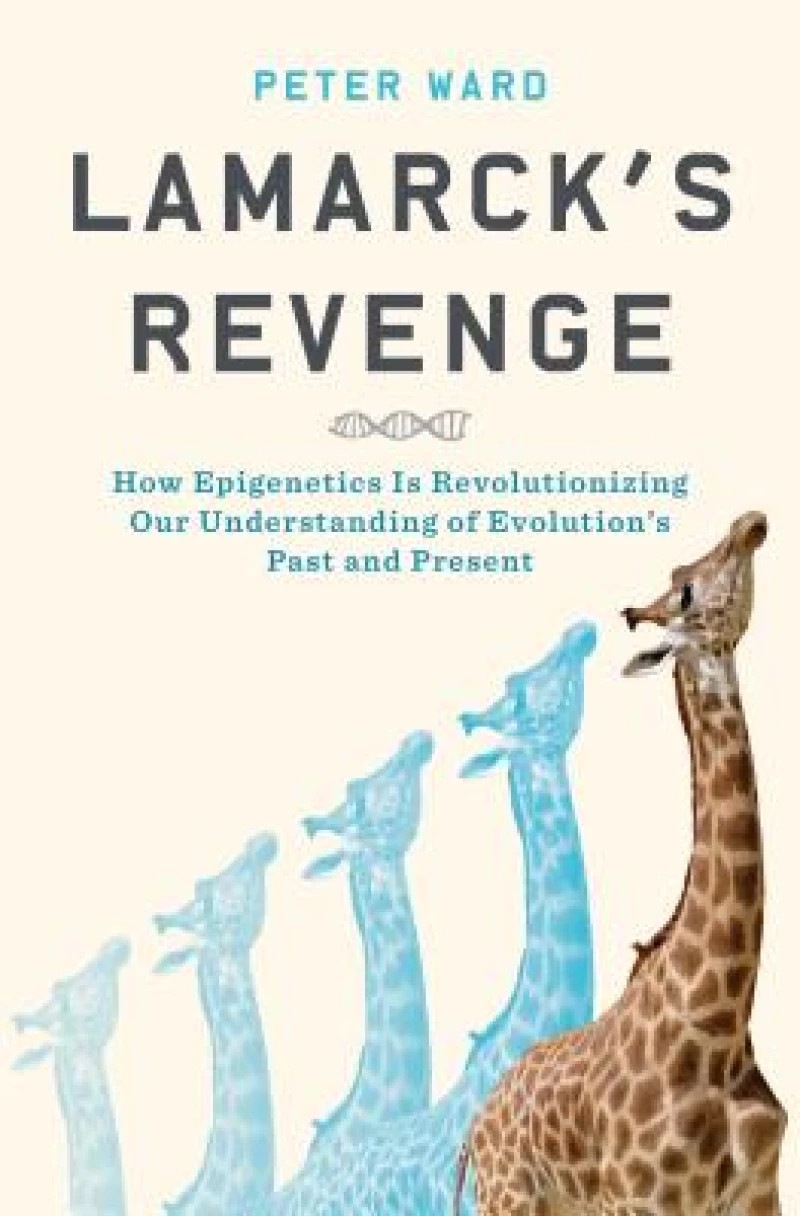
Lamarck's Revenge : How Epigenetics Is Revolutionizing Our Understanding of Evolution's Past and Present

Book Details

Format Hardback or Cased Book
ISBN-10 1632866153
ISBN-13 9781632866158
Publisher Bloomsbury Publishing Plc
Imprint Bloomsbury Academic USA
Country of Manufacture GB
Country of Publication GB
Publication Date Oct 17th, 2018
Print length 288 Pages
Weight 558 grams
Dimensions 16.20 x 24.20 x 3.00 cms
Product Classification: Biology, life sciencesEvolution
Ksh 4,500.00
Publisher Out of Stock

Delivery Location

Delivery fee: Select location

Secure
Quality
Fast
Epigenetics upends natural selection and genetic mutation as the sole engines of evolution. Darwinian evolution is based on the genetic code of an individual being changed by mutation, causing the genome passed to the offspring to differ from that of the parent. But some morphological changes have taken place so radically and so pervasively that they cannot be explained by modern evolutionary theory. A far simpler explanation for this phenomenon is epigenetics, which can create radical physical and physiological changes in subsequent generations by the simple addition of a single small molecule and without genetic mutation. One commonly studied alteration is the addition of very short chains of carbon, oxygen, and hydrogen to particular nucleotides in DNA, typically silencing gene activity--somewhat as if someone canceled your delivery of bricks while you were in the process of building a house. Heritable epigenetics takes place when methyl molecules change the functioning of both DNA and tiny bits of RNA. Sometimes the presence of methylation or tiny freeloaders causes a protein not to be made. Or it might cause a new protein to be made that would not otherwise occur. Other times, it might cause a regulator gene-essentially the General Contractor coordinating all of the cells of the busy construction project-to walk off the job entirely, and huge changes take place far beyond what any single mutation could facilitate. Such changes affecting an individual can then be passed to the next generation: the methyl molecules are not physically passed on to the next generation, but the propensity for them to attach in the same places in the next generation are! Lamarck's Revenge explains how physical and behavioral changes can be passed on even though there has been no mutation that has been "inherited" from the progenitor. Among species, epigenetics can create morphological and physiological changes faster than could be explained by "Darwinian" natural selection and mutation. Not only has epigenetics played a key role in the history of our species--and indeed, of the world as a whole--it is crucial to understanding and predicting future human evolution.

Epigenetics upends natural selection and genetic mutation as the sole engines of evolution.
Darwinian evolution is based on the genetic code of an individual being changed by mutation, causing the genome passed to the offspring to differ from that of the parent. But some morphological changes have taken place so radically and so pervasively that they cannot be explained by modern evolutionary theory.

A far simpler explanation for this phenomenon is epigenetics, which can create radical physical and physiological changes in subsequent generations by the simple addition of a single small molecule and without genetic mutation. One commonly studied alteration is the addition of very short chains of carbon, oxygen, and hydrogen to particular nucleotides in DNA, typically silencing gene activity--somewhat as if someone canceled your delivery of bricks while you were in the process of building a house. Heritable epigenetics takes place when methyl molecules change the functioning of both DNA and tiny bits of RNA. Sometimes the presence of methylation or tiny freeloaders causes a protein not to be made. Or it might cause a new protein to be made that would not otherwise occur. Other times, it might cause a regulator gene—essentially the General Contractor coordinating all of the cells of the busy construction project—to walk off the job entirely, and huge changes take place far beyond what any single mutation could facilitate. Such changes affecting an individual can then be passed to the next generation: the methyl molecules are not physically passed on to the next generation, but the propensity for them to attach in the same places in the next generation are!

Lamarck’s Revenge explains how physical and behavioral changes can be passed on even though there has been no mutation that has been “inherited” from the progenitor. Among species, epigenetics can create morphological and physiological changes faster than could be explained by “Darwinian” natural selection and mutation. Not only has epigenetics played a key role in the history of our species--and indeed, of the world as a whole--it is crucial to understanding and predicting future human evolution.


Get Lamarck's Revenge by at the best price and quality guaranteed only at Werezi Africa's largest book ecommerce store. The book was published by Bloomsbury Publishing Plc and it has pages.


Mind, Body, & Spirit

Shopping Cart

Africa largest book store

Sub Total:
Ebooks

Digital Library
Coming Soon

Our digital collection is currently being curated to ensure the best possible reading experience on Werezi. We'll be launching our Ebooks platform shortly.