Land Reform in Developing Countries : Property Rights and Property Wrongs
Book Details
Format
Paperback / softback
Book Series
Priorities for Development Economics
ISBN-10
0415615569
ISBN-13
9780415615563
Publisher
Taylor & Francis Ltd
Imprint
Routledge
Country of Manufacture
GB
Country of Publication
GB
Publication Date
Apr 26th, 2011
Print length
472 Pages
Weight
726 grams
Dimensions
23.20 x 16.00 x 2.70 cms
KSh 9,350.00
Temporarily out of stock, due soon
0 in stock
Delivery Location
Delivery fee: Select location
Secure
Quality
Fast
First Published in 2009. Routledge is an imprint of Taylor & Francis, an informa company.
Land reforms are laws that are intended, and likely, to cut poverty by raising the poor?s share of land rights. That raises questions about property rights as old as moral philosophy, and issues of efficiency and fairness that dominate policy from Bolivia to Nepal. Classic reforms directly transfer land from rich to poor. However, much else has been marketed as land reform: the restriction of tenancy, but also its de-restriction; collectivisation, but also de-collectivisation; land consolidation, but also land division. In 1955-2000, genuine land reform affected over a billion people, and almost as many hectares. Is land reform still alive, for example in Bolivia, South Africa and Nepal? Or is it dead and, if so, is this because it has succeeded, or because it has failed? There has been massive research on land reform and this book builds on some surprising findings.
- Small farms? share in land is rising in most of Asia and Africa.
- This is not driven (as widely claimed) by growth in rural population or farm productivity, but by the relative efficiency of small farms, and in some cases by land reform.
- Whether land reform helps the poor depends not only on land transfers, but at least as much on its effects through employment, non-farm activity, GDP growth and distribution, as well as the village status and power of the poor.
- Avoidance, evasion and even distortion of land reform laws sometimes advance their main aims.
- Liberalisation and its accompaniments (such as supermarkets) can be powerful friends or fatal foes of small farms and land reform.
Get Land Reform in Developing Countries by Michael Lipton at the best price and quality guaranteed only at Werezi Africa's largest book ecommerce store. The book was published by Taylor & Francis Ltd and it has 472 pages.
Customers Who Bought This Also Bought

How Africa Works
KSh 3,050.00
Development as Freedom
KSh 2,900.00

How Africa Works
KSh 4,500.00

Anti-Politics Machine
KSh 3,750.00

We Are Not Able to Live in the Sky
KSh 3,400.00
Apostles of Development
KSh 5,600.00
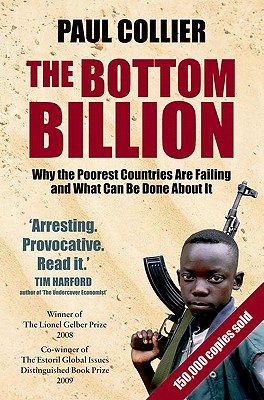
The Bottom Billion
KSh 2,500.00
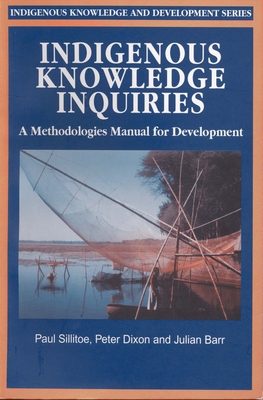
Indigenous Knowledge Inquiries
KSh 6,600.00

Why Africa is poor
KSh 2,350.00

Historical Dictionary of Aid and Development Organizations
KSh 12,050.00

Contemporary Latin American Architecture
KSh 7,900.00
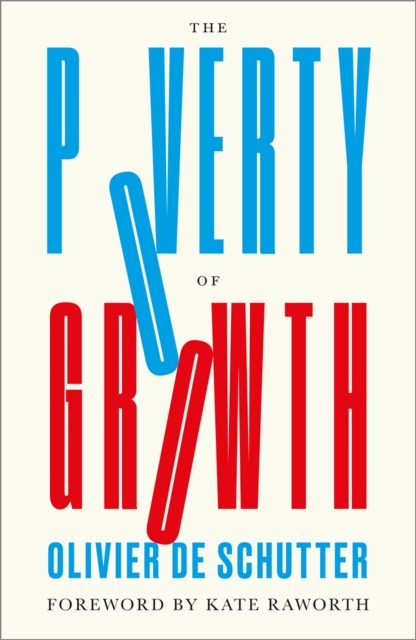
The Poverty of Growth
KSh 2,900.00