
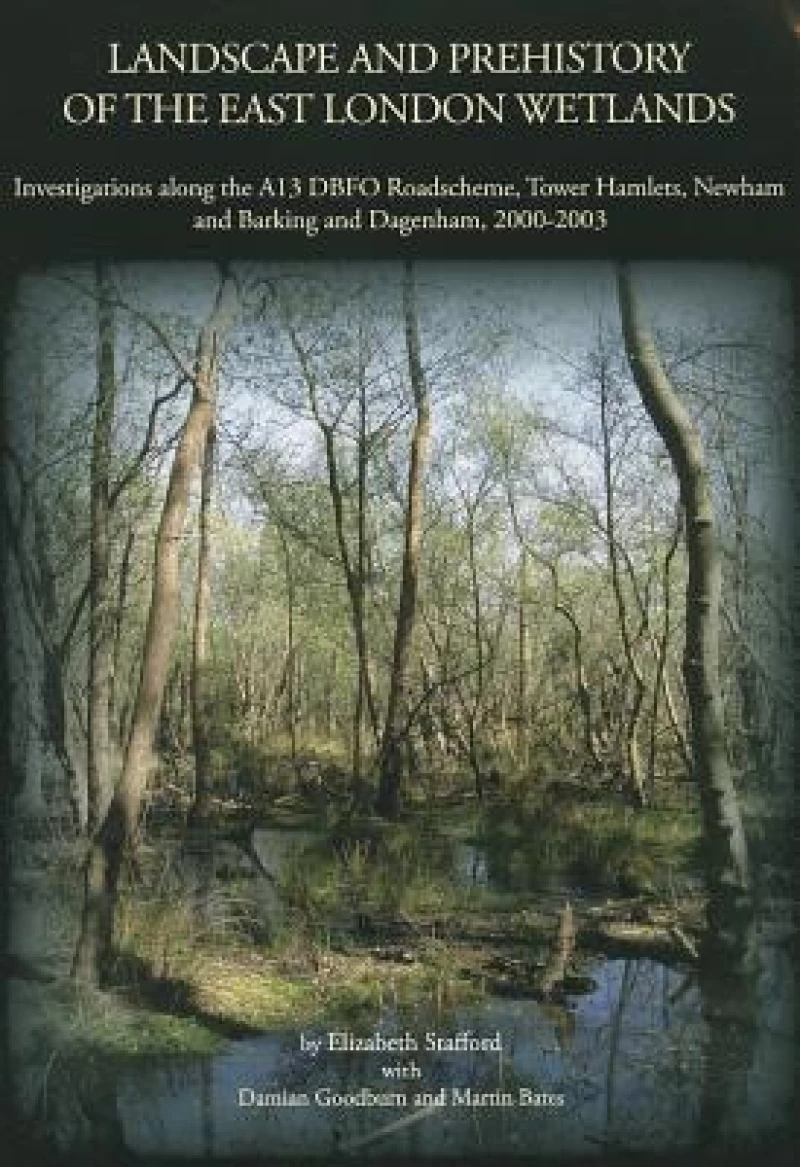
Landscape and Prehistory of the East London Wetlands
Book Details
Format
Paperback / Softback
Book Series
Oxford Archaeology Monograph
ISBN-10
0904220702
ISBN-13
9780904220704
Publisher
Oxford Archaeology
Imprint
Oxford Archaeology
Country of Manufacture
GB
Country of Publication
GB
Publication Date
Jun 21st, 2012
Print length
313 Pages
Weight
1,254 grams
Dimensions
29.50 x 20.90 x 1.70 cms
Ksh 6,000.00
Werezi Extended Catalogue
Delivery in 14 days
1 copies in stock
Delivery Location
Delivery fee: Select location
Delivery in 14 days
Secure
Quality
Fast
This report presents the results of archaeological investigations carried out during improvements to five key junctions along a stretch of the A13 trunk road through the East London Boroughs of Tower Hamlets, Newham and Barking and Dagenham. The A13 at this location runs parallel to the River Thames, traversing the very edge of the Thames gravel terraces and alluvial floodplain. Previous archaeological work has shown the Thames gravel terraces to be one of the most intensively occupied regions of Southern England during the prehistoric period and locations on or adjacent to the terrace edge have high potential for preserving organic remains such as timber structures and palaeoenvironmental evidence in waterlogged conditions. The archaeology recorded covers a wide chronological range representing intermittent activity spanning the Mesolithic through to the post-Roman period. Regionally important evidence of Neolithic activity included artefact assemblages of pottery and worked flint. A rare cache of charred emmer wheat recovered during evaluation at the Woolwich Manor Way site provides definitive evidence of early Neolithic cereal cultivation in the vicinity, and a fragment of belt slider made from Whitby jet attests to long distance exchange networks. The greatest concentration of activity, however, dates to the 2nd millennium BC and includes several Bronze Age timber stake-built structures and brushwood trackways with associated wetland edge occupation. The A13 structures add to the corpus of regional evidence for trackway building and marshland exploitation during this period. The broadly northsouth orientation would suggest they were built to maintain access to the Thames floodplain during a period of increased wetness. This may have been to exploit a range of natural resources and to herd animals to seasonal pasture. To the west, at Freemasons Road, a double row of large oak piles may represent the remains of a wooden footbridge linking the drier ground of the terrace to an island on the Lea floodplain. The piles are among the most substantial known in the region and are of similar form to those from Runneymede Bridge and Vauxhall. The bridge structure seems to have been associated with a series of gullies and postholes representing some form of enclosure perhaps associated with the corralling of animals. At Movers Lane a burnt mound deposit and associated pits located at the edge of a palaeochannel appear to post-date trackway construction and date to the latter part of the 2nd millennium BC, as does a cremation deposit and series of linear features that may define boundaries or drainage systems. Evidence during the later periods was sparser and probably relates to a period of marine incursion, with the spread of saltmarsh environments and tidal creeks making the area unsuitable for activity. Extensive geoarchaeological and palaeoenvironmental sampling carried out during the lifetime of the project provides an important record of landscape evolution and periods of major change can be detected, both natural and anthropogenically induced. As well as providing a context for the archaeology along the A13, this raises a number of issues regarding the interaction of local communities with the natural environment, how they responded to change and to a certain extent exploited it. Ultimately this is of relevance not only to understanding the past but also to current concerns regarding environmental management along the Thames estuary.
Get Landscape and Prehistory of the East London Wetlands by at the best price and quality guaranteed only at Werezi Africa's largest book ecommerce store. The book was published by Oxford Archaeology and it has pages.

