
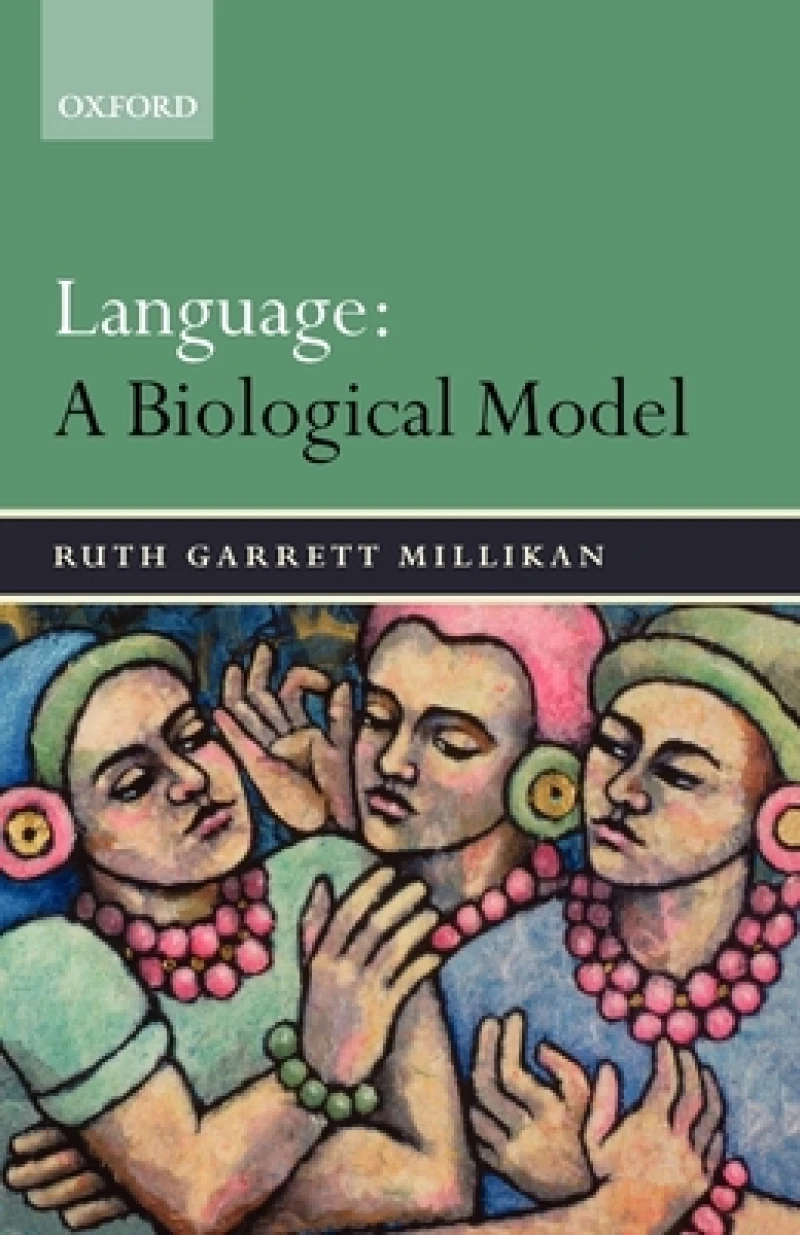
Language: A Biological Model
Book Details
Format
Paperback / Softback
ISBN-10
0199284776
ISBN-13
9780199284771
Publisher
Oxford University Press
Imprint
Oxford University Press
Country of Manufacture
GB
Country of Publication
GB
Publication Date
Aug 18th, 2005
Print length
240 Pages
Weight
310 grams
Dimensions
13.90 x 21.40 x 2.10 cms
Product Classification:
Philosophy of languagePhilosophy of mindCognition & cognitive psychology
Ksh 9,250.00
Manufactured on Demand
0 in stock
Delivery Location
Delivery fee: Select location
Secure
Quality
Fast
Presents a different way of viewing the partial regularities that language displays, the norms and conventions of language. The central norms applying to language, like those norms of function and behavior that account for the survival and proliferation of biological traits, are non-evaluative norms.
Guiding the work of most linguists and philosophers of language today is the assumption that language is governed by prescriptive normative rules. Many believe that it is of the essence of thought itself to follow rules, rules of inference determining the intentional contents of our concepts, and that these rules originate as internalized rules of language. However, exactly what it is for there to be such things as normative rules of language remains distressingly unclear. From what source do these norms flow? What sanctions enforce them? What happens, exactly, if you don''t follow the rules? How do children learn the rules?Ruth Millikan presents a radicallly different way of viewing the partial regularities that language displays, the norms and conventions of language. The central norms applying to language, like those norms of function and behavior that account for the survival and proliferation of biological traits, are non-evaluative norms. Specific linguistic forms survive and are reproduced together with co-operative hearer responses because, in a critical mass of cases, these patterns of production and response benefit both speakers and hearers. Conformity is needed only often enough to ensure that the co-operative use constituting the norm - the convention - continues to be copied and hence continues to characterize some interactions of some speaker-hearer pairs.What needs to be reproduced for discursive language forms to survive, it turns out, is not specific conceptual roles but only satisfaction conditions coupled to essential elements of hearer responses. An uncompromising rejection of conceptual analysis as a tool in philosophy results. At the same time the distinction between the propositional content and the force of a linguistic utterance comes into very sharp focus, force emerging as essential to the creation of content rather than as something added to content. The distinction between illocutionary and perlocutionary force, the distinction between linguistic meaning and speaker meaning, and the semantics/pragmatics distinction are each illuminated in new and crisper ways. On the model proposed, neither the intentionality of thought nor the intentionality of language is derived from the other. Processes involved in understanding language are not Gricean but more like direct perception of the world as mediated, for example, through the natural signs contained in the structured light that allows vision. There are also startling implications for pragmatics, and for how children learn language.
Get Language: A Biological Model by at the best price and quality guaranteed only at Werezi Africa's largest book ecommerce store. The book was published by Oxford University Press and it has pages.

