
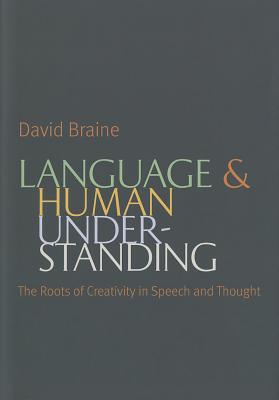
Language and Human Understanding : The Roots of Creativity in Speech and Thought
by
David Braine
Book Details
Format
Hardback
ISBN-10
0813221749
ISBN-13
9780813221748
Publisher
The Catholic University of America Press
Imprint
The Catholic University of America Press
Country of Manufacture
US
Country of Publication
GB
Publication Date
Feb 28th, 2014
Print length
808 Pages
Weight
1,576 grams
Dimensions
26.20 x 18.50 x 5.00 cms
Product Classification:
Philosophy of language
KSh 10,100.00
Werezi Extended Catalogue
Delivery in 12 days
1 copies in stock
Delivery Location
Delivery fee: Select location
Delivery in 12 days
Secure
Quality
Fast
Philosopher, psychologist and linguist are all concerned with natural language. Accordingly, in seeking a unified view, David Braine draws on insights from all these fields, sifting through the discordant schools of linguists. He concludes that one extended logic or “integrated semantic syntax” shapes grammar, but without constricting languages to being of one grammatical type.
Human speech and writing reveal our powers both to generalize and to criticize our own procedures. For this we must use words non-mechanically and with a freedom without definite limits, but still allowing mutual intelligibility. Such powers cannot be simulated by any possible physical mechanism, and this shows that human beings in our acts of judgment and understanding transcend the body.
Philosopher, psychologist and linguist are all concerned with natural language. Accordingly, in seeking a unified view, Braine draws on insights from all these fields, sifting through the discordant schools of linguists. He concludes that one extended logic or “integrated semantic syntax” shapes grammar, but without constricting languages to being of one grammatical type.
Language as learnt and speech are both essentially public, geared to a community of language-users. Therefore, psycholinguists should imitate Gibson’s treatment of our perceptual system and treat learning and use of language as arising by adaptation to our social and natural environment. Through taking the malleability of the functioning of the brain and its parts to an extreme, grammar has become unrestricted by neurology, limited only by logical and pragmatic constraints.
For Braine, a language is a living thing, both in the development of thought and in conversation. Chomsky has entrenched a static, building-block, model of a language as a code, each lexical item with just one meaning. Yet in our learning and use of language each word develops an indefinite spread of uses or senses adapted to the realities and questions which we have to confront. The idea ""one lexical item, one meaning"" applies only to formal languages, not to the natural language which extends beyond social life to embrace mathematics, physics and all the sciences, religion and literature.
In rewriting the philosophy of grammar, Braine restores the dynamic conception of language, reuniting structure and communicative function. Grammar, typically through the verb, gives the sentence its ""saying"" function, the verb being what brings the sentence to life, giving the sentence’s other elements their role and force.
Philosopher, psychologist and linguist are all concerned with natural language. Accordingly, in seeking a unified view, Braine draws on insights from all these fields, sifting through the discordant schools of linguists. He concludes that one extended logic or “integrated semantic syntax” shapes grammar, but without constricting languages to being of one grammatical type.
Language as learnt and speech are both essentially public, geared to a community of language-users. Therefore, psycholinguists should imitate Gibson’s treatment of our perceptual system and treat learning and use of language as arising by adaptation to our social and natural environment. Through taking the malleability of the functioning of the brain and its parts to an extreme, grammar has become unrestricted by neurology, limited only by logical and pragmatic constraints.
For Braine, a language is a living thing, both in the development of thought and in conversation. Chomsky has entrenched a static, building-block, model of a language as a code, each lexical item with just one meaning. Yet in our learning and use of language each word develops an indefinite spread of uses or senses adapted to the realities and questions which we have to confront. The idea ""one lexical item, one meaning"" applies only to formal languages, not to the natural language which extends beyond social life to embrace mathematics, physics and all the sciences, religion and literature.
In rewriting the philosophy of grammar, Braine restores the dynamic conception of language, reuniting structure and communicative function. Grammar, typically through the verb, gives the sentence its ""saying"" function, the verb being what brings the sentence to life, giving the sentence’s other elements their role and force.
Get Language and Human Understanding by David Braine at the best price and quality guaranteed only at Werezi Africa's largest book ecommerce store. The book was published by The Catholic University of America Press and it has 808 pages.
Customers Who Bought This Also Bought

Recognising the Stranger
KSh 1,800.00
The Origin of Language
KSh 4,500.00
Sharing Thoughts
KSh 17,000.00
An Inquiry Into Meaning and Truth
KSh 3,750.00
Semiotics and the Philosophy of Language
KSh 3,400.00
An Introduction to Logic
KSh 6,650.00
Walker Percy''s Search for Community
KSh 5,950.00
Film Figures
KSh 16,450.00

The Tacit Dimensions of Language and Logic
KSh 15,800.00

Metaphors in Action
KSh 21,600.00
Frontiers in Semiotics
KSh 3,000.00

A Theory of Death
KSh 11,900.00


