
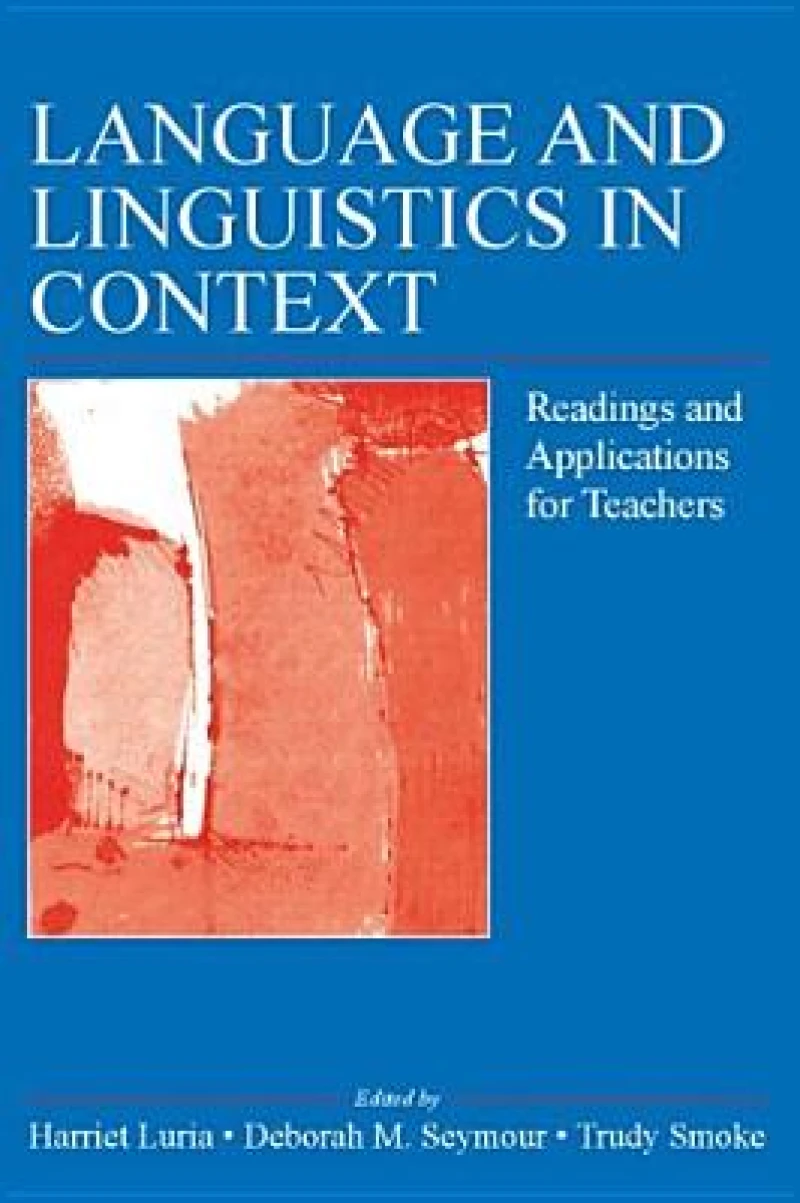
Language and Linguistics in Context : Readings and Applications for Teachers
Book Details
Format
Paperback / Softback
ISBN-10
0805855009
ISBN-13
9780805855005
Publisher
Taylor & Francis Inc
Imprint
Routledge
Country of Manufacture
GB
Country of Publication
GB
Publication Date
Sep 16th, 2005
Print length
454 Pages
Weight
816 grams
Product Classification:
Teaching of a specific subjectEducational: English language & literacy
Ksh 5,700.00
Werezi Extended Catalogue
0 in stock
Delivery Location
Delivery fee: Select location
Secure
Quality
Fast
This textbook, designed for courses in first-and-second language education, provides a "big picture" view of basic linguistics through readings organized in 3 thematic units-"What is Language and How is it Acquired?"; "How Does Language Change?"; and "Wh
Taking a sociocultural and educational approach, Language and Linguistics in Context: Readings and Applications for Teachers:
*introduces basic linguistic concepts and current perspectives on language acquisition;
*considers the role of linguistic change (especially in English) in the politics of language;
*acknowledges the role of linguists in current policies involving language;
*offers insights into the relationship between the structure of language systems and first- and second-language acquisition; the study of language across culture, class, race, gender, and ethnicity; and between language study and literacy and education; and
*provides readers with a basis for understanding current educational debates about bilingual education, non-standard dialects, English only movements, literacy methodologies, and generally the importance to teaching of the study of language.
The text is organized into three thematic units – "What is Language and How is It Acquired?"; "How Does Language Change?"; and "What is Literacy?". To achieve both breadth and depth – that is, to provide a “big picture” view of basic linguistics and at the same time make it specific enough for the beginner – a selection of readings, including personal language narratives, is provided to both introduce and clarify linguistic concepts. The readings, by well-known theoretical and applied linguists and researchers from various disciplines, are diverse in level and range of topics and vary in level of linguistic formalism.
Pedagogical features: This text is designed for a range of courses in English and language arts, bilingualism, applied linguistics, and ESL courses in teacher education programs. Each unit contains a substantive introduction to the topic, followed by the readings. Each reading concludes with Questions to Think About including one Extending Your Understanding question, and a short list of Terms to Define. Each unit ends with additional Extending Your Understanding and Making Connections activities that engage readers in applying what they have read to teaching and suggested projects and a bibliography of Print and Web Resources. The readings and apparatus are arranged so that the material can be modified to fit many course plans and schemes of presentation. To help individual instructors make the most effective use of the text in specific classes, a set of matrixes is provided suggesting configurations of readings for different types of linguistics and education classes.
*introduces basic linguistic concepts and current perspectives on language acquisition;
*considers the role of linguistic change (especially in English) in the politics of language;
*acknowledges the role of linguists in current policies involving language;
*offers insights into the relationship between the structure of language systems and first- and second-language acquisition; the study of language across culture, class, race, gender, and ethnicity; and between language study and literacy and education; and
*provides readers with a basis for understanding current educational debates about bilingual education, non-standard dialects, English only movements, literacy methodologies, and generally the importance to teaching of the study of language.
The text is organized into three thematic units – "What is Language and How is It Acquired?"; "How Does Language Change?"; and "What is Literacy?". To achieve both breadth and depth – that is, to provide a “big picture” view of basic linguistics and at the same time make it specific enough for the beginner – a selection of readings, including personal language narratives, is provided to both introduce and clarify linguistic concepts. The readings, by well-known theoretical and applied linguists and researchers from various disciplines, are diverse in level and range of topics and vary in level of linguistic formalism.
Pedagogical features: This text is designed for a range of courses in English and language arts, bilingualism, applied linguistics, and ESL courses in teacher education programs. Each unit contains a substantive introduction to the topic, followed by the readings. Each reading concludes with Questions to Think About including one Extending Your Understanding question, and a short list of Terms to Define. Each unit ends with additional Extending Your Understanding and Making Connections activities that engage readers in applying what they have read to teaching and suggested projects and a bibliography of Print and Web Resources. The readings and apparatus are arranged so that the material can be modified to fit many course plans and schemes of presentation. To help individual instructors make the most effective use of the text in specific classes, a set of matrixes is provided suggesting configurations of readings for different types of linguistics and education classes.
Get Language and Linguistics in Context by at the best price and quality guaranteed only at Werezi Africa's largest book ecommerce store. The book was published by Taylor & Francis Inc and it has pages.

