
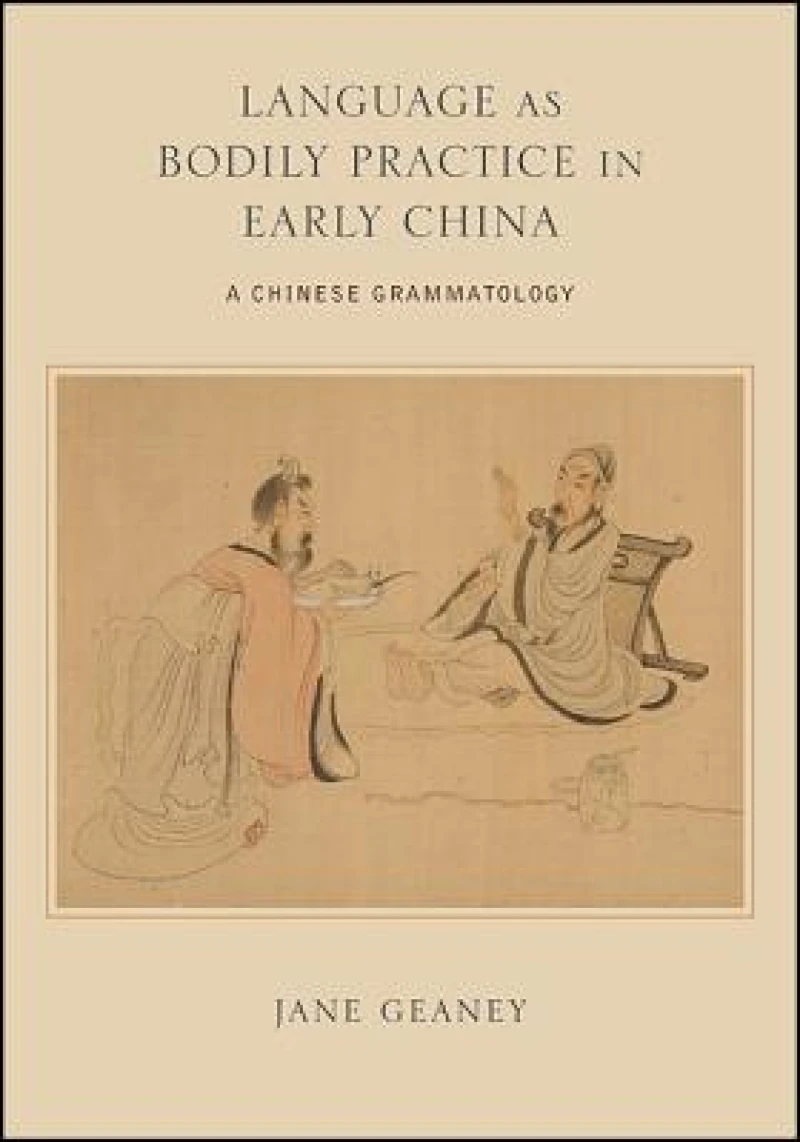
Language as Bodily Practice in Early China : A Chinese Grammatology
Book Details
Delivery Location
Delivery fee: Select location
Challenges the idea held by many prominent twentieth-century Sinologists that early China experienced a "language crisis."
Jane Geaney argues that early Chinese conceptions of speech and naming cannot be properly understood if viewed through the dominant Western philosophical tradition in which language is framed through dualisms that are based on hierarchies of speech and writing, such as reality/appearance and one/many. Instead, early Chinese texts repeatedly create pairings of sounds and various visible things. This aural/visual polarity suggests that texts from early China treat speech as a bodily practice that is not detachable from its use in everyday experience. Firmly grounded in ideas about bodies from the early texts themselves, Geaney''s interpretation offers new insights into three key themes in these texts: the notion of speakers'' intentions (yi), the physical process of emulating exemplary people, and Confucius''s proposal to rectify names (zhengming).
Get Language as Bodily Practice in Early China by at the best price and quality guaranteed only at Werezi Africa's largest book ecommerce store. The book was published by State University of New York Press and it has pages.

