
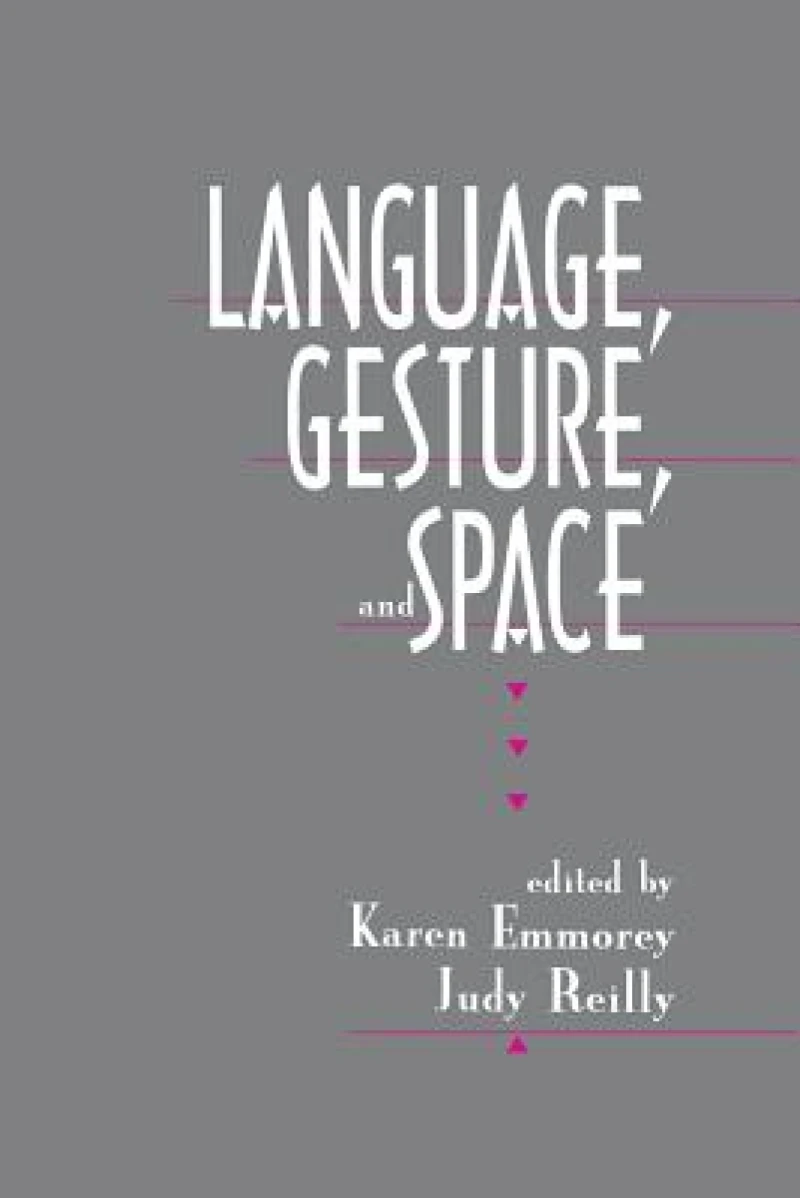
Language, Gesture, and Space
Book Details
Format
Paperback / Softback
ISBN-10
1138979376
ISBN-13
9781138979376
Publisher
Taylor & Francis Ltd
Imprint
Psychology Press Ltd
Country of Manufacture
GB
Country of Publication
GB
Publication Date
Dec 18th, 2015
Print length
464 Pages
Weight
612 grams
Ksh 10,000.00
Werezi Extended Catalogue
0 in stock
Delivery Location
Delivery fee: Select location
Secure
Quality
Fast
This book brings together papers which address a range of issues regarding the nature and structure of sign languages and other gestural systems, and how they exploit the space in which they are conveyed. The chapters focus on five pertinent areas reflecting different, but related research topics:
* space in language and gesture,
* point of view and referential shift,
* morphosyntax of verbs in ASL,
* gestural systems and sign language, and
* language acquisition and gesture.
Sign languages and gestural systems are produced in physical space; they manipulate spatial contrasts for linguistic and communicative purposes. In addition to exploring the different functions of space, researchers discuss similarities and differences between visual-gestural systems -- established sign languages, pidgin sign language (International Sign), "homesign" systems developed by deaf children with no sign language input, novel gesture systems invented by hearing nonsigners, and the gesticulation that accompanies speech. The development of gesture and sign language in children is also examined in both hearing and deaf children, charting the emergence of gesture ("manual babbling"), its use as a prelinguistic communicative device, and its transformation into language-like systems in homesigners. Finally, theoretical linguistic accounts of the structure of sign languages are provided in chapters dealing with the analysis of referential shift, the structure of narrative, the analysis of tense and the structure of the verb phrase in American Sign Language. Taken together, the chapters in this volume present a comprehensive picture of sign language and gesture research from a group of international scholars who investigate a range of communicative systems from formal sign languages to the gesticulation that accompanies speech.
* space in language and gesture,
* point of view and referential shift,
* morphosyntax of verbs in ASL,
* gestural systems and sign language, and
* language acquisition and gesture.
Sign languages and gestural systems are produced in physical space; they manipulate spatial contrasts for linguistic and communicative purposes. In addition to exploring the different functions of space, researchers discuss similarities and differences between visual-gestural systems -- established sign languages, pidgin sign language (International Sign), "homesign" systems developed by deaf children with no sign language input, novel gesture systems invented by hearing nonsigners, and the gesticulation that accompanies speech. The development of gesture and sign language in children is also examined in both hearing and deaf children, charting the emergence of gesture ("manual babbling"), its use as a prelinguistic communicative device, and its transformation into language-like systems in homesigners. Finally, theoretical linguistic accounts of the structure of sign languages are provided in chapters dealing with the analysis of referential shift, the structure of narrative, the analysis of tense and the structure of the verb phrase in American Sign Language. Taken together, the chapters in this volume present a comprehensive picture of sign language and gesture research from a group of international scholars who investigate a range of communicative systems from formal sign languages to the gesticulation that accompanies speech.
Get Language, Gesture, and Space by at the best price and quality guaranteed only at Werezi Africa's largest book ecommerce store. The book was published by Taylor & Francis Ltd and it has pages.

