
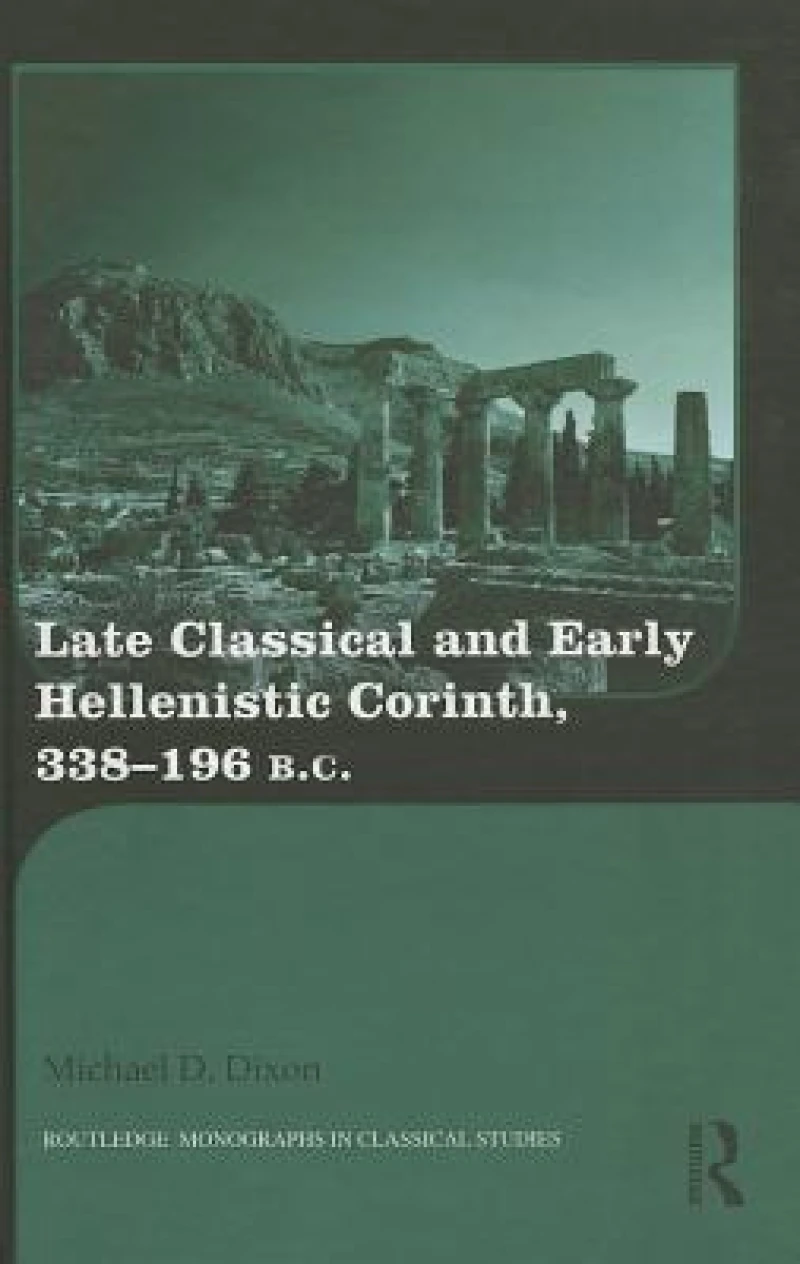
Late Classical and Early Hellenistic Corinth : 338-196 BC
Book Details
Delivery Location
Delivery fee: Select location
This volume challenges the perception that the Macedonian presence in Corinth resulted in a loss of significance and autonomy for the city, arguing that Corinth flourished while Macedon possessed the city. It explicates the nature of their relationship in the aftermath of Chaironeia through to the declaration of Greek Freedom at Isthmia in 196 B.C. It also draws upon a wide range of evidence to place Corinth within the broader Hellenistic world. This study, the full first treatment of the city in this period, contributes significantly to the growing body of work focusing on the Hellenistic world and is a crucial resource for specialists in late Classical and early Hellenistic history.
Late Classical and Early Hellenistic Corinth, 338-196 B.C. challenges the perception that the Macedonians'' advent and continued presence in Corinth amounted to a loss of significance and autonomy. Immediately after Chaironeia, Philip II and his son Alexander III established close relations with Corinth and certain leading citizens on the basis of goodwill (eunoia). Mutual benefits and respect characterized their discourse throughout the remainder of the early Hellenistic period; this was neither a period of domination or decline, nor one in which the Macedonians deprived Corinthians of their autonomy. Instead, Corinth flourished while the Macedonians possessed the city. It was the site of a vast building program, much of which must be construed as the direct result of Macedonian patronage, evidence suggests strongly that those Corinthians who supported the Macedonians enjoyed great prosperity under them. Corinth''s strategic location made it an integral part of the Macedonians'' strategy to establish and maintain hegemony over the mainland Greek peninsula after Philip II''s victory at Chaironeia. The Macedonian dynasts and kings who later possessed Corinth also valued its strategic position, and they regarded it as an essential component in their efforts to claim legitimacy due to its association with the Argead kings, Philip II and Alexander III the Great, and the League of Corinth they established.
This study explicates the nature of the relationship between Corinthians and Macedonians that developed in the aftermath of Chaironeia, through the defeat at the battle of Kynoskephalai and the declaration of Greek Freedom at Isthmia in 196 B.C. Late Classical and Early Hellenistic Corinth is not simply the history of a single polis; it draws upon the extant literary, epigraphic, prosopographic, topographic, numismatic, architectural, and archaeological evidence to place Corinth within broader Hellenistic world. This volume, the full first treatment of the city in this period, contributes significantly to the growing body of scholarly literature focusing on the Hellenistic world and is a crucial resource for specialists in late Classical and early Hellenistic history.
Get Late Classical and Early Hellenistic Corinth by at the best price and quality guaranteed only at Werezi Africa's largest book ecommerce store. The book was published by Taylor & Francis Ltd and it has pages.

