
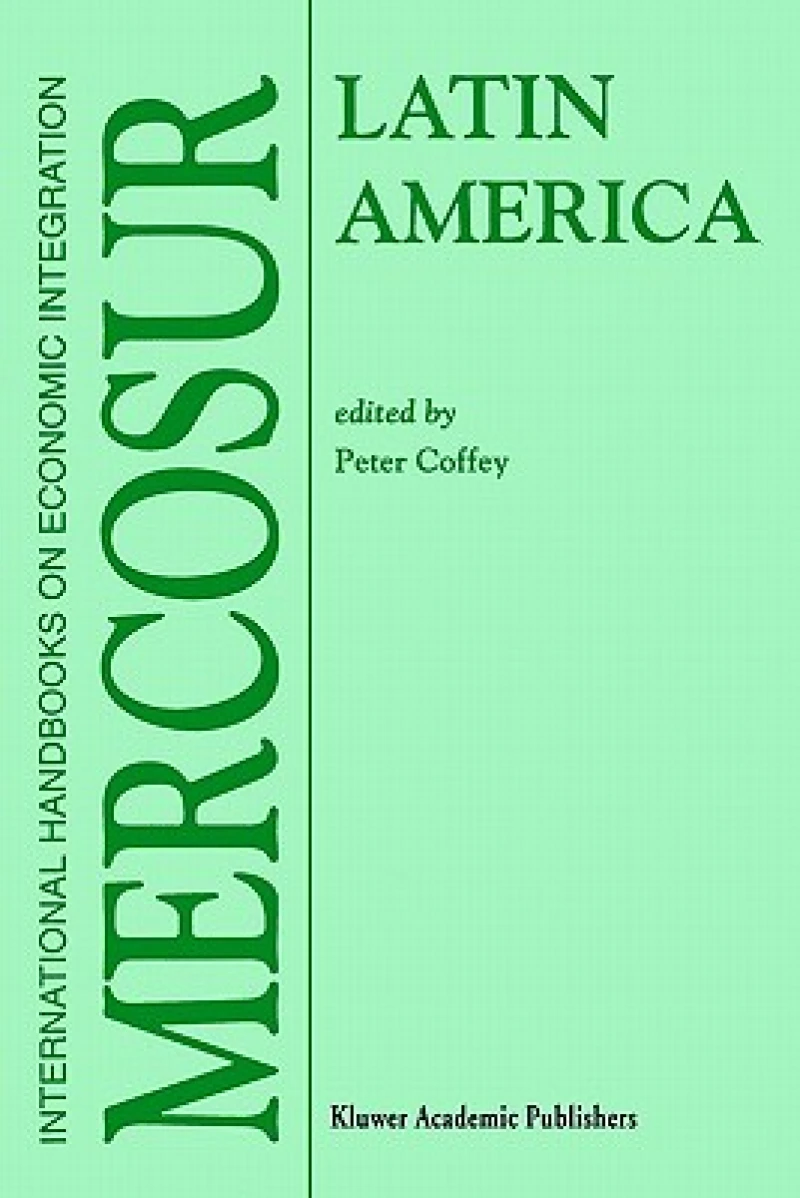
Latin America : MERCOSUR
Softcover reprint of the original 1st ed. 1998
Book Details
Format
Paperback / Softback
Book Series
International Handbooks on Economic Integration
ISBN-10
079238153X
ISBN-13
9780792381532
Edition
Softcover reprint of the original 1st ed. 1998
Publisher
Kluwer Academic Publishers
Imprint
Kluwer Academic Publishers
Country of Manufacture
NL
Country of Publication
GB
Publication Date
May 31st, 1998
Print length
350 Pages
Weight
530 grams
Dimensions
23.30 x 15.60 x 2.10 cms
Product Classification:
International economics
Ksh 32,400.00
Werezi Extended Catalogue
0 in stock
Delivery Location
Delivery fee: Select location
Secure
Quality
Fast
In fact, the first attempt at integration started as early as 1960, with the creation of LAFTA - the Latin American Free Trade Area (subsequently replaced by LAIA - the Latin American Integration Association).
Latin America''s experience with regional economic integration has been only slightly shorter than that of Europe. In fact, the first attempt at integration started as early as 1960, with the creation of LAFTA - the Latin American Free Trade Area (subsequently replaced by LAIA - the Latin American Integration Association). LAFTA, composed of 11 countries, sought, unsuccessfully, to create a free trade area in 12 years. In 1969, the Andean pact, which sought, also unsuccessfully, to create a sub-regional free trade area, was set up. Recently the Presidents of Argentina, Brazil, Paraguay and Uruguay signed the Treaty of Asuncion aimed at creating a common market as from 1st January, 1995. This common market, MERCOSUR, will be completed by 2006.
In comparison with the earlier and unsuccessful attempts at integration, and despite challenges and problems, both internal and external, MERCOSUR is working, and trade between the member States is increasing. Furthermore, as with the case of the European Union (EU), serious attempts (notably between Argentina and Brazil) are being made to co-ordinate economic and monetary policies. The most important evidence of these moves is the introduction of hard currencies, the reduction in the size of the public sector and the privatization of State assets. These are clearly exciting times for Latin American integration.
In this book, the first in a new series of books on International Economic Integration, the authors examine the experience of MERCOSUR in the Latin American integration progress. After an analysis of the history of the moves towards integration in South America, the case of each Member State and the Associate Country is examined and perspectives for the future are assessed.
In comparison with the earlier and unsuccessful attempts at integration, and despite challenges and problems, both internal and external, MERCOSUR is working, and trade between the member States is increasing. Furthermore, as with the case of the European Union (EU), serious attempts (notably between Argentina and Brazil) are being made to co-ordinate economic and monetary policies. The most important evidence of these moves is the introduction of hard currencies, the reduction in the size of the public sector and the privatization of State assets. These are clearly exciting times for Latin American integration.
In this book, the first in a new series of books on International Economic Integration, the authors examine the experience of MERCOSUR in the Latin American integration progress. After an analysis of the history of the moves towards integration in South America, the case of each Member State and the Associate Country is examined and perspectives for the future are assessed.
Get Latin America by at the best price and quality guaranteed only at Werezi Africa's largest book ecommerce store. The book was published by Kluwer Academic Publishers and it has pages.

