
Cart 0
Latin Blackness in Parisian Visual Culture, 1852-1932
Click to zoom

Share this book

Latin Blackness in Parisian Visual Culture, 1852-1932

Book Details

Format Hardback or Cased Book
ISBN-10 150133235X
ISBN-13 9781501332357
Publisher Bloomsbury Publishing PLC
Imprint Bloomsbury Visual Arts
Country of Manufacture US
Country of Publication GB
Publication Date Feb 21st, 2019
Print length 232 Pages
Weight 644 grams
Dimensions 15.90 x 23.70 x 2.10 cms
Ksh 23,300.00
Manufactured on Demand Delivery in 29 days

Delivery Location

Delivery fee: Select location

Delivery in 29 days

Secure
Quality
Fast
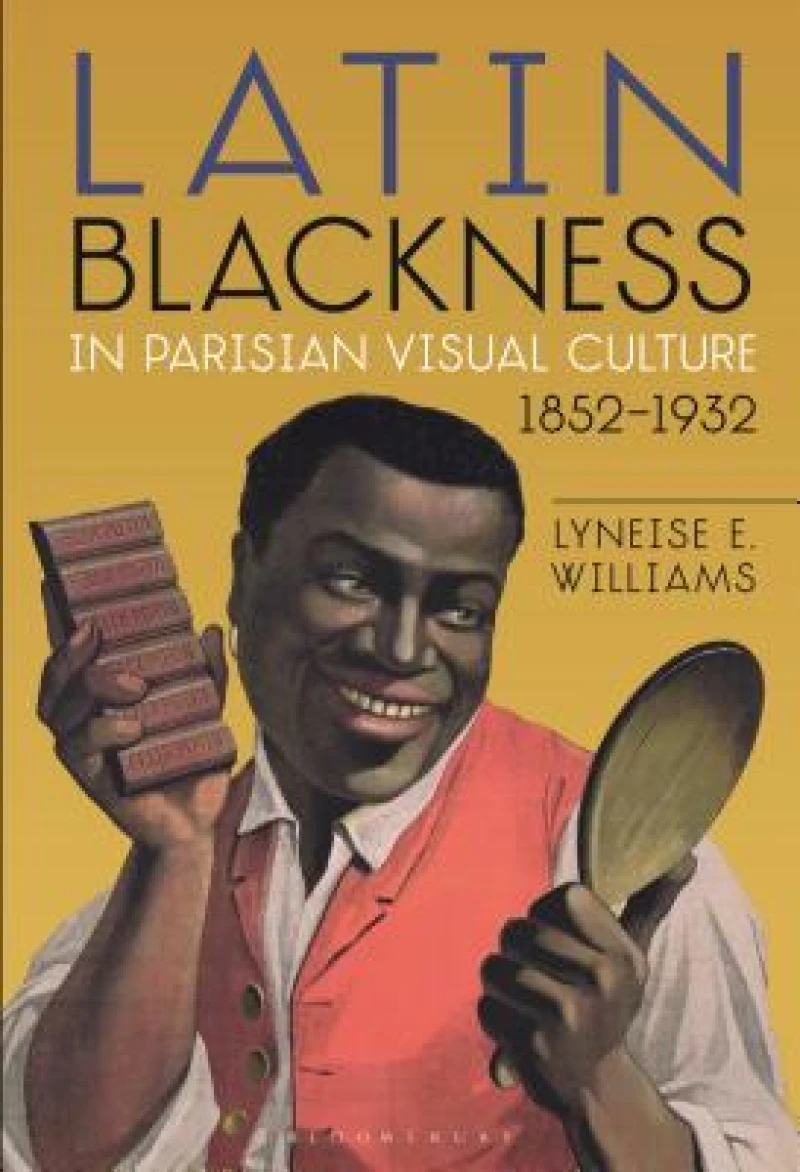
Latin Blackness in Parisian Visual Culture, 1852-1932 examines an understudied visual language used to portray Latin Americans in mid-19th to early 20th-century Parisian popular visual media. The term ‘Latinize’ is introduced to connect France’s early 19th-century endeavors to create “Latin America,” an expansion of the French empire into the Latin-language based Spanish and Portuguese Americas, to its perception of this population. Latin-American elites traveler to Paris in the 1840s from their newly independent nations were denigrated in representations rather than depicted as equals in a developing global economy. Darkened skin, etched onto images of Latin Americans of European descent mitigated their ability to claim the privileges of their ancestral heritage. Whitened skin, among other codes, imposed on turn-of-the-20th-century Black Latin Americans in Paris tempered their Blackness and rendered them relatively assimilatable compared to colonial Africans, Blacks from the Caribbean, and African Americans. After identifying mid-to-late 19th-century Latinizing codes, the study focuses on shifts in latinizing visuality between 1890-1933 in three case studies: the depictions of popular Cuban circus entertainer Chocolat; representations of Panamanian World Bantamweight Champion boxer Alfonso Teofilo Brown; and paintings of Black Uruguayans executed by Pedro Figari, a Uruguayan artist, during his residence in Paris between 1925-1933.

Latin Blackness in Parisian Visual Culture, 1852-1932 examines an understudied visual language used to portray Latin Americans in mid-19th to early 20th-century Parisian popular visual media. The term ‘Latinize’ is introduced to connect France’s early 19th-century endeavors to create “Latin America,” an expansion of the French empire into the Latin-language based Spanish and Portuguese Americas, to its perception of this population.

Latin-American elites traveler to Paris in the 1840s from their newly independent nations were denigrated in representations rather than depicted as equals in a developing global economy. Darkened skin, etched onto images of Latin Americans of European descent mitigated their ability to claim the privileges of their ancestral heritage. Whitened skin, among other codes, imposed on turn-of-the-20th-century Black Latin Americans in Paris tempered their Blackness and rendered them relatively assimilatable compared to colonial Africans, Blacks from the Caribbean, and African Americans.

After identifying mid-to-late 19th-century Latinizing codes, the study focuses on shifts in latinizing visuality between 1890-1933 in three case studies: the depictions of popular Cuban circus entertainer Chocolat; representations of Panamanian World Bantamweight Champion boxer Alfonso Teofilo Brown; and paintings of Black Uruguayans executed by Pedro Figari, a Uruguayan artist, during his residence in Paris between 1925-1933.


Get Latin Blackness in Parisian Visual Culture, 1852-1932 by at the best price and quality guaranteed only at Werezi Africa's largest book ecommerce store. The book was published by Bloomsbury Publishing PLC and it has pages.


Mind, Body, & Spirit

Price

Ksh 23,300.00

Shopping Cart

Africa largest book store

Sub Total:
Ebooks

Digital Library
Coming Soon

Our digital collection is currently being curated to ensure the best possible reading experience on Werezi. We'll be launching our Ebooks platform shortly.