

Book Details
Format
Paperback / softback
ISBN-10
1441927042
ISBN-13
9781441927040
Edition
Softcover reprint of hardcover 1st ed. 2009
Publisher
Springer-Verlag New York Inc.
Imprint
Springer-Verlag New York Inc.
Country of Manufacture
GB
Country of Publication
GB
Publication Date
Oct 29th, 2010
Print length
305 Pages
Weight
490 grams
Dimensions
15.70 x 23.40 x 2.10 cms
Product Classification:
Algebra
KSh 9,900.00
Currently unavailable
0 in stock
Delivery Location
Delivery fee: Select location
Secure
Quality
Fast
Lattice theory began in the early 1890s, when Richard Dedekind wanted to know the answer to the following question: Given three subgroups EF , and G of an abelian group K, what is the largest number of distinct subgroups that can be formed using these subgroups and the operations of intersection and sum (join), as in E?FßÐE?FÑ?GßE?ÐF?GÑ and so on?
This book is intended to be a thorough introduction to the subject of order and lattices, with an emphasis on the latter. It can be used for a course at the graduate or advanced undergraduate level or for independent study. Prerequisites are kept to a minimum, but an introductory course in abstract algebra is highly recommended, since many of the examples are drawn from this area. This is a book on pure mathematics: I do not discuss the applications of lattice theory to physics, computer science or other disciplines. Lattice theory began in the early 1890s, when Richard Dedekind wanted to know the answer to the following question: Given three subgroups EF , and G of an abelian group K, what is the largest number of distinct subgroups that can be formed using these subgroups and the operations of intersection and sum (join), as in E?FßÐE?FÑ?GßE?ÐF?GÑ and so on? In lattice-theoretic terms, this is the number of elements in the relatively free modular lattice on three generators. Dedekind [15] answered this question (the answer is #)) and wrote two papers on the subject of lattice theory, but then the subject lay relatively dormant until Garrett Birkhoff, Oystein Ore and others picked it up in the 1930s. Since then, many noted mathematicians have contributed to the subject, including Garrett Birkhoff, Richard Dedekind, Israel Gelfand, George Grätzer, Aleksandr Kurosh, Anatoly Malcev, Oystein Ore, Gian-Carlo Rota, Alfred Tarski and Johnny von Neumann.
Get Lattices and Ordered Sets by Steven Roman at the best price and quality guaranteed only at Werezi Africa's largest book ecommerce store. The book was published by Springer-Verlag New York Inc. and it has 305 pages.
Customers Who Bought This Also Bought

Locally Flat Embeddings of 3-Manifolds in S4
KSh 8,100.00

Advanced Problems in Mathematics
KSh 4,800.00

Algebra and Discrete Mathematics for Economics
KSh 13,150.00

Sets and Groups
KSh 18,600.00

Operator Algebras
KSh 32,400.00
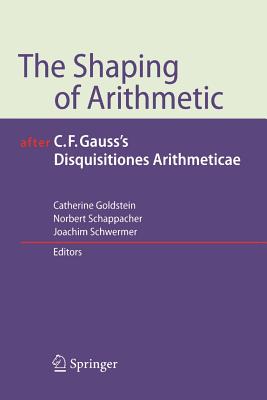
The Shaping of Arithmetic after C.F. Gauss''s Disquisitiones Arithmeticae
KSh 16,200.00

Higher Category Theory
KSh 20,000.00

Abstract Algebra
KSh 16,200.00

Residues and Duality for Projective Algebraic Varieties
KSh 10,600.00
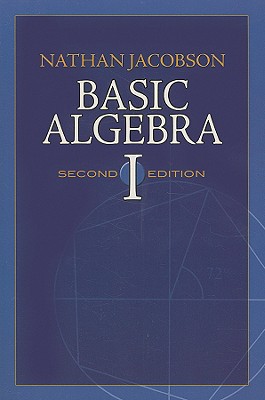
Basic Algebra I
KSh 4,500.00

Handbook of Tilting Theory
KSh 17,100.00

Advances in Matrix Inequalities
KSh 19,800.00
More by Steven Roman

An Introduction to the Language of Category Theory
KSh 10,800.00
Writing Word Macros
KSh 7,200.00
The Umbral Calculus
KSh 2,250.00

An Introduction to Catalan Numbers
KSh 6,500.00
Access Database Design & Programming
KSh 5,750.00
Advanced Linear Algebra
KSh 11,900.00

VB NET Language Pocket Reference
KSh 1,600.00
More in This Genre
Locally Flat Embeddings of 3-Manifolds in S4
KSh 8,100.00
Advanced Problems in Mathematics
KSh 4,800.00
Algebra and Discrete Mathematics for Economics
KSh 13,150.00
Sets and Groups
KSh 18,600.00
Operator Algebras
KSh 32,400.00
The Shaping of Arithmetic after C.F. Gauss''s Disquisitiones Arithmeticae
KSh 16,200.00
