
Cart 0
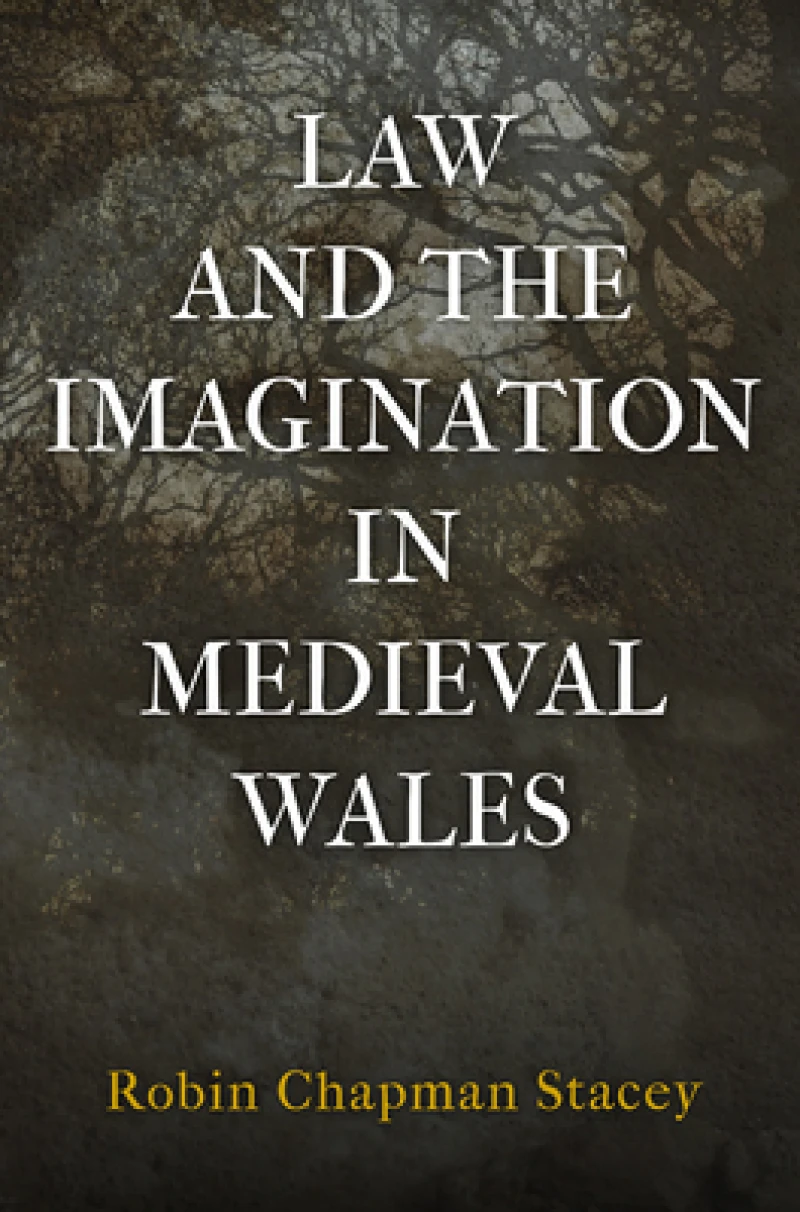
Law and the Imagination in Medieval Wales
Click to zoom

Share this book

Law and the Imagination in Medieval Wales

Book Details

Format Hardback or Cased Book
ISBN-10 0812250516
ISBN-13 9780812250510
Publisher University of Pennsylvania Press
Imprint University of Pennsylvania Press
Country of Manufacture GB
Country of Publication GB
Publication Date Oct 19th, 2018
Print length 344 Pages
Weight 696 grams
Dimensions 16.20 x 23.80 x 3.20 cms
Ksh 13,700.00
Werezi Extended Catalogue Delivery in 28 days

Delivery Location

Delivery fee: Select location

Delivery in 28 days

Secure
Quality
Fast
In Law and the Imagination in Medieval Wales, Robin Chapman Stacey explores the idea of law as a form of political fiction: a body of literature that blurs the lines generally drawn between the legal and literary genres. She argues that for jurists of thirteenth-century Wales, legal writing was an intensely imaginative genre, one acutely responsive to nationalist concerns and capable of reproducing them in sophisticated symbolic form. She identifies narrative devices and tropes running throughout successive revisions of legal texts that frame the body as an analogy for unity and for the court, that equate maleness with authority and just rule and femaleness with its opposite, and that employ descriptions of internal and external landscapes as metaphors for safety and peril, respectively. Historians disagree about the context in which the lawbooks of medieval Wales should be read and interpreted. Some accept the claim that they originated in a council called by the tenth-century king Hywel Dda, while others see them less as a repository of ancient custom than as the Welsh response to the general resurgence in law taking place in western Europe. Stacey builds on the latter approach to argue that whatever their origins, the lawbooks functioned in the thirteenth century as a critical venue for political commentary and debate on a wide range of subjects, including the threat posed to native independence and identity by the encroaching English; concerns about violence and disunity among the native Welsh; abusive behavior on the part of native officials; unwelcome changes in native practice concerning marriage, divorce, and inheritance; and fears about the increasing political and economic role of women.

In Law and the Imagination in Medieval Wales, Robin Chapman Stacey explores the idea of law as a form of political fiction: a body of literature that blurs the lines generally drawn between the legal and literary genres. She argues that for jurists of thirteenth-century Wales, legal writing was an intensely imaginative genre, one acutely responsive to nationalist concerns and capable of reproducing them in sophisticated symbolic form. She identifies narrative devices and tropes running throughout successive revisions of legal texts that frame the body as an analogy for unity and for the court, that equate maleness with authority and just rule and femaleness with its opposite, and that employ descriptions of internal and external landscapes as metaphors for safety and peril, respectively.
Historians disagree about the context in which the lawbooks of medieval Wales should be read and interpreted. Some accept the claim that they originated in a council called by the tenth-century king Hywel Dda, while others see them less as a repository of ancient custom than as the Welsh response to the general resurgence in law taking place in western Europe. Stacey builds on the latter approach to argue that whatever their origins, the lawbooks functioned in the thirteenth century as a critical venue for political commentary and debate on a wide range of subjects, including the threat posed to native independence and identity by the encroaching English; concerns about violence and disunity among the native Welsh; abusive behavior on the part of native officials; unwelcome changes in native practice concerning marriage, divorce, and inheritance; and fears about the increasing political and economic role of women.


Get Law and the Imagination in Medieval Wales by at the best price and quality guaranteed only at Werezi Africa's largest book ecommerce store. The book was published by University of Pennsylvania Press and it has pages.


Mind, Body, & Spirit

Price

Ksh 13,700.00

Shopping Cart

Africa largest book store

Sub Total:
Ebooks

Digital Library
Coming Soon

Our digital collection is currently being curated to ensure the best possible reading experience on Werezi. We'll be launching our Ebooks platform shortly.