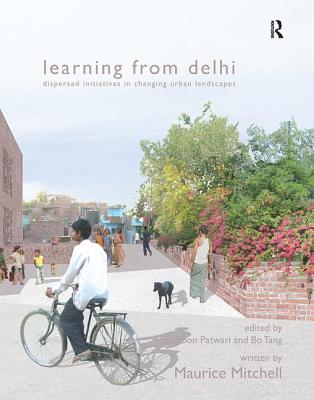
Learning from Delhi : Dispersed Initiatives in Changing Urban Landscapes
Book Details
Format
Paperback / softback
ISBN-10
1409401022
ISBN-13
9781409401025
Publisher
Taylor & Francis Ltd
Imprint
Routledge
Country of Manufacture
GB
Country of Publication
GB
Publication Date
Dec 23rd, 2010
Print length
322 Pages
Weight
1,198 grams
Dimensions
28.00 x 22.20 x 1.90 cms
KSh 15,000.00
Currently unavailable
0 in stock
Delivery Location
Delivery fee: Select location
Secure
Quality
Fast
Based on a course run by the London Metropolitan University School of Architecture, in which students produce schemes from research undertaken during field trips to India, this title provides a comprehensive review of the course and of the schemes produced since 2002, and argues the value of linking practical projects with education in the studio.
The inflexibility of modern urban planning, which seeks to determine the activities of urban inhabitants and standardise everyday city life, is challenged by the unstoppable organic growth of illegal settlements. In rapidly expanding cities, issues of continuity with local traditions, local conditions and local ways of working are juxtaposed with those of abrupt change due to emergency, reaction to modernity, environmental degradation, global market forces and global technological imperatives to make efforts to control by physical planning redundant as soon as they are enacted. In most third world cities there is little social welfare and almost no attempt at social housing. The urban poor must still house themselves with little or no state help to procure land or infrastructure. Not having a legal existence, ''slums'' are automatically swept away to create a ''tabula rasa'' prior to a complete new build for those who can afford the full cost. The notion of upgrading the existing built environment, has hardly entered the official planning vocabulary. Since 2002, both Diploma and latterly Degree students from London Metropolitan University Department of Architecture and Spatial Design have produced schemes from research work generated during an annual field trip to India. Work is focused on situations where rapid cultural and technical change is affecting traditional or transitional communities who have access to only limited resources. Sites have included post earthquake desert locations in Gujarat, under-serviced urban slums in Delhi, dense traditional city landscapes in Meerut and the integration of Marwari nomads into a settlement in Agra. This has proved a stimulating and provocative academic learning environment producing a range of innovative work. Some of the students involved have been awarded RIBA medals and other prestigious student prizes. In the course of this enterprise, links with Indian non-government organisations and architectural schools have developed providing a wealth of opportunity for further work, including a new MA and, while a first live project which will provide sanitation to a low income urban village in Agra is nearing completion, two other live projects: for primary education in a stone quarry near Mumbai and for a housing cooperative in north west Delhi, are just beginning. The course has been ground breaking and innovative in this area in that it seeks first to understand the cultural and physical patterns of old city labyrinths and illegal urban settlements before, and as an aid to, intervention. Extended physical and cultural surveys which up date the ''diagnostic'' surveys first employed by Patrick Geddes in the early 20th century are carried out by the students. By understanding the historical, cultural and physical factors which underlie the current city fabric, students are able to propose and validate a range of schemes from simple conservative surgery carried out by the community alone, to working alongside cultures of resistance to provide alternatives to planned projects. They have also shown how major infrastructure projects can be tweaked in practice to add greater potential to those who use them. Unlike master planning this understanding does not seek to lay down a fossilised grid within which inhabitants must fit themselves. Rather than this, students design using a narrative approach to frame, capture and harness (however fleetingly) moments from the everyday to use as building blocks for their imagined proposals. Their schemes show how an ''untidy'' mix of the old and the new, of memory and aspiration can, in a spirit of experiment and curiosity, give unique identity to place. Cities are in a process of constant renewal. The piecemeal reuse and adaptation of the existing urban fabric in an attempt to match the changing aspirations of its inhabitants is cost effective, environmentally sustainable and appropriate. The book is about this increasingly vital type of architectural work. It is also a testimony to the value of linking real live projects with education in the studio. Whilst primarily a review of the work of the studio in India, it will serve as essential theoretical and practical guidance to ''thinking global and acting local'' for students and practitioners seeking to study wherever resources are scarce and culture and technology are changing fast. The book is thus of global relevance. The publication will illustrate and annotate selected student schemes and place them within a critical theoretical framework. It will trace the background to the studio work, review working methods and, through a series of essays, reflect on themes for studio endeavour and its application to live projects for students and practitioners working with urban settlements throughout the world.
Get Learning from Delhi by Written by Maurice Mitchell at the best price and quality guaranteed only at Werezi Africa's largest book ecommerce store. The book was published by Taylor & Francis Ltd and it has 322 pages.
Customers Who Bought This Also Bought
Architecture – Form, Space, & Order
KSh 8,700.00
In Fine Detail: Perspective
KSh 3,700.00
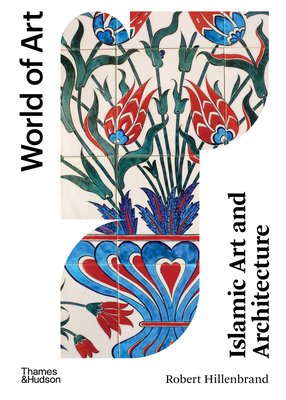
Islamic Art and Architecture
KSh 3,600.00

Classical Architecture
KSh 8,700.00
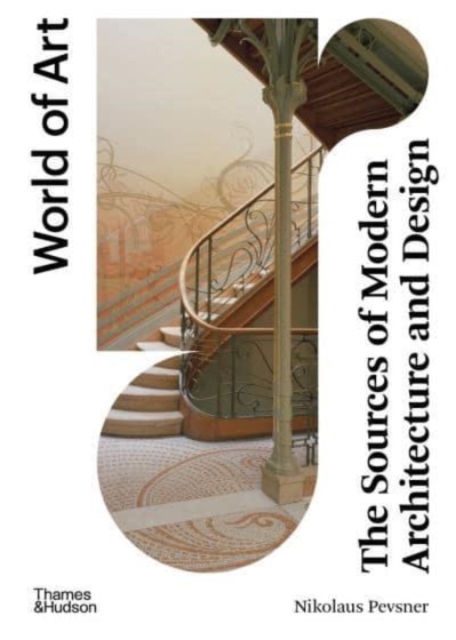
The Sources of Modern Architecture and Design
KSh 3,400.00
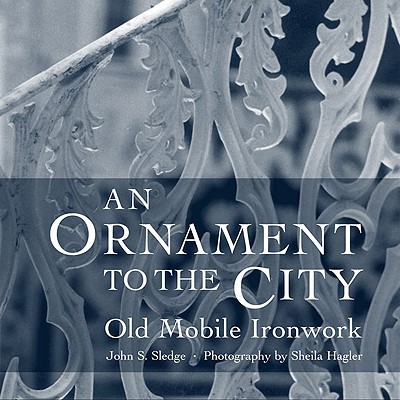
An Ornament to the City
KSh 10,450.00

Frank Lloyd Wright Designs
KSh 18,550.00
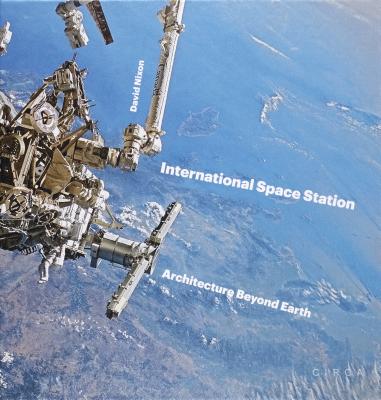
International Space Station
KSh 11,700.00
Colorful Cities
KSh 2,050.00
The Culture Factory
KSh 3,600.00
American Renaissance
KSh 18,700.00

Zürich Primer
KSh 8,900.00