
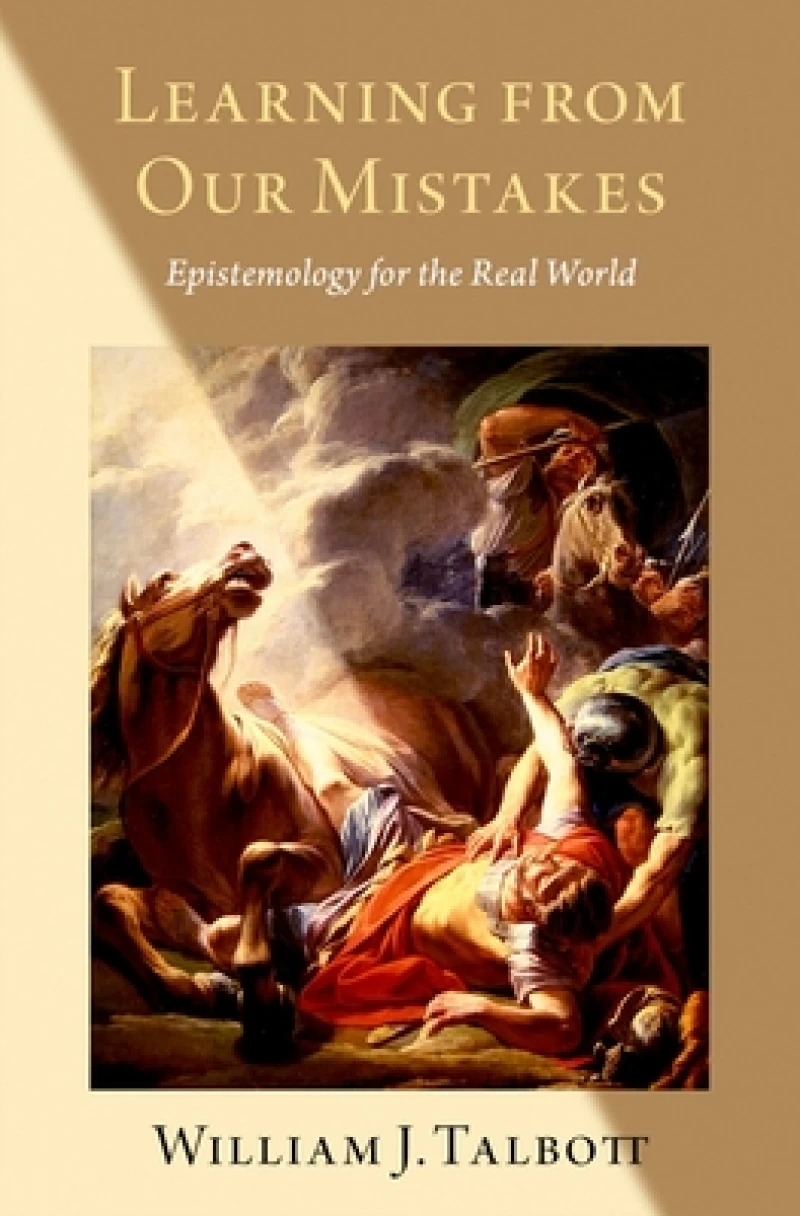
Learning from Our Mistakes : Epistemology for the Real World
Book Details
Format
Hardback or Cased Book
ISBN-10
0197567657
ISBN-13
9780197567654
Publisher
Oxford University Press Inc
Imprint
Oxford University Press Inc
Country of Manufacture
US
Country of Publication
GB
Publication Date
Nov 22nd, 2021
Print length
368 Pages
Weight
635 grams
Dimensions
16.30 x 24.10 x 3.30 cms
Ksh 20,000.00
Werezi Extended Catalogue
0 in stock
Delivery Location
Delivery fee: Select location
Secure
Quality
Fast
In Learning from Our Mistakes: Epistemology for the Real World, William J. Talbott provides a new framework for understanding the history of Western epistemology and uses it to propose a new way of understanding rational belief that can be applied to pressing social and political issues. This framework is used to articulate a new theory of prejudice and a new diagnosis of the sources of inequity in the U.S. criminal justice system, as well as insight into the proliferation of tribal and fascist epistemologies based on alt-facts and alt-truth.
In Learning from Our Mistakes: Epistemology for the Real World, William J. Talbott provides a new framework for understanding the history of Western epistemology and uses it to propose a new way of understanding rational belief that can be applied to pressing social and political issues.Talbott''s new model of rational belief is not a model of a theorem prover in mathematics – It is a model of a good learner. Being a good learner requires sensitivity to clues, the imaginative ability to generate alternative explanatory narratives that fit the clues, and the ability to select the most coherent explanatory narrative. Sensitivity to clues requires sensitivity not only to evidence that supports one''s own beliefs, but also to evidence that casts doubt on them. One of the most important characteristics of a good learner is the ability to correct mistakes.From this model, Talbott articulates nine principles that help to explain the difference between rational and irrational belief. Talbott contrasts his approach with the approach of historically important philosophers, including Socrates, Plato, Aristotle, Hume, Kant, Wittgenstein, and Kuhn, as well as with a range of contemporary approaches, including pragmatism, Bayesianism, and naturalism.On the basis of his model of rational belief, Talbott articulates a new theory of prejudice, which he uses to help diagnose the sources of inequity in the U.S. criminal justice system, as well as to provide insight into the proliferation of tribal and fascist epistemologies based on alt-facts and alt-truth. Learning from Our Mistakes offers a new lens through which to interpret the history of Western epistemology and analyze the complicated social and political phenomena facing us today.
Get Learning from Our Mistakes by at the best price and quality guaranteed only at Werezi Africa's largest book ecommerce store. The book was published by Oxford University Press Inc and it has pages.

