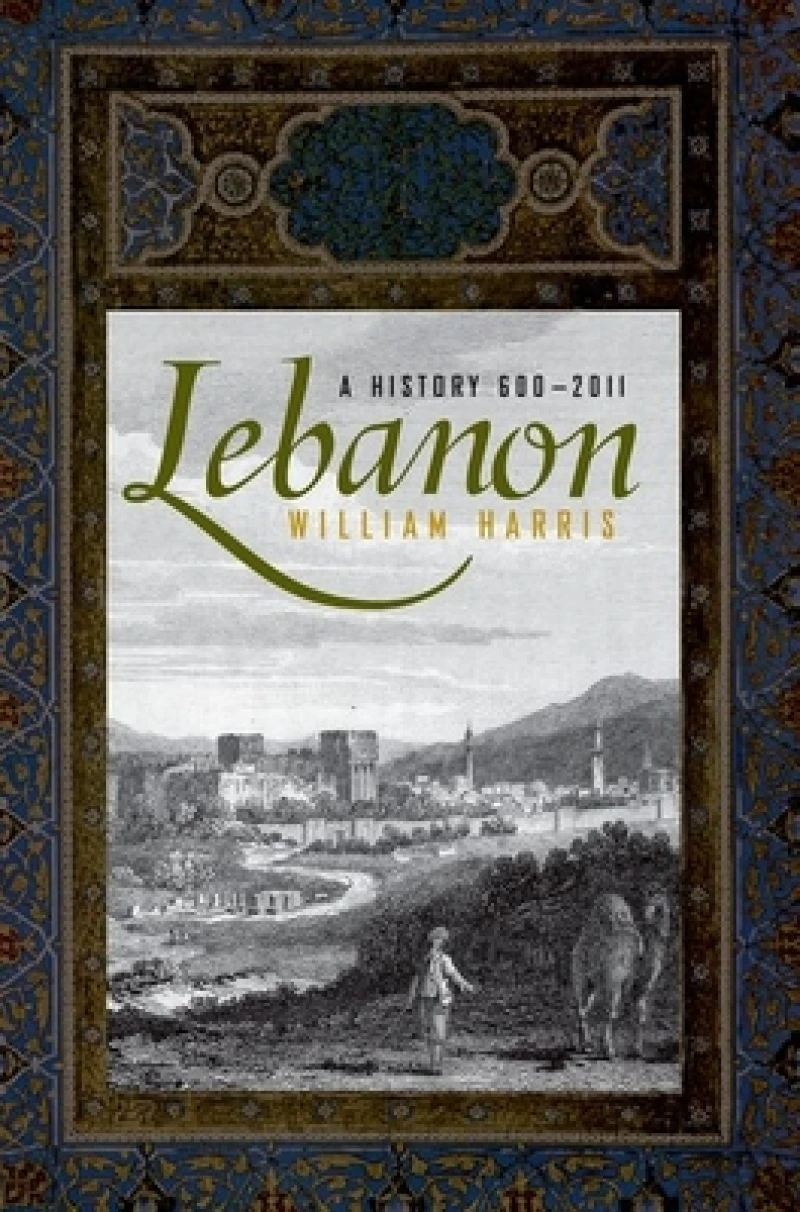
Lebanon : A History, 600 - 2011
Book Details
Format
Paperback / Softback
Book Series
Studies in Middle Eastern History
ISBN-10
0190217839
ISBN-13
9780190217839
Publisher
Oxford University Press Inc
Imprint
Oxford University Press Inc
Country of Manufacture
GB
Country of Publication
GB
Publication Date
Jan 15th, 2015
Print length
400 Pages
Weight
644 grams
Dimensions
15.70 x 23.50 x 2.20 cms
Ksh 8,600.00
Temporarily out of stock, due soon
0 in stock
Delivery Location
Delivery fee: Select location
Secure
Quality
Fast
The book explores the affairs of Mount Lebanon and its surrounds through fourteen centuries, beginning with the emergence of its Christian, Muslim and Islamic-derived communities between the sixth and eleventh centuries. Against this backdrop, it interprets the modern republic of Lebanon from Ottoman antecedents to present day crises.
In this impressive synthesis, William Harris narrates the history of the sectarian communities of Mount Lebanon and its vicinity. He offers a fresh perspective on the antecedents of modern multi-communal Lebanon, tracing the consolidation of Lebanon''s Christian, Muslim, and Islamic derived sects from their origins between the sixth and eleventh centuries. The identities of Maronite Christians, Twelver Shia Muslims, and Druze, the mountain communities, developed alongside assertions of local chiefs under external powers from the Umayyads to the Ottomans. The chiefs began interacting in a common arena when Druze lord Fakhr al-Din Ma''n achieved domination of the mountain within the Ottoman imperial framework in the early seventeenth century. Harris knits together the subsequent interplay of the elite under the Sunni Muslim Shihab relatives of the Ma''ns after 1697 with demographic instability as Maronites overtook Shia as the largest community and expanded into Druze districts. By the 1840s many Maronites conceived the common arena as their patrimony. Maronite/Druze conflict ensued. Modern Lebanon arose out of European and Ottoman intervention in the 1860s to secure sectarian peace in a special province. In 1920, after the Ottoman collapse, France and the Maronites enlarged the province into the modern country, with a pluralism of communal minorities headed by Maronite Christians and Sunni Muslims. The book considers the flowering of this pluralism in the mid-twentieth century, and the strains of new demographic shifts and of social resentment in an open economy. External intrusions after the 1967 Arab-Israeli war rendered Lebanon''s contradictions unmanageable and the country fell apart. Harris contends that Lebanon has not found a new equilibrium and has not transcended its sects. In the early twenty-first century there is an uneasy duality: Shia have largely recovered the weight they possessed in the sixteenth century, but Christians, Sunnis, and Druze are two-thirds of the country. This book offers readers a clear understanding of how modern Lebanon acquired its precarious social intricacy and its singular political character.
Get Lebanon by at the best price and quality guaranteed only at Werezi Africa's largest book ecommerce store. The book was published by Oxford University Press Inc and it has pages.