

Legal Pluralism Explained : History, Theory, Consequences
Book Details
Format
Hardback
ISBN-10
019086155X
ISBN-13
9780190861551
Publisher
Oxford University Press Inc
Imprint
Oxford University Press Inc
Country of Manufacture
US
Country of Publication
GB
Publication Date
May 14th, 2021
Print length
230 Pages
Weight
474 grams
Dimensions
16.30 x 24.60 x 1.90 cms
Product Classification:
Jurisprudence & philosophy of lawMethods, theory and philosophy of lawComparative law
KSh 20,250.00
Temporarily out of stock, due soon
0 in stock
Delivery Location
Delivery fee: Select location
Secure
Quality
Fast
Legal pluralism involves the coexistence of multiple forms of law. This involves state law, international law, transnational law, customary law, religious law, indigenous law, and the law of distinct ethnic or cultural communities. Legal pluralism is a subject of discussion today in legal anthropology, legal sociology, legal history, postcolonial legal studies, women''s rights and human rights, comparative law, international law, transnational law, European Union law, jurisprudence, and law and development scholarship.A great deal of confusion and theoretical disagreement surrounds discussions of legal pluralism—which this book aims to clarify and help resolve. Drawing on historical and contemporary studies—including the Medieval period, the Ottoman Empire, postcolonial societies, Native peoples, Jewish and Islamic law, Western state legal systems, transnational law, as well as others—it shows that the dominant image of the state with a unified legal system exercising a monopoly over law is, and has always been, false and misleading. State legal systems are internally pluralistic in various ways and multiple manifestations of law coexist in every society. This book explains the underlying reasons for and sources of legal pluralism, identifies its various consequences, uncovers its conceptual and normative implications, and resolves current theoretical disputes in ways that are useful for social scientists, theorists, jurists, and law and development scholars and practitioners.
Get Legal Pluralism Explained by Brian Z. Tamanaha at the best price and quality guaranteed only at Werezi Africa's largest book ecommerce store. The book was published by Oxford University Press Inc and it has 230 pages.
Customers Who Bought This Also Bought

On Law, Morality, and Politics
KSh 3,800.00

Information, Freedom and Property
KSh 30,950.00

Weimar
KSh 5,400.00

Province of Jurisprudence Determined and The Uses of the Study of Jurisprudence
KSh 3,100.00

Trial Consulting
KSh 13,050.00

Rethinking Normativity in the Law and Beyond
KSh 16,750.00

On Interpretation
KSh 6,200.00

The Limits of the Rule of Law in China
KSh 7,850.00
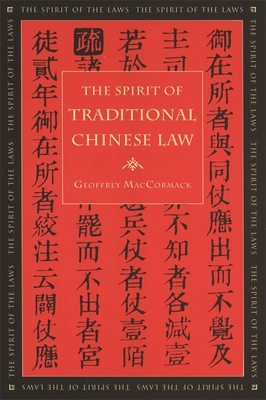
The Spirit of Traditional Chinese Law
KSh 11,500.00

Neglected Policies – Constitutional Law and Legal Commentary as Civic Education
KSh 4,850.00

Jurisdiction in Deleuze: The Expression and Representation of Law
KSh 30,950.00

Arguing About Law
KSh 30,950.00
More by Brian Z. Tamanaha

Law as a Means to an End
KSh 19,600.00

A Realistic Theory of Law
KSh 6,100.00

On the Rule of Law
KSh 7,900.00

Failing Law Schools
KSh 4,700.00

Law as a Means to an End
KSh 7,900.00

Sociological Approaches to Theories of Law
KSh 3,250.00

Realistic Socio-Legal Theory
KSh 13,700.00

A General Jurisprudence of Law and Society
KSh 11,450.00

Beyond the Formalist–Realist Divide – The Role of Politics in Judging
KSh 6,300.00

On the Rule of Law
KSh 19,100.00

Legal Pluralism Explained
KSh 5,800.00

A Realistic Theory of Law
KSh 20,500.00