

Legitimacy Gap : Secularism, Religion, and Culture in Comparative Constitutional Law
Book Details
Format
Hardback
ISBN-10
0198803826
ISBN-13
9780198803829
Publisher
Oxford University Press
Imprint
Oxford University Press
Country of Manufacture
GB
Country of Publication
GB
Publication Date
Jul 13th, 2017
Print length
242 Pages
Weight
526 grams
Dimensions
24.30 x 16.50 x 2.20 cms
Product Classification:
Social & political philosophyReligious institutions & organizationsComparative politicsConstitution: government & the stateConstitution: government and the statePolitical structures / systems: democracyPolitical structures: democracyJurisprudence & philosophy of lawMethods, theory and philosophy of lawComparative lawLaw & societyLaw and society, sociology of lawInternational human rights lawPublic international law: human rightsHuman rights & civil liberties lawLaw: Human rights and civil libertiesSocial and political philosophyReligious institutions and organizations
KSh 19,900.00
Currently unavailable
0 in stock
Delivery Location
Delivery fee: Select location
Secure
Quality
Fast
This book addresses the 'legitimacy gap' created by the removal of religion as a source of legitimacy for the foundation of secular states, when many of the world's states are still profoundly religious but require procedural, rather than substantive, grounds for constitutional arrangements.
This book provides an account and explanation of a fundamental dilemma facing secular states: the ''legitimacy gap'' left by the withdrawal of religion as a source of legitimacy. Legitimacy represents a particular problem for the secular state. The ''secular'' in all its manifestations is very much linked to the historical rise of the modern state. It should not be seen as a category that separates culture and religion from politics, but rather as one that links these different dimensions. In the first part of the book, Depaigne explains how modern constitutional law has moved away from a ''substantive'' legitimacy, based in particular on natural law, towards a ''procedural'' legitimacy based on popular sovereignty and human rights. Depaigne examines three case studies of constitutional responses to legitimacy challenges which articulate the three main sources of ''procedural'' legitimacy (people, rights, and culture) in different ways: the ''neutral model'' (constitutions based on the ''displacement of culture''); the ''multicultural model'' (constitutions based on diversity and pluralism); and the ''asymmetric model'' (constitutions based on tradition). Even if secularization can be considered European in its origin, it is best seen today as a global phenomenon, which needs to be approached by taking into account the particular cultural dimension in which it is rooted. Depaigne''s detailed study shows how secularization has moved either towards ''nationalization'' linked to a particular national identity (as in France and, to some extent, in India)-or towards ''de-secularization'', whereby secularism is displaced by particular cultural norms, as in Malaysia.
Get Legitimacy Gap by Vincent Depaigne at the best price and quality guaranteed only at Werezi Africa's largest book ecommerce store. The book was published by Oxford University Press and it has 242 pages.
Customers Who Bought This Also Bought

End of History and the Last Man
KSh 2,700.00

12 Rules for Life
KSh 2,350.00

The 48 Laws of Power
KSh 4,700.00

Second Treatise of Government – Norton Library
KSh 1,600.00

Discipline and Punish
KSh 2,350.00

The Prince The Original Classic
KSh 2,150.00

How to Be a Leader – An Ancient Guide to Wise Leadership
KSh 2,800.00

The Origin of Others
KSh 3,600.00
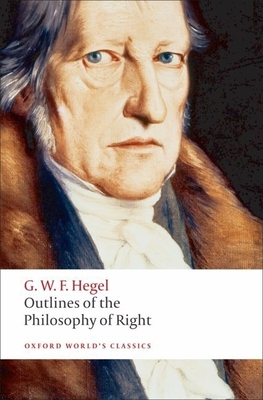
Outlines of the Philosophy of Right
KSh 2,500.00

How Fascism Works
KSh 2,900.00

The Prince
KSh 1,800.00

Who''s Afraid of Gender?
KSh 2,350.00
