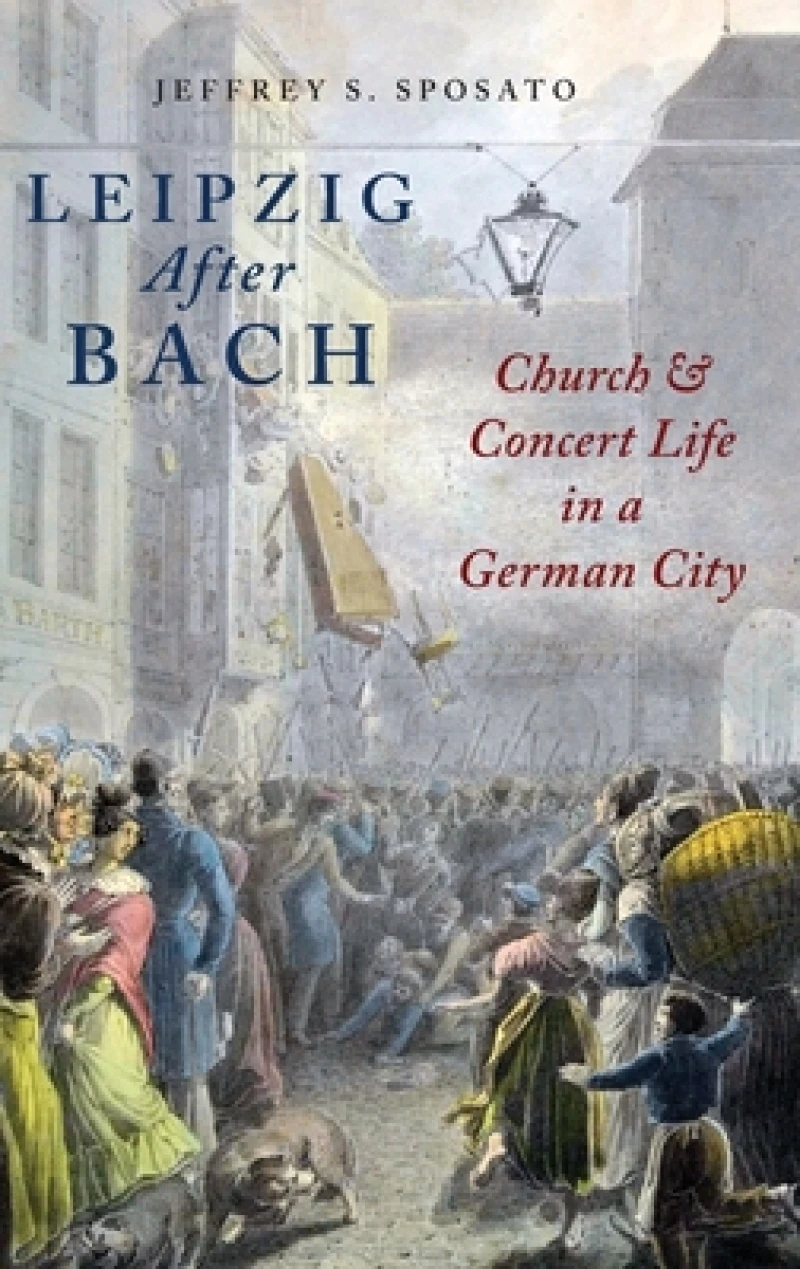
Leipzig After Bach : Church and Concert Life in a German City
Book Details
Format
Hardback or Cased Book
ISBN-10
0190616954
ISBN-13
9780190616953
Publisher
Oxford University Press Inc
Imprint
Oxford University Press Inc
Country of Manufacture
US
Country of Publication
GB
Publication Date
Jun 7th, 2018
Print length
336 Pages
Weight
632 grams
Dimensions
16.70 x 24.30 x 2.70 cms
Product Classification:
Music reviews & criticismSacred & religious musicWorld music
Ksh 16,050.00
Manufactured on Demand
0 in stock
Delivery Location
Delivery fee: Select location
Secure
Quality
Fast
Leipzig, Germany, is best known as the city where renowned composer J. S. Bach worked. But the century after his death in 1750 was critically important as well. This book examines how music in Leipzig responded to repeated threats, including changing middle-class musical tastes and the chaos of the Napoleonic wars.
Leipzig, Germany, is renowned as the city where Johann Sebastian Bach worked as a church musician until his death in 1750, and where Felix Mendelssohn Bartholdy directed the famed Gewandhaus orchestra until his own death in 1847. But the century in between these events was critically important as well. During this period, Leipzig''s church music enterprise was convulsed by repeated external threats-a growing middle class that viewed music as an object of public consumption, religious and political tumult, and the chaos of the Seven Years and Napoleonic wars. Jeffrey S. Sposato''s Leipzig After Bach examines how these forces changed church and concert life in Leipzig. Whereas most European cities saw their public concerts grow out of secular institutions such as a royal court or an opera theater, neither of these existed when Leipzig''s first subscription concert series, the Grosse Concert, was started in 1743. Instead, the city had a thriving Lutheran church-music enterprise that had been brought to its zenith by Bach. Paid subscription concerts therefore found their roots in Leipzig''s church music tradition, with important and unique results. These included a revolving door between the Thomaskantor position and the Gewandhaus directorship, as well as public concerts with a distinctly sacred flavor. Late in the century, as church attendance faltered and demand for subscription concerts rose, the Gewandhaus dominated the musical life of Leipzig, influencing church music programming in turn. Examining liturgical documents, orchestral programs, and dozens of unpublished works of church and concert music, Leipzig After Bach sheds new light on a century that redefined the relationship between sacred and secular musical institutions.
Get Leipzig After Bach by at the best price and quality guaranteed only at Werezi Africa's largest book ecommerce store. The book was published by Oxford University Press Inc and it has pages.