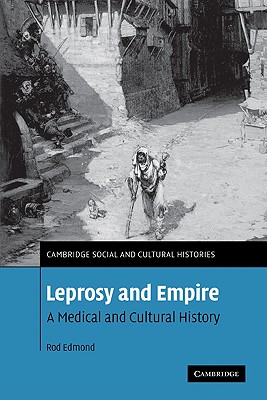
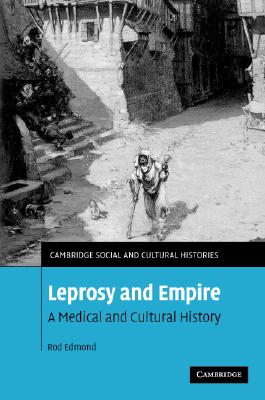
Leprosy and Empire : A Medical and Cultural History
by
Rod Edmond
Book Details
Format
Hardback
Book Series
Cambridge Social and Cultural Histories
ISBN-10
0521865840
ISBN-13
9780521865845
Publisher
Cambridge University Press
Imprint
Cambridge University Press
Country of Manufacture
GB
Country of Publication
GB
Publication Date
Nov 30th, 2006
Print length
266 Pages
Weight
576 grams
Dimensions
22.90 x 15.20 x 1.90 cms
Product Classification:
British EmpireSocial & cultural historyHistory of medicineSocial and cultural history
KSh 17,800.00
Currently unavailable
0 in stock
Delivery Location
Delivery fee: Select location
Secure
Quality
Fast
An interdisciplinary study of why a disease that is so difficult to catch has caused such alarm. It examines how the fear of leprosy was part of nineteenth-century imperial expansion, as colonial officials and missionaries were thought exposed to the risk of infection, which might be carried back to Britain.
An innovative, interdisciplinary study of why leprosy, a disease with a very low level of infection, has repeatedly provoked revulsion and fear. Rod Edmond explores, in particular, how these reactions were refashioned in the modern colonial period. Beginning as a medical history, the book broadens into an examination of how Britain and its colonies responded to the believed spread of leprosy. Across the empire this involved isolating victims of the disease in 'colonies', often on offshore islands. Discussion of the segregation of lepers is then extended to analogous examples of this practice, which, it is argued, has been an essential part of the repertoire of colonialism in the modern period. The book also examines literary representations of leprosy in Romantic, Victorian and twentieth-century writing, and concludes with a discussion of traveller-writers such as R. L. Stevenson and Graham Greene who described and fictionalised their experience of staying in a leper colony.
Get Leprosy and Empire by Rod Edmond at the best price and quality guaranteed only at Werezi Africa's largest book ecommerce store. The book was published by Cambridge University Press and it has 266 pages.
Customers Who Bought This Also Bought

The Finest Hotel in Kabul
KSh 2,150.00

Black Wave
KSh 2,700.00

Migrations
KSh 5,450.00

Art of War / The Book of Lord Shang
KSh 1,100.00

Nexus
KSh 2,350.00

World According to Colour
KSh 2,700.00

Crusade for Justice – The Autobiography of Ida B. Wells, Second Edition
KSh 4,050.00

Modern Classics Road To Wigan Pier
KSh 1,800.00

The Origins of Totalitarianism
KSh 2,700.00

In the Wake
KSh 3,600.00
Question of Palestine
KSh 2,700.00

Palestine
KSh 2,400.00