
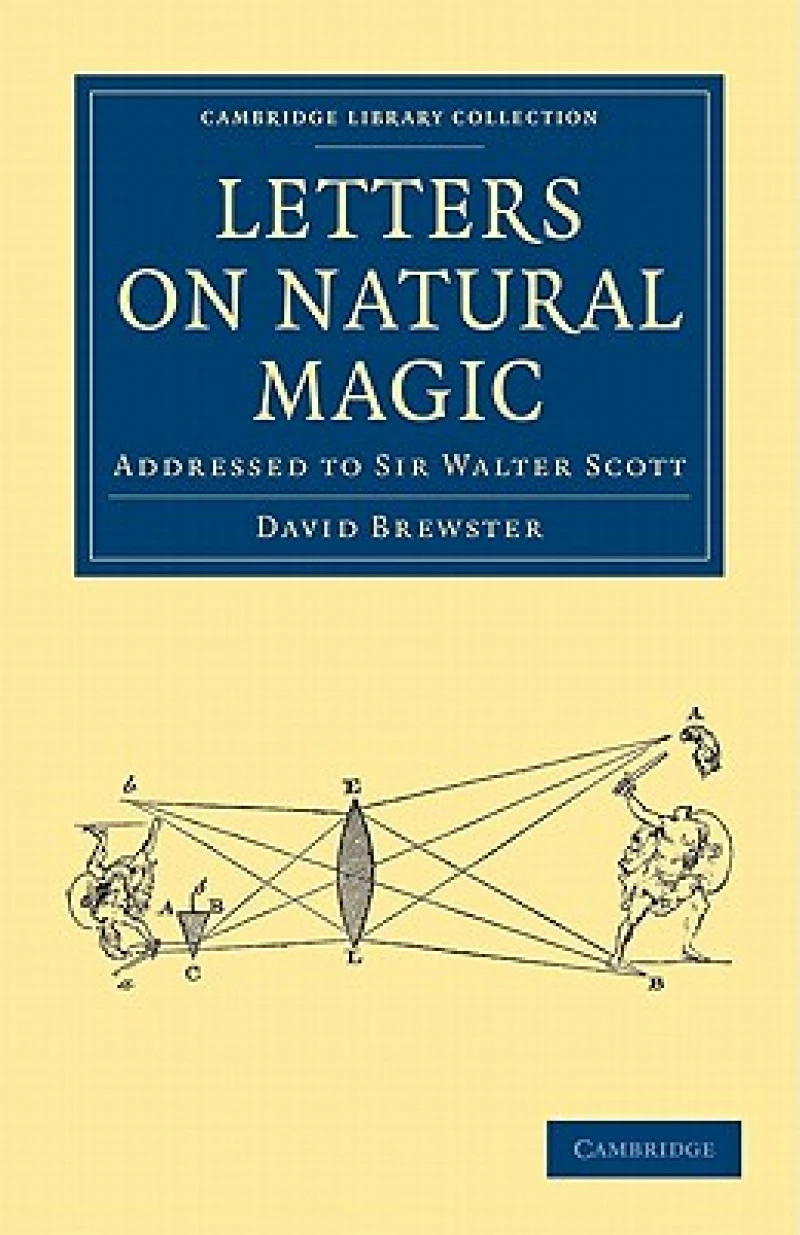
Letters on Natural Magic, Addressed to Sir Walter Scott
Book Details
Format
Paperback / Softback
ISBN-10
1108025552
ISBN-13
9781108025553
Publisher
Cambridge University Press
Imprint
Cambridge University Press
Country of Manufacture
GB
Country of Publication
GB
Publication Date
Jan 27th, 2011
Print length
366 Pages
Weight
470 grams
Dimensions
21.50 x 14.00 x 2.40 cms
Ksh 7,050.00
Manufactured on Demand
0 in stock
Delivery Location
Delivery fee: Select location
Secure
Quality
Fast
Published in 1832 at the request of Sir Walter Scott, this book provides natural explanations for the allegedly supernatural phenomena so popular in the nineteenth century. Brewster, a Scottish natural philosopher and academic, carefully exposes the workings of conjurors by demonstrating the effectiveness of optical illusions and chemical tricks.
Intended as a supplement to Sir Walter Scott's 1830 Letters on Demonology and Witchcraft, this 1832 publication seeks to explain and expose the science behind the alleged 'magic' of spiritualists and conjurors. David Brewster (1781–1868), a Scottish natural philosopher and historian of science, was highly regarded in his lifetime but has since faded into obscurity. Penned at the request of Scott, Brewster's friend and neighbour, this book follows an epistolary structure, consisting of thirteen letters each addressing and exposing different aspects of the alleged supernatural activity, in keeping with the format of Scott's publication. Brewster's subject matter includes optics, magic lanterns, automata, alchemy, fire-breathing, spontaneous combustion, spectral illusions and various other phenomena. In each case he carefully outlines how this 'magic' is created with optical illusion, narcotic drugs, gas inhalation, and chemical tricks. The book offers an intriguing insight into nineteenth-century attitudes towards the supernatural.
Get Letters on Natural Magic, Addressed to Sir Walter Scott by at the best price and quality guaranteed only at Werezi Africa's largest book ecommerce store. The book was published by Cambridge University Press and it has pages.

