
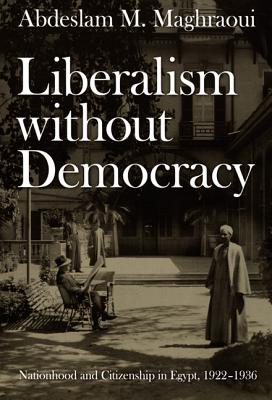
Liberalism Without Democracy : Nationhood and Citizenship in Egypt, 1922–1936
Book Details
Delivery Location
Delivery fee: Select location
In the 1920s and 1930s, Egypt’s reformers equated liberal notions of nationhood and citizenship with European civilization and culture. As Maghraoui demonstrates, in their efforts to achieve liberalization, they sought to align Egypt with the West and to dissociate it from the Arab and Islamic worlds. Egypt’s professionals and leading cultural figures attempted to replace the fez with European-style hats; they discouraged literary critics from studying Arabic poetry, claiming it was alien to Egyptian culture. Why did they feel compelled to degrade local cultures in order to accommodate liberal principles?
Drawing on the thought of Lacan, Fanon, Said, and Bhabha, as well as contemporary political theory, Maghraoui points to liberalism’s inherent contradiction: its simultaneous commitments to individual liberty and colonial conquest. He argues that when Egypt’s reformers embraced the language of liberalism as their own, they adopted social prejudices built into that language. Efforts to achieve liberalization played out-and failed-within the realm of culture, not just within the political arena. Opinions voiced through literary works, cartoons, newspaper articles on controversial social issues, and other forms of cultural expression were ultimately more important to the fate of liberalism in Egypt than were questions of formal political participation and representation. Liberalism without Democracy demonstrates the powerful-and under appreciated-role of language and culture in defining citizenship and political community.
Get Liberalism Without Democracy by Abdeslam M. Maghraoui at the best price and quality guaranteed only at Werezi Africa's largest book ecommerce store. The book was published by Duke University Press and it has 216 pages.
Customers Who Bought This Also Bought

The Second Emancipation – Nkrumah, Pan–Africanism, and Global Blackness at High Tide
KSh 5,650.00
A Modern History of the Somali
KSh 5,300.00
Decolonizing Language and Other Revolutionary Ideas
KSh 2,350.00
Homecoming
KSh 1,800.00
Decolonizing Language and Other Revolutionary Ideas
KSh 3,600.00
Modern Africa
KSh 11,500.00
Histories of the Hanged
KSh 2,700.00
How Europe Underdeveloped Africa
KSh 3,250.00
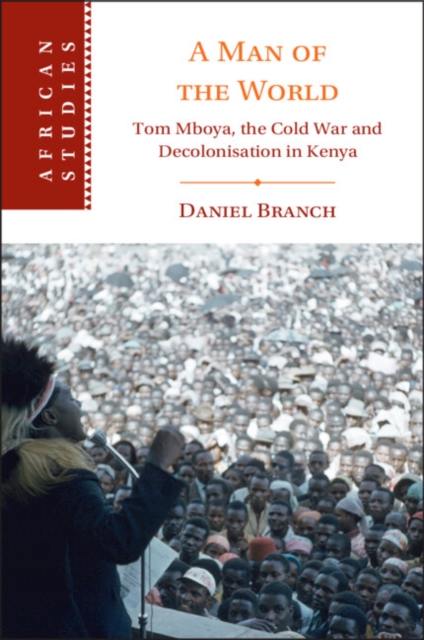
A Man of the World
KSh 5,350.00
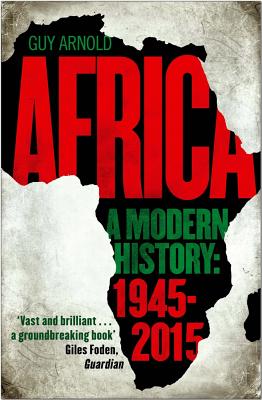
Africa: A Modern History
KSh 8,000.00
There Was a Country
KSh 2,350.00
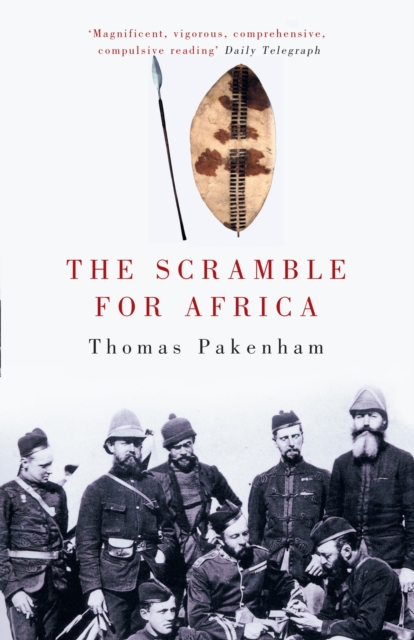
Scramble for Africa
KSh 3,400.00
More in This Genre
The Second Emancipation – Nkrumah, Pan–Africanism, and Global Blackness at High Tide
KSh 5,650.00
A Modern History of the Somali
KSh 5,300.00
Decolonizing Language and Other Revolutionary Ideas
KSh 2,350.00
Homecoming
KSh 1,800.00
Decolonizing Language and Other Revolutionary Ideas
KSh 3,600.00
Modern Africa
KSh 11,500.00
