
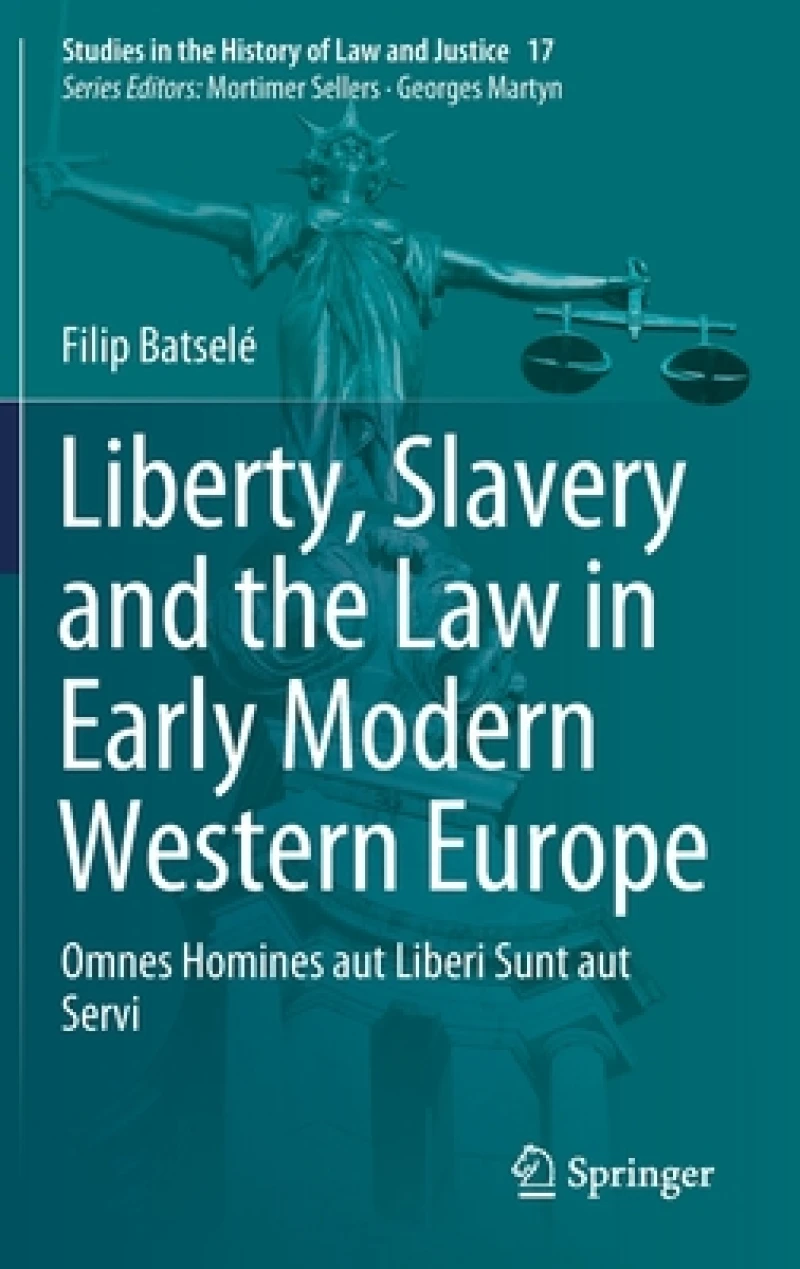
Liberty, Slavery and the Law in Early Modern Western Europe : Omnes Homines aut Liberi Sunt aut Servi
2020 ed.
Book Details
Format
Hardback or Cased Book
Book Series
Studies in the History of Law and Justice
ISBN-10
3030368548
ISBN-13
9783030368548
Edition
2020 ed.
Publisher
Springer Nature Switzerland AG
Imprint
Springer Nature Switzerland AG
Country of Manufacture
GB
Country of Publication
GB
Publication Date
Feb 5th, 2020
Print length
223 Pages
Weight
518 grams
Dimensions
16.30 x 24.10 x 2.20 cms
Ksh 19,800.00
Werezi Extended Catalogue
0 in stock
Delivery Location
Delivery fee: Select location
Secure
Quality
Fast
Secondly, the book assesses the legal origins of the free soil principle in England, France and the Low Countries during the period 1500–1650 and discusses the legal repercussions of slaves coming to England, France and the Low Countries from other countries, where the institution was legally recognized.
This book investigates the legal evolution of the "free soil principle" in England, France and the Low Countries during the Early Modern period (ca. 1500-1800), which essentially stated that, as soon as slaves entered a certain country, they would immediately gain their freedom. This book synthesizes the existing literature on the origins and evolution of the principle, adds new insights by drawing on previously undiscussed primary sources on the development of free soil in the Low Countries and employs a pan-Western, European and comparative approach to identify and explain the differences and similarities in the application of this principle in France, England and the Low Countries.
Divided into four sections, the book begins with a brief introduction to the subject matter, putting it in its historical context. Slavery is legally defined, using the established international law definition, and both the status of slavery in Europe before the Early Modern Period and the Atlantic slave trade are discussed. Secondly, the book assesses the legal origins of the free soil principle in England, France and the Low Countries during the period 1500-1650 and discusses the legal repercussions of slaves coming to England, France and the Low Countries from other countries, where the institution was legally recognized. Thirdly, it addresses the further development of the free soil principle during the period 1650-1800. In the fourth and last section, the book uses the insights gained to provide a pan-Western, European and comparative perspective on the origins and application of the free soil principle in Western Europe. In this regard, it compares the origins of free soil for the respective countries discussed, as well as its application during the heyday of the Atlantic slave trade. This perspective makes it possible to explain some of the divergences in approaches between the countries examined and represents the first-ever full-scale country comparison on this subject in a book.
Get Liberty, Slavery and the Law in Early Modern Western Europe by at the best price and quality guaranteed only at Werezi Africa's largest book ecommerce store. The book was published by Springer Nature Switzerland AG and it has pages.

