
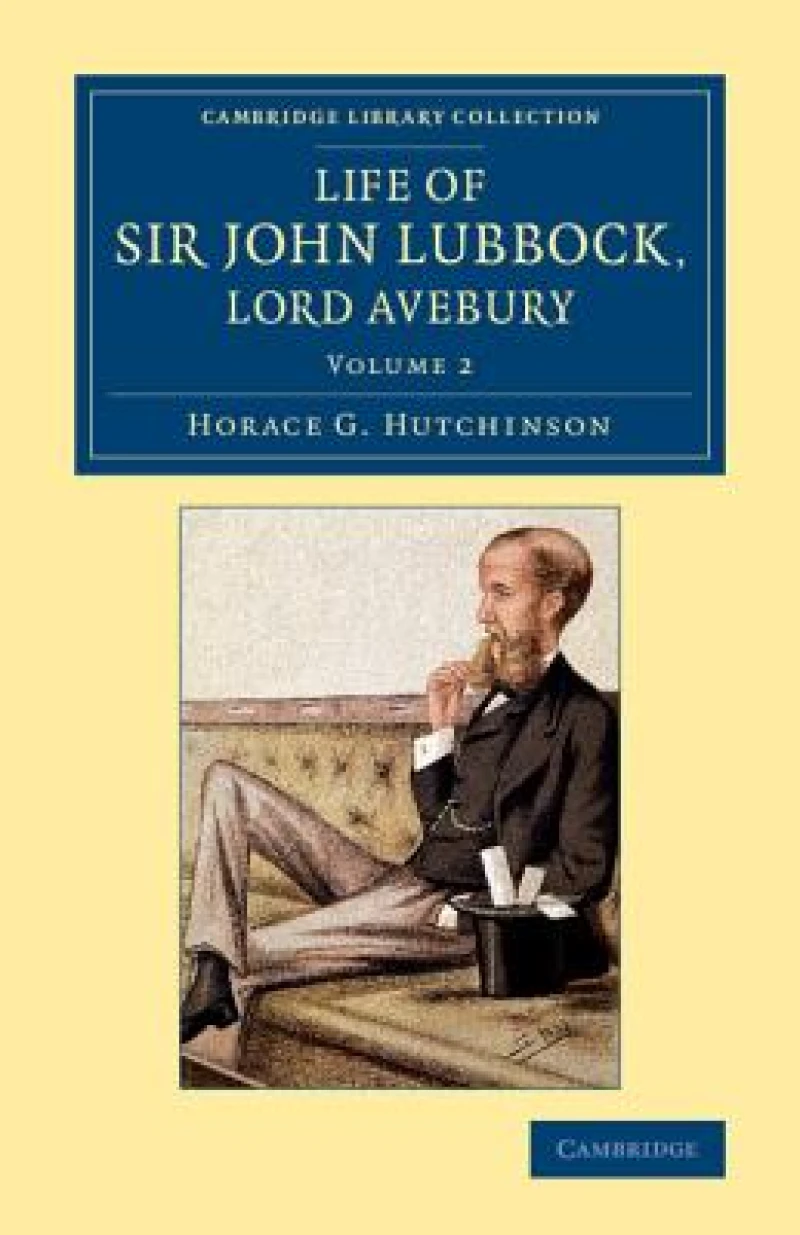
Life of Sir John Lubbock, Lord Avebury
Book Details
Format
Paperback / Softback
ISBN-10
1108076467
ISBN-13
9781108076463
Publisher
Cambridge University Press
Imprint
Cambridge University Press
Country of Manufacture
GB
Country of Publication
GB
Publication Date
Oct 30th, 2014
Print length
356 Pages
Weight
476 grams
Dimensions
14.20 x 21.70 x 2.90 cms
Product Classification:
Economic history
Ksh 6,700.00
Manufactured on Demand
0 in stock
Delivery Location
Delivery fee: Select location
Secure
Quality
Fast
The achievements of the polymath Sir John Lubbock, Lord Avebury (1834–1913) spanned banking, politics and science. This two-volume biography by Horace G. Hutchinson (1859–1932), first published in 1914, traces Lubbock's extraordinary life and career, from the early influence of Charles Darwin to professional, intellectual and philanthropic pursuits.
The achievements of the polymath Sir John Lubbock (1834–1913) spanned banking, politics, science and philanthropy. First published in 1914, this two-volume biography by Horace G. Hutchinson (1859–1932) traces Lubbock's extraordinary life and career. Hutchinson, who knew his subject in later years, paints a highly favourable portrait of Lubbock's varied accomplishments. Notably, Lubbock became a partner of his father's bank at twenty-two, a Member of Parliament in 1870, and in 1900 received the title of Baron Avebury. Tutored in natural history by Charles Darwin in his youth, he remained fascinated by evolutionary theory: it influenced his archaeological and anthropological work, including Pre-Historic Times as Illustrated by Ancient Remains (1865) and The Origin of Civilisation and the Primitive Condition of Man (1870), both reissued in the Cambridge Library Collection. Volume 2 focuses on Lubbock's later life, with Hutchinson remarking that by seventy Lubbock was still politically active and in good health.
Get Life of Sir John Lubbock, Lord Avebury by at the best price and quality guaranteed only at Werezi Africa's largest book ecommerce store. The book was published by Cambridge University Press and it has pages.

