
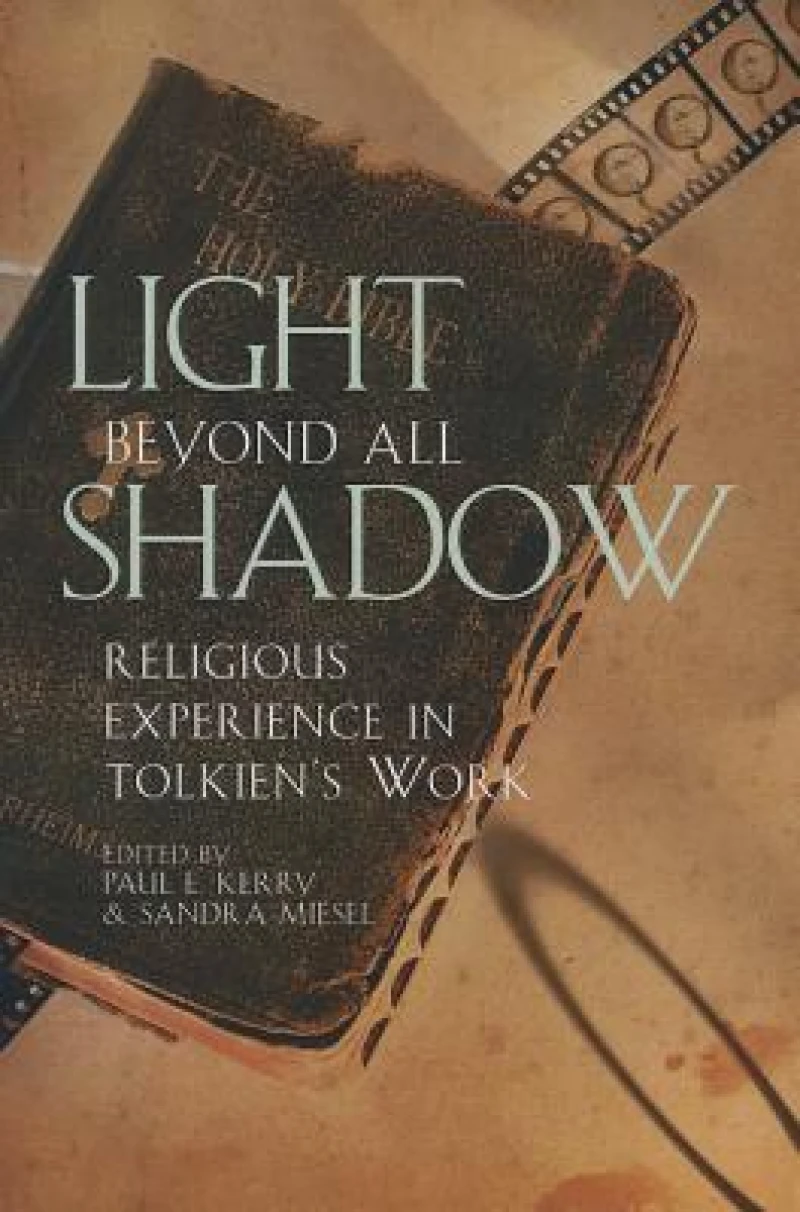
Light Beyond All Shadow : Religious Experience in Tolkien's Work
Book Details
Format
Paperback / Softback
ISBN-10
1611476224
ISBN-13
9781611476224
Publisher
Fairleigh Dickinson University Press
Imprint
Fairleigh Dickinson University Press
Country of Manufacture
US
Country of Publication
GB
Publication Date
Jun 15th, 2013
Print length
234 Pages
Weight
342 grams
Dimensions
22.80 x 14.40 x 2.00 cms
Product Classification:
Literary studies: from c 1900 -
Ksh 9,800.00
Manufactured on Demand
0 in stock
Delivery Location
Delivery fee: Select location
Secure
Quality
Fast
What forms can religious experience take in a world without cult or creed? Organized religion is notably absent from J. R. R. Tolkien's Secondary Universe of elves, dwarves, men and hobbits despite the author's own deep Catholic faith. Tolkien stated that his goal was 'sub-creating' a universe whose natural form of religion would not directly contradict Catholic theology. Essays in Light Beyond All Shadows examine the full sweep of Tolkien's legendarium, not only The Lord of the Rings but also The Hobbit, The Silmarillion and The History of Middle-Earth series plus Peter Jackson's film trilogy. Contributions to Light Beyond All Shadows probe both the mind of the maker and the world he made to uncover some of his fictional strategies, such as communicating through imagery. They suggest that Tolkien's Catholic imagination was shaped by the visual appeal of his church's worship and iconography. They seek other influences in St. Ignatius Loyola's meditation technique and St. Philip Neri's 'Mediterranean' style of Catholicism. They propose that Tolkien communicates his story through Biblical typology familiar in the Middle Ages as well as mythic imagery with both Christian and pagan resonances. They defend his 'comedy of grace' from charges of occultism and Manichaean dualism. They analyze Tolkien's Christian friends the Inklings as a supportive literary community. They show that within Tolkien's world, Nature is the Creator's first book of revelation. Like its earlier companion volume, The Ring and the Cross, edited by Paul E. Kerry, scholarship gathered in Light Beyond All Shadows aids appreciation of what is real, meaningful, and truthful in Tolkien's work.
What forms can religious experience take in a world without cult or creed? Organized religion is notably absent from J. R. R. Tolkien''s Secondary Universe of elves, dwarves, men and hobbits despite the author''s own deep Catholic faith. Tolkien stated that his goal was ''sub-creating'' a universe whose natural form of religion would not directly contradict Catholic theology. Essays in Light Beyond All Shadows examine the full sweep of Tolkien''s legendarium, not only The Lord of the Rings but also The Hobbit, The Silmarillion and The History of Middle-Earth series plus Peter Jackson''s film trilogy. Contributions to Light Beyond All Shadows probe both the mind of the maker and the world he made to uncover some of his fictional strategies, such as communicating through imagery. They suggest that Tolkien''s Catholic imagination was shaped by the visual appeal of his church''s worship and iconography. They seek other influences in St. Ignatius Loyola''s meditation technique and St. Philip Neri''s ''Mediterranean'' style of Catholicism. They propose that Tolkien communicates his story through Biblical typology familiar in the Middle Ages as well as mythic imagery with both Christian and pagan resonances. They defend his ''comedy of grace'' from charges of occultism and Manichaean dualism. They analyze Tolkien''s Christian friends the Inklings as a supportive literary community. They show that within Tolkien''s world, Nature is the Creator''s first book of revelation. Like its earlier companion volume, The Ring and the Cross, edited by Paul E. Kerry, scholarship gathered in Light Beyond All Shadows aids appreciation of what is real, meaningful, and truthful in Tolkien''s work.
Get Light Beyond All Shadow by at the best price and quality guaranteed only at Werezi Africa's largest book ecommerce store. The book was published by Fairleigh Dickinson University Press and it has pages.

