
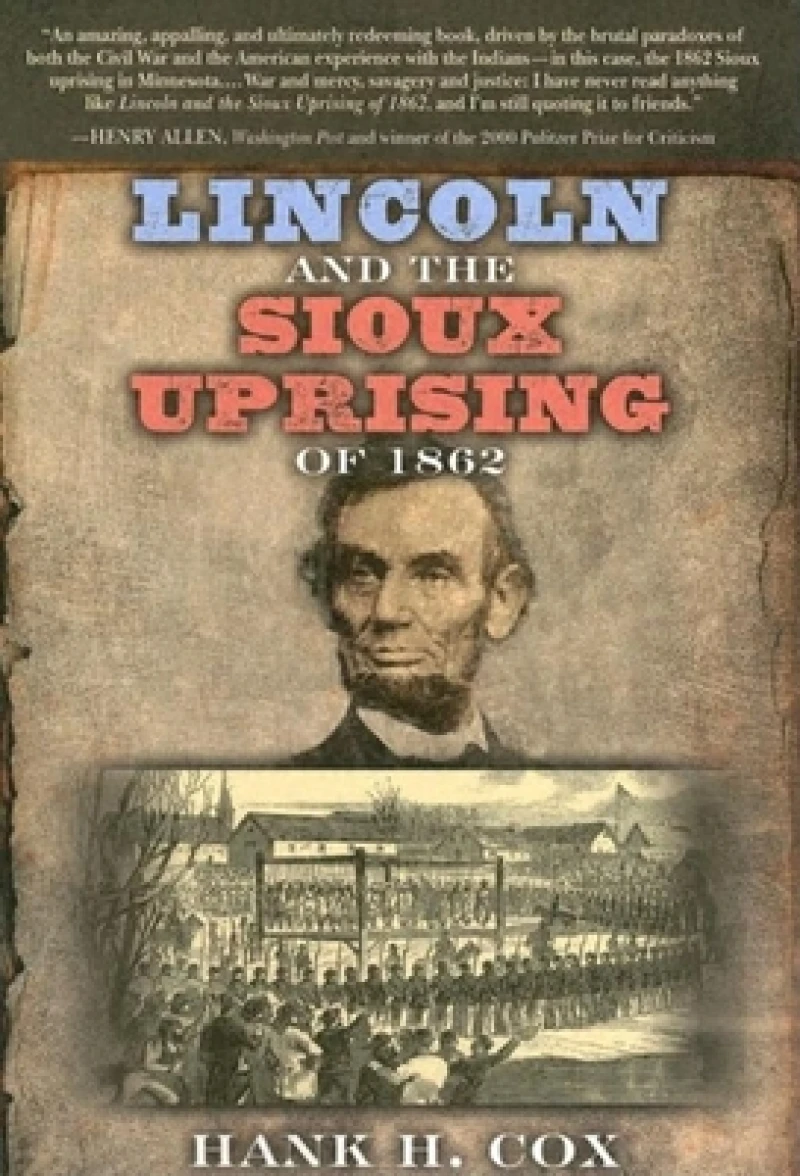
Lincoln and the Sioux Uprising of 1862
by
Hank H. Cox
Book Details
Format
Hardback or Cased Book
ISBN-10
1630263702
ISBN-13
9781630263706
Publisher
Turner Publishing Company
Imprint
Cumberland House Publishing,US
Country of Manufacture
GB
Country of Publication
GB
Publication Date
Aug 18th, 2005
Print length
214 Pages
Ksh 3,600.00
Werezi Extended Catalogue
0 in stock
Delivery Location
Delivery fee: Select location
Secure
Quality
Fast
On the bright Sunday morning of August 17, 1862, four Sioux warriors emerged from the Big Woods northwest of St. Paul, Minnesota, on their way home from an unsuccessful hunt. When they came upon the homestead of Robinson Jones, a white man who ran a post office and general store and offered lodging for travelers, the Indians opened fire on the settlers, killing almost all of them. Soon bands of Sioux were rampaging across southwestern Minnesota, attacking farms and trading posts and murdering everywhere they wentosplitting the skulls of men; clubbing children to death; raping daughters and wives before disemboweling them; cutting off hands, breasts, and genitals; and looting whatever could be taken before setting fire to what remained. Perhaps as many as two thousand settlers were brutally massacred, although the number has never been firmly established. Once the uprising was suppressed, 303 Sioux warriors were sentenced to death. The people of Minnesota called for their immediate execution, a sentiment that matched the national mood. Abraham Lincoln suspected that most of those convicted were marginal players in the rebellion and that the worst culprits had escaped, and he carefully reviewed each case before selecting the 39olater reduced to 38omen to hang whom he believed to be guilty of the worst crimes. The remainder were committed to life in prison. "I could not hang men for votes," he later explained. On December 26 the 38 were simultaneously hanged on a gallows construction especially for them. The Sioux Uprising of 1862, also known as the Dakota War, sounded the first shots of a war that continued for another 28 years, culminating in the massacre of Indian women and children at Wounded Knee in 1890. Lincoln's death at the hands of John Wilkes Booth ended his intention to reform the government's Indian policy, and both political parties continued to use the system to reward their supporters, a practice that largely continues to this day.
On the bright Sunday morning of August 17, 1862, four Sioux warriors emerged from the Big Woods northwest of St. Paul, Minnesota, on their way home from an unsuccessful hunt. When they came upon the homestead of Robinson Jones, a white man who ran a post office and general store and offered lodging for travelers, the Indians opened fire on the settlers, killing almost all of them. Soon bands of Sioux were rampaging across southwestern Minnesota, attacking farms and trading posts and murdering everywhere they wentósplitting the skulls of men; clubbing children to death; raping daughters and wives before disemboweling them; cutting off hands, breasts, and genitals; and looting whatever could be taken before setting fire to what remained. Perhaps as many as two thousand settlers were brutally massacred, although the number has never been firmly established. Once the uprising was suppressed, 303 Sioux warriors were sentenced to death. The people of Minnesota called for their immediate execution, a sentiment that matched the national mood. Abraham Lincoln suspected that most of those convicted were marginal players in the rebellion and that the worst culprits had escaped, and he carefully reviewed each case before selecting the 39ólater reduced to 38ómen to hang whom he believed to be guilty of the worst crimes. The remainder were committed to life in prison. "I could not hang men for votes," he later explained. On December 26 the 38 were simultaneously hanged on a gallows construction especially for them. The Sioux Uprising of 1862, also known as the Dakota War, sounded the first shots of a war that continued for another 28 years, culminating in the massacre of Indian women and children at Wounded Knee in 1890. Lincoln''s death at the hands of John Wilkes Booth ended his intention to reform the government''s Indian policy, and both political parties continued to use the system to reward their supporters, a practice that largely continues to this day.
Get Lincoln and the Sioux Uprising of 1862 by at the best price and quality guaranteed only at Werezi Africa's largest book ecommerce store. The book was published by Turner Publishing Company and it has pages.

