
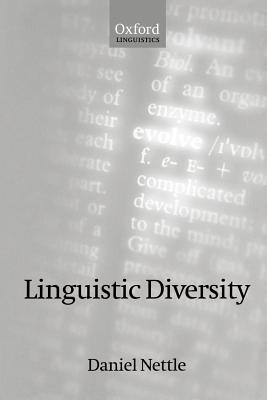
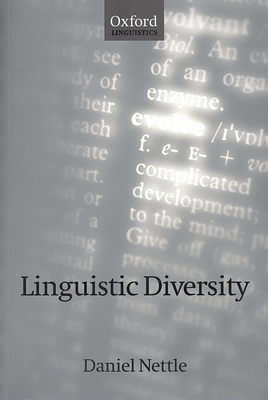
Linguistic Diversity
Book Details
Format
Paperback / softback
ISBN-10
0198238576
ISBN-13
9780198238577
Publisher
Oxford University Press
Imprint
Oxford University Press
Country of Manufacture
GB
Country of Publication
GB
Publication Date
Apr 22nd, 1999
Print length
180 Pages
Weight
300 grams
Dimensions
15.80 x 23.40 x 1.00 cms
Product Classification:
Dialect, slang & jargonPhysical anthropologyEvolutionHuman biologyHuman geography
KSh 9,900.00
Temporarily out of stock, due soon
0 in stock
Delivery Location
Delivery fee: Select location
Secure
Quality
Fast
Investigating the diversity of language, this text examines why diversity evolved at all, given that the biological mechanisms underlying language are the same in all human beings. The distribution of diversity is discussed as being linked with the major patterns of human geography and prehistory.
There are some 6,500 different languages in the world, belonging to around 250 distinct families and conforming to numerous grammatical types. This book explains why. Given that the biological mechanisms underlying language are the same in all normal human beings, would we not be a more successful species if we spoke one language? Daniel Nettle considers how this extraordinary and rich diversity arose, how it relates to the nature of language, cognition, and culture, and how it is linked with the main patterns of human geography and history.Human languages and language families are not distributed evenly: there are relatively few in Eurasia compared to the profusion found in Australasia, the Pacific, and the Americas. There is also a marked correlation between biodiversity and linguistic diversity. The author explains the processes by which this distribution evolved and changes still. To do so he returns to the earliest origins of language, reconstructing the processes of linguistic variation and diffusion that occurred when humans first filled the continents and, thousands of years later, turned to agriculture. He ends by examining the causes of linguistic mortality, and why the number of the world''s languages may halve before 2100.Linguistic Diversity draws on work in anthropology, linguistics, geography, archaeology, and evolutionary science to provide a comprehensive account of the patterns of linguistic diversity. It is written in a clear, lively and accessible style, and will appeal broadly across the natural and human sciences, as well as to the informed general reader.
Get Linguistic Diversity by Daniel Nettle at the best price and quality guaranteed only at Werezi Africa's largest book ecommerce store. The book was published by Oxford University Press and it has 180 pages.
Customers Who Bought This Also Bought
Jamaica Talk
KSh 5,600.00
The Language of the American South
KSh 4,000.00

It''s Not Rocket Science
KSh 2,550.00
The Crucible of Carolina
KSh 5,350.00

The UNCITRAL Model Law and Asian Arbitration Laws
KSh 11,400.00
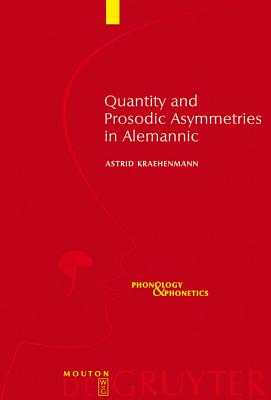
Quantity and Prosodic Asymmetries in Alemannic
KSh 22,300.00

East Anglian English
KSh 3,900.00

The Origin of American Black English
KSh 24,050.00

World Englishes in the 21st Century
KSh 5,400.00
Dialect Variation and the Theory of Grammar
KSh 19,000.00
Southern English Varieties Then and Now
KSh 27,350.00
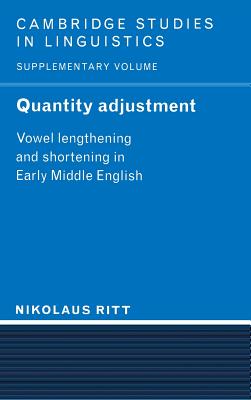
Quantity Adjustment
KSh 13,300.00
More by Daniel Nettle

Hanging on to the Edges
KSh 3,400.00
Strong Imagination
KSh 9,800.00
Vanishing Voices
KSh 7,800.00
Strong Imagination
KSh 4,350.00
Linguistic Diversity
KSh 12,900.00
Evolution and Genetics for Psychology
KSh 9,650.00
Vanishing Voices
KSh 3,900.00

Basic Income – The Policy That Changes Everything
KSh 1,800.00
