
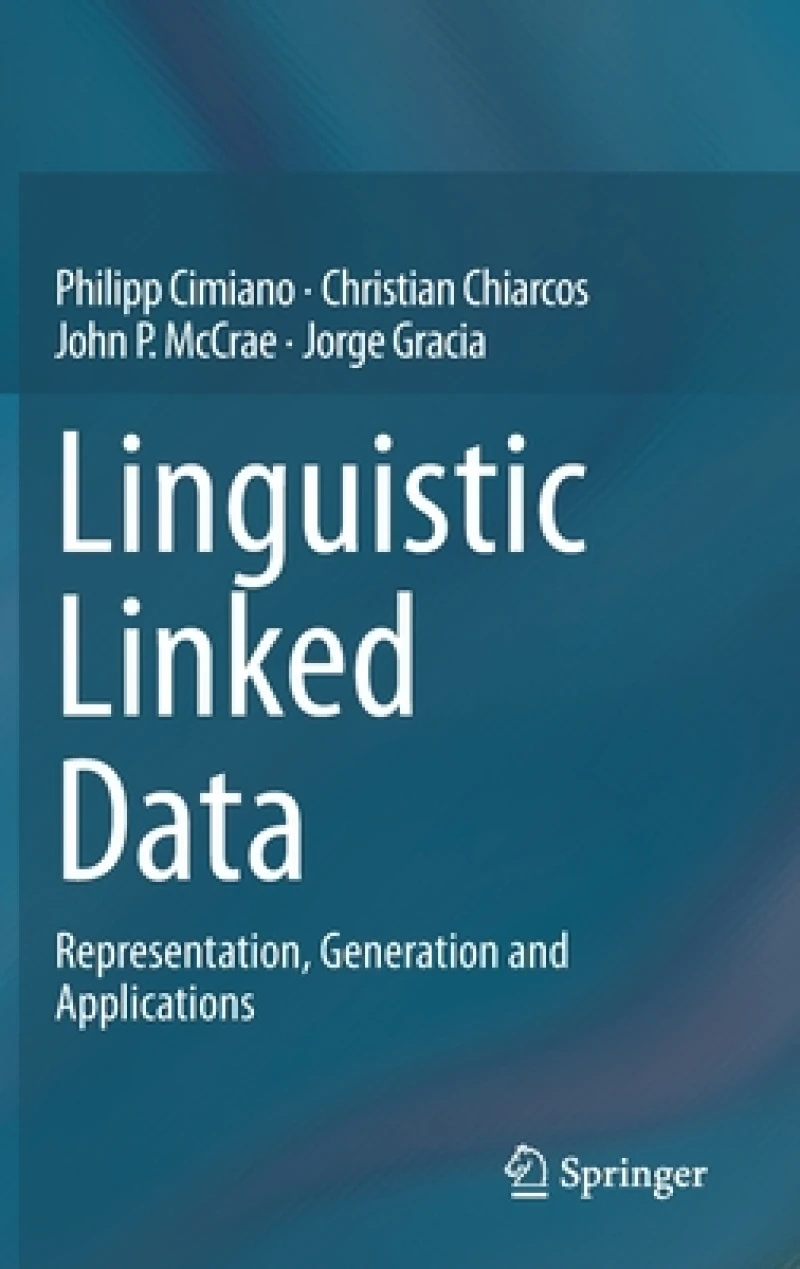
Linguistic Linked Data : Representation, Generation and Applications
2020 ed.
Book Details
Format
Hardback or Cased Book
ISBN-10
3030302245
ISBN-13
9783030302245
Edition
2020 ed.
Publisher
Springer Nature Switzerland AG
Imprint
Springer Nature Switzerland AG
Country of Manufacture
GB
Country of Publication
GB
Publication Date
Jan 14th, 2020
Print length
286 Pages
Ksh 23,400.00
Werezi Extended Catalogue
0 in stock
Delivery Location
Delivery fee: Select location
Secure
Quality
Fast
This is the first monograph on the emerging area of linguistic linked data. Presenting a combination of background information on linguistic linked data and concrete implementation advice, it introduces and discusses the main benefits of applying linked data (LD) principles to the representation and publication of linguistic resources, arguing that LD does not look at a single resource in isolation but seeks to create a large network of resources that can be used together and uniformly, and so making more of the single resource.
The book describes how the LD principles can be applied to modelling language resources. The first part provides the foundation for understanding the remainder of the book, introducing the data models, ontology and query languages used as the basis of the Semantic Web and LD and offering a more detailed overview of the Linguistic Linked Data Cloud. The second part of the book focuses on modelling language resources using LD principles, describing how to model lexical resources using Ontolex-lemon, the lexicon model for ontologies, and how to annotate and address elements of text represented in RDF. It also demonstrates how to model annotations, and how to capture the metadata of language resources. Further, it includes a chapter on representing linguistic categories. In the third part of the book, the authors describe how language resources can be transformed into LD and how links can be inferred and added to the data to increase connectivity and linking between different datasets. They also discuss using LD resources for natural language processing. The last part describes concrete applications of the technologies: representing and linking multilingual wordnets, applications in digital humanities and the discovery of language resources.
Given its scope, the book is relevant for researchers and graduate students interested in topics at the crossroads of natural language processing / computational linguistics and the Semantic Web / linked data. It appeals to Semantic Web experts who are not proficient in applying the Semantic Web and LD principles to linguistic data, as well as to computational linguists who are used to working with lexical and linguistic resources wanting to learn about a new paradigm for modelling, publishing and exploiting linguistic resources.
Get Linguistic Linked Data by at the best price and quality guaranteed only at Werezi Africa's largest book ecommerce store. The book was published by Springer Nature Switzerland AG and it has pages.

