
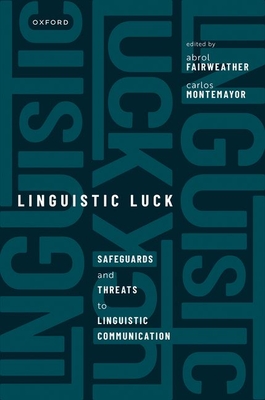
Linguistic Luck : Safeguards and threats to linguistic communication
Book Details
Format
Hardback
ISBN-10
0192845454
ISBN-13
9780192845450
Publisher
Oxford University Press
Imprint
Oxford University Press
Country of Manufacture
GB
Country of Publication
GB
Publication Date
Jun 22nd, 2023
Print length
340 Pages
Weight
660 grams
Dimensions
16.20 x 24.30 x 2.60 cms
KSh 15,850.00
Currently unavailable
0 in stock
Delivery Location
Delivery fee: Select location
Secure
Quality
Fast
There has been much philosophical interest in the role of luck in ethics and epistemology; now this volume brings the topic to the fore in philosophy of language. Eleven new essays explore the diversity, scope, and mode of operation of luck-reducing mechanisms in language, without which linguistic communication would be impossible.
Despite the considerable attention the topic of luck has received in ethics and epistemology, very little has been published in the philosophical literature overtly on linguistic luck. The essays collected here provide the first sustained examination of the diverse forms of linguistic luck, the mechanisms available to reduce the impact of linguistic luck and how to cope with residual luck not eliminated by the causal, inferential, and intentional mechanisms which aim at its eradication. Of primary interest is not some, hitherto unnoticed widespread prevalence of luck in the determinants of meaning and communication, but rather the impressive extent to which luck is reduced or eliminated therein. Whether through casual, inferential or intentional means, the determinants of meaning and communication are impressively independent of luck and chance. In fact, it is difficult to imagine a world with human language where efforts to communicate succeed no better than chance. Linguistic communication is only possible because robust luck reducing variables are at work. The essays collected seek to understand the diversity, scope and mode of operation of luck reducing mechanisms in language. While it is not possible here to cover the full range of linguistic phenomena affected by luck, a wide range of issues in linguistics and philosophy of language are investigated, including, syntax processing, demonstrative reference, conversational implicature, testimony, lexical innovation, joint attention, communicative value, conventionalism vs. anti-conventionalism, metasemantic safety, and semantic skepticism, to name a few.
Get Linguistic Luck by Abrol Fairweather at the best price and quality guaranteed only at Werezi Africa's largest book ecommerce store. The book was published by Oxford University Press and it has 340 pages.
Customers Who Bought This Also Bought

Recognising the Stranger
KSh 1,800.00
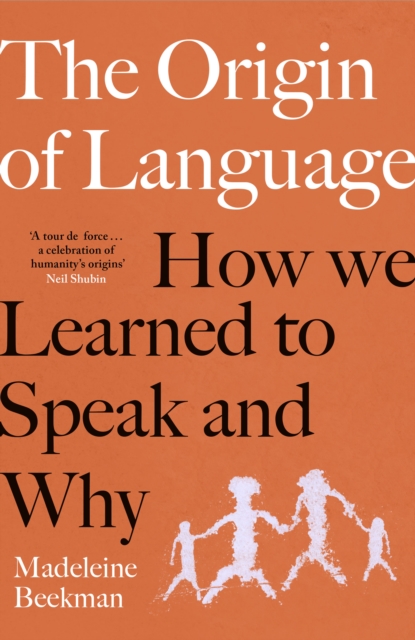
The Origin of Language
KSh 4,500.00
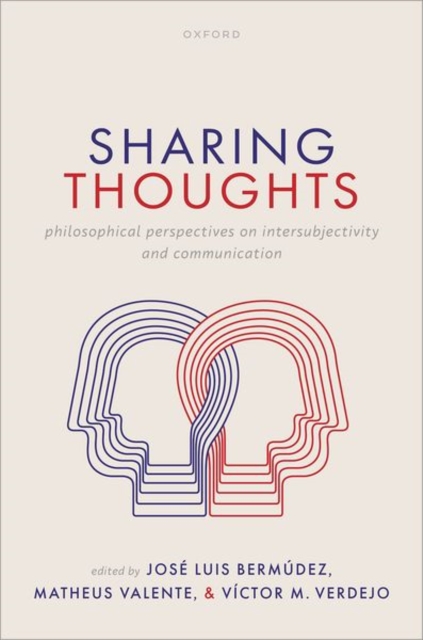
Sharing Thoughts
KSh 17,000.00

An Inquiry Into Meaning and Truth
KSh 3,750.00

Semiotics and the Philosophy of Language
KSh 3,400.00
An Introduction to Logic
KSh 6,650.00

Walker Percy''s Search for Community
KSh 5,950.00
Film Figures
KSh 16,450.00

The Tacit Dimensions of Language and Logic
KSh 15,800.00

Metaphors in Action
KSh 21,600.00
Frontiers in Semiotics
KSh 3,000.00

A Theory of Death
KSh 11,900.00
