
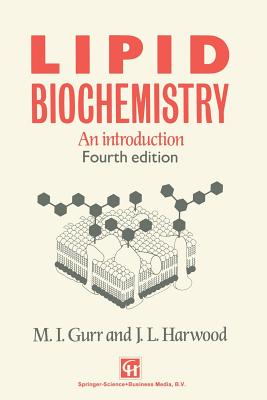
Book Details
Format
Paperback / softback
ISBN-10
940105360X
ISBN-13
9789401053600
Edition
Softcover reprint of the original 1st ed. 1991
Publisher
Springer
Imprint
Springer
Country of Manufacture
NL
Country of Publication
GB
Publication Date
Nov 12th, 2012
Print length
406 Pages
Weight
666 grams
Dimensions
15.80 x 23.50 x 2.90 cms
Product Classification:
BiochemistryLipids
KSh 8,100.00
Currently unavailable
0 in stock
Delivery Location
Delivery fee: Select location
Secure
Quality
Fast
Lipids can usually be extracted easily from tissues by making use of their hydrophobic characteristics. Although research laboratories use generally sophisticated analytical methods such as GLC to analyse and quantify lipid samples, chemical derivatii:ations are often used in hospitals.
Lipids can usually be extracted easily from tissues by making use of their hydrophobic characteristics. However, such extractions yield a complex mixture of different lipid classes which have to be purified further for quantitative analysis. Moreover, the crude lipid extract will be contami nated by other hydrophobic molecules, e.g. by intrinsic membrane proteins. Of the various types of separation processes, thin layer and column chromatography are most useful for intact lipids. High performance liquid chromatography (HPLC) is also rapidly becoming more popular, especially for the fractionation of molecular species of a given lipid class. The most powerful tool for quantitation of the majority of lipids is gas liquid chromatography (GLC). The method is very sensitive and, if adapted with capillary columns, can provide information with regard to such subtle features as the position or configuration of substitutions along acyl chains. By coupling GLC or HPLC to a radioactivity detector, then the techniques are also very useful for metabolic measurements. Although research laboratories use generally sophisticated analytical methods such as GLC to analyse and quantify lipid samples, chemical derivatii:ations are often used in hospitals. For these methods, the lipid samples are derivatized to yield a product which can be measured simply and accurately"- usually by colour. Thus, total triacylglycerol, cholesterol or phospholipid-phosphorus can be quantitated conveniently without bothering with the extra information of molecular species, etc. which might be determined by more thorough analyses. REFERENCES Christie, W.W. (1982) Lipid Analysis, 2nd edn, Pergamon Press, Oxford.
Get Lipid Biochemistry by M. Gurr at the best price and quality guaranteed only at Werezi Africa's largest book ecommerce store. The book was published by Springer and it has 406 pages.
Customers Who Bought This Also Bought

Genius of Trees
KSh 4,500.00

Genius of Trees
KSh 2,350.00

Chemical Signatures of the Brain
KSh 35,800.00

Chemoenzymatic Synthesis of Natural Products and Complex Small Molecules
KSh 37,600.00

Translational Chemical Ecology
KSh 22,500.00

Set: Natural Poisons and Venoms 1+2+3+4+5
KSh 52,900.00

Essays in Biochemistry, Volume 33 – Molecular Biology of the Brain
KSh 17,100.00
Comparative Physiology of Fasting, Starvation, and Food Limitation
KSh 32,400.00

Mango Malformation
KSh 23,400.00
Guanidino Compounds in Biology and Medicine
KSh 23,650.00
Metal Toxicity in Plants
KSh 23,400.00

Light Spectroscopy
KSh 10,450.00
