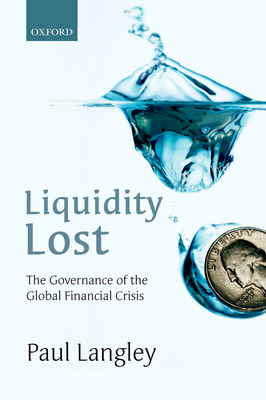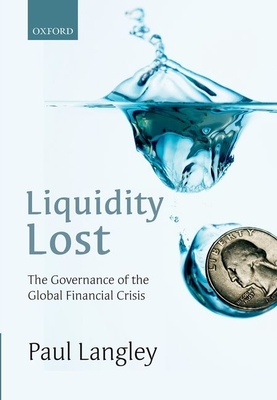
Liquidity Lost : The Governance of the Global Financial Crisis
by
Paul Langley
Book Details
Format
Hardback
ISBN-10
0199683786
ISBN-13
9780199683789
Publisher
Oxford University Press
Imprint
Oxford University Press
Country of Manufacture
GB
Country of Publication
GB
Publication Date
Dec 11th, 2014
Print length
236 Pages
Weight
484 grams
Dimensions
16.50 x 23.60 x 1.70 cms
KSh 18,350.00
Temporarily out of stock, due soon
0 in stock
Delivery Location
Delivery fee: Select location
Secure
Quality
Fast
Contributing to interdisciplinary debates in cultural economy and the social studies of finance, and grounded in extensive empirical research, this book offers an innovative analysis of how the contemporary global financial crisis was governed. The focus is on the US and UK between 2007 and 2011
Contributing to interdisciplinary debates in cultural economy and the social studies of finance, and grounded in extensive empirical research, Liquidity Lost offers an innovative analysis of how the contemporary global financial crisis was governed. Through an exploration of the interventions made by central banks, treasuries, and regulatory authorities in the Anglo-American heartland of the crisis between 2007 and 2011, experimental and strategic apparatuses of crisis governance are shown to have emerged. These discrete apparatuses established six technical problems to be acted upon - liquidity, toxicity, solvency, risk, regulation, and debt - but also shared certain proclivities and preferences. Crisis governance assembled discourses and devices of economy in relation with sovereign monetary, fiscal, and regulatory techniques, and elicited an affective atmosphere of confidence. It also sought to secure the financialized way of life which turns on the opportunities ostensibly afforded by uncertain financial circulations, and gave rise to post-crisis technical fixes designed to advance the resilience of banking and the macro-prudential regulation of financial stability. Thus, the consensus that prevails across economics, political economy, and beyond - wherein sovereign state institutions are cast as coming to the rescue of the markets, banking, or neo-liberal capitalism - conceals a great deal more than it reveals about the governance of the global financial crisis.
Get Liquidity Lost by Paul Langley at the best price and quality guaranteed only at Werezi Africa's largest book ecommerce store. The book was published by Oxford University Press and it has 236 pages.
Customers Who Bought This Also Bought

The Road to Serfdom
KSh 3,600.00
Portfolios of the Poor – How the World`s Poor Live on $2 a Day
KSh 5,400.00

Radical Intimacy
KSh 2,900.00
Discrimination and Disparities
KSh 5,400.00
Entrepreneurial State
KSh 2,350.00
Capitalism
KSh 9,000.00
Capital & Ideology
KSh 3,050.00
The Power of Creative Destruction – Economic Upheaval and the Wealth of Nations
KSh 3,250.00

Capitalism – The Story behind the Word
KSh 2,500.00

Deficit Myth
KSh 2,350.00
Vulture Capitalism
KSh 2,000.00
Value of Everything
KSh 2,350.00