
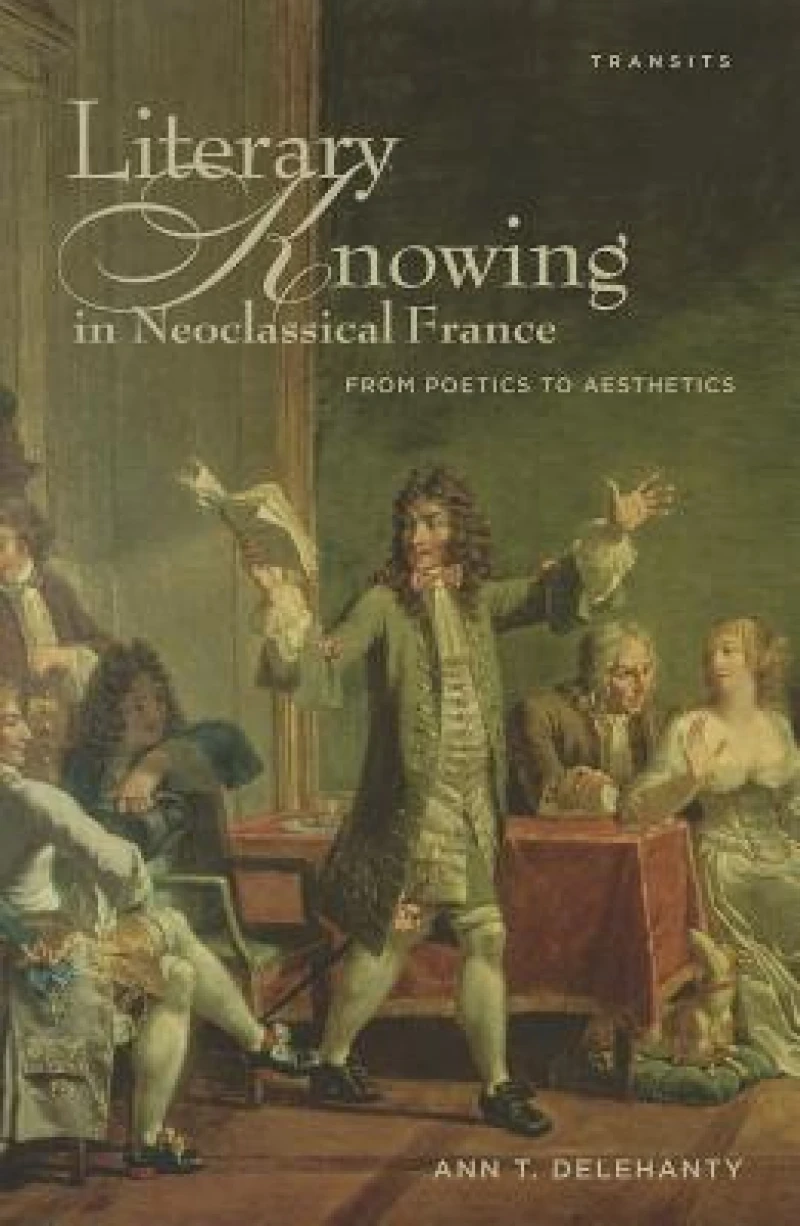
Literary Knowing in Neoclassical France : From Poetics to Aesthetics
Book Details
Format
Hardback or Cased Book
ISBN-10
1611484898
ISBN-13
9781611484892
Publisher
Bucknell University Press
Imprint
Bucknell University Press
Country of Manufacture
GB
Country of Publication
GB
Publication Date
Dec 19th, 2012
Print length
220 Pages
Weight
472 grams
Dimensions
23.70 x 16.00 x 2.10 cms
Product Classification:
Literary theoryLiterary studies: general
Ksh 18,400.00
Manufactured on Demand
0 in stock
Delivery Location
Delivery fee: Select location
Secure
Quality
Fast
Literary Knowing in Neoclassical France analyzes the work of several literary critics in France and England, at the end of the seventeenth and beginning of the eighteenth centuries, who were inspired by the idea that literature – especially the literary sublime – might offer us the deepest kind of knowledge. Dominique Bouhours, Nicolas Boileau, René Rapin, John Dennis, and the abbé Dubos believed that literature could deliver truths that transcend our world and were analogous or even equal to the truths of divine revelation. Ann Delehanty argues that this shift towards the transcendental realm pushed the definition of the literary work away from describing its objective properties and towards its effects on the mind of the reader. After placing these ideas about literature in the context of the religious and philosophical thinking of Blaise Pascal, Delehanty traces the evolution of a debate about literature in the writings of the critics in question. They embraced theories of sentiment and the passions as the epistemological means of identifying and knowing the transcendental aspects of a literary work that eventually came to be known as aesthetics. By tracing the historical evolution of the relationship between transcendentalism and aesthetics in French and English neoclassical thought, Literary Knowing in Neoclassical France provides new and engaging insights into an important moment in our literary history.
Literary Knowing in Neoclassical France analyzes the work of several literary critics in France and England, at the end of the seventeenth and beginning of the eighteenth centuries, who were inspired by the idea that literature – especially the literary sublime – might offer us the deepest kind of knowledge. Dominique Bouhours, Nicolas Boileau, René Rapin, John Dennis, and the abbé Dubos believed that literature could deliver truths that transcend our world and were analogous or even equal to the truths of divine revelation. Ann Delehanty argues that this shift towards the transcendental realm pushed the definition of the literary work away from describing its objective properties and towards its effects on the mind of the reader. After placing these ideas about literature in the context of the religious and philosophical thinking of Blaise Pascal, Delehanty traces the evolution of a debate about literature in the writings of the critics in question. They embraced theories of sentiment and the passions as the epistemological means of identifying and knowing the transcendental aspects of a literary work that eventually came to be known as aesthetics. By tracing the historical evolution of the relationship between transcendentalism and aesthetics in French and English neoclassical thought, Literary Knowing in Neoclassical France provides new and engaging insights into an important moment in our literary history.
Get Literary Knowing in Neoclassical France by at the best price and quality guaranteed only at Werezi Africa's largest book ecommerce store. The book was published by Bucknell University Press and it has pages.

