
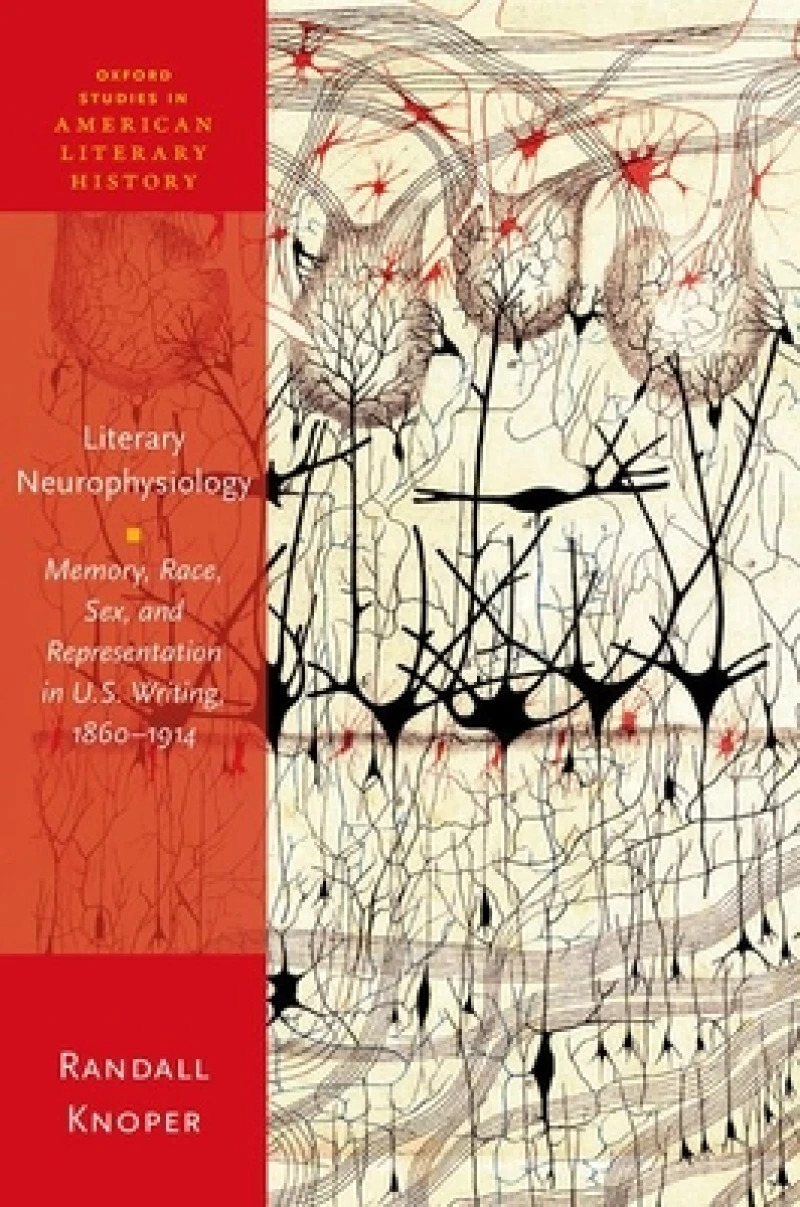
Literary Neurophysiology : Memory, Race, Sex, and Representation in U.S. Writing, 1860-1914
Book Details
Format
Hardback or Cased Book
Book Series
Oxford Studies in American Literary History
ISBN-10
0192845500
ISBN-13
9780192845504
Publisher
Oxford University Press
Imprint
Oxford University Press
Country of Manufacture
GB
Country of Publication
GB
Publication Date
Sep 28th, 2021
Print length
306 Pages
Weight
632 grams
Dimensions
24.00 x 16.50 x 2.00 cms
Ksh 18,050.00
Werezi Extended Catalogue
0 in stock
Delivery Location
Delivery fee: Select location
Secure
Quality
Fast
The book investigates the relations between American literature of the late nineteenth and early twentieth centuries and the sciences of the brain and the nervous system, showing how literary authors investigated, used, and challenged this emerging neurophysiology.
Writing about the brain and the nervous system more than a century ago, what were U.S. authors doing? Literary Neurophysiology: Memory, Race, Sex, and Representation in U.S. Writing, 1860-1914 examines their use of literature to experiment with the new materialist psychology, a science that was challenging their capacity to represent reality and forging new understandings of race and sexuality. Late-nineteenth and eartly-twentieth century authors sometimes emulated scientific epistemology, allowing their art and conceptions of creativity to be reshaped by it, but more often they imaginatively investigated neurophysiological theories, challenging and rewriting scientific explanations of human identity and behavior. By enfolding physiological experimentation into literary inquiries that could nonreductively account for psychological and social complexities beyond the reach of the laboratory, they used literature as a cognitive medium. Mark Twain, W. D. Howells, and Gertrude Stein come together as they probe the effects on mimesis and creativity of reflex-based automatisms and unconscious meaning-making. Oliver Wendell Holmes explores conceptions of racial nerve force elaborated in population statistics and biopolitics, while W. E. B. Du Bois and Pauline Hopkins contest notions of racial energy used to predict the extinction of African Americans. Holmes explores new definitions of "sexual inversion" as, in divergent ways, Whitman and John Addington Symonds evaluate relations among nerve force, human fecundity, and the supposed grave of nonreproductive sex. Carefully tracing entanglements and conflicts between literary culture and mental science of this period, Knoper reveals unexpected connections among these authors and fresh insights into the science they confronted. Considering their writing as cognitive practice, he provides a new understanding of literary realism and of the emergent distinction between literary and scientific knowledge.
Get Literary Neurophysiology by at the best price and quality guaranteed only at Werezi Africa's largest book ecommerce store. The book was published by Oxford University Press and it has pages.

