
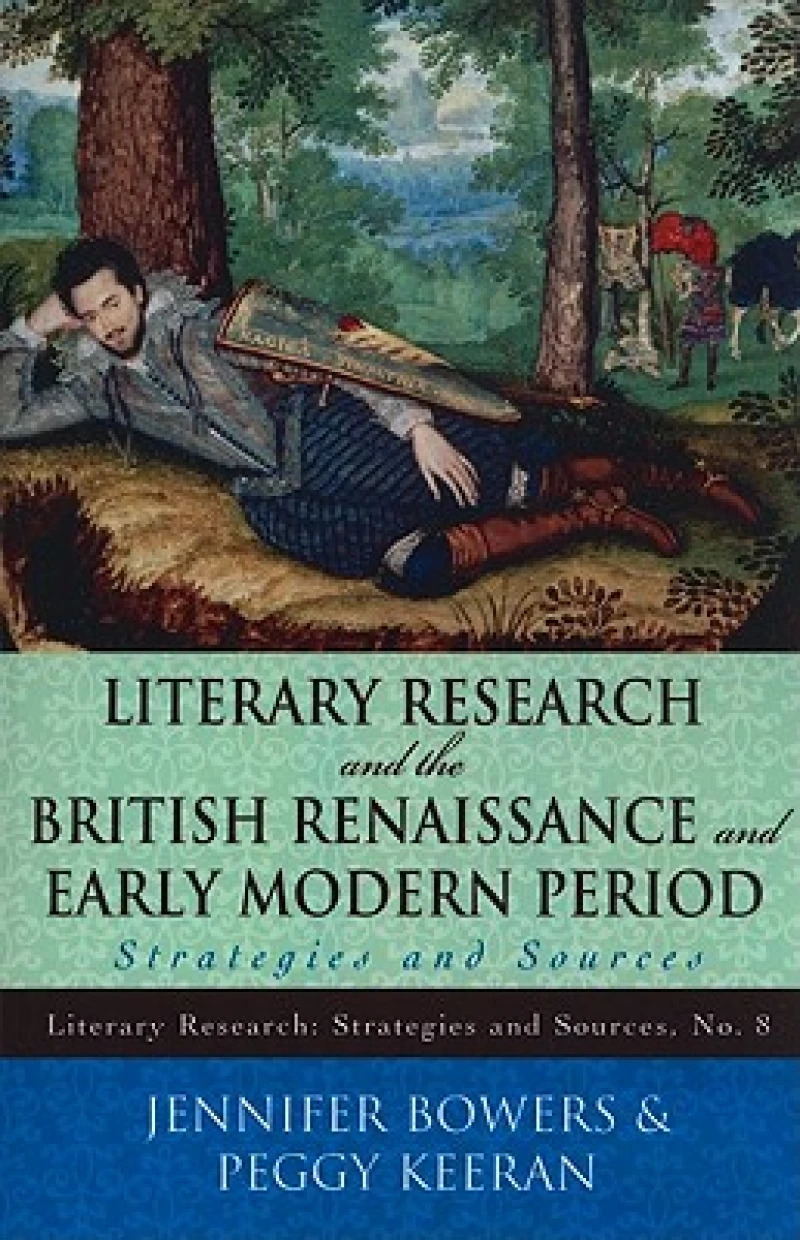
Literary Research and the British Renaissance and Early Modern Period : Strategies and Sources
Book Details
Format
Paperback / Softback
Book Series
Literary Research: Strategies and Sources
ISBN-10
0810856972
ISBN-13
9780810856974
Publisher
Scarecrow Press
Imprint
Scarecrow Press
Country of Manufacture
GB
Country of Publication
GB
Publication Date
Apr 13th, 2010
Print length
398 Pages
Weight
624 grams
Dimensions
23.30 x 15.50 x 2.40 cms
Product Classification:
Library, archive & information managementResearch methods: general
Ksh 16,200.00
Manufactured on Demand
0 in stock
Delivery Location
Delivery fee: Select location
Secure
Quality
Fast
Recognizing that every literary era presents scholars with particular challenges, this volume covers the best practices and describes important reference resources, both print and electronic, that can be used in conducting literary research of the British Renaissance and Early Modern period. Although the primary emphasis is on literature produced in England, the guide also covers literature from Scotland, Wales, and Ireland. This book addresses specific research characteristics integral to studying the period, including a more inclusive canon and the predominance of Shakespeare, a dual environment of print and manuscript production, the challenges of reading early modern handwriting, a lack of reviewing media, the role of translations, and researching non-standardized genres, among others. Central to this volume and to literary research of the era are the equally valid approaches to studying this literature through the more traditional Renaissance lens or through the varying theoretical approaches falling under the rubric early modern. Bowers and Keeran explore primary and secondary research resources of this era, including general literary research guides; union library catalogs; print and online bibliographies; scholarly journals; manuscripts and archives; microfilm and digitization projects; 17th-century periodicals; contemporary reception; translations and lexicons; genres; and electronic texts, journals, and Web resources. A final chapter, entitled "Researching a Thorny Problem," demonstrates how many of the research tools and strategies presented in the volume can be employed to explore a question that perhaps has no definitive answer. Each chapter addresses how research methods and tools are best used to extract relevant information and compare and evaluate sources. The strengths and weaknesses of core and specialized electronic and print research tools and standard search techniques are also examined, making this book an invaluable guide to any scholar of the Renaissance and early modern era.
Recognizing that every literary era presents scholars with particular challenges, this volume covers the best practices and describes important reference resources, both print and electronic, that can be used in conducting literary research of the British Renaissance and Early Modern period. Although the primary emphasis is on literature produced in England, the guide also covers literature from Scotland, Wales, and Ireland. This book addresses specific research characteristics integral to studying the period, including a more inclusive canon and the predominance of Shakespeare, a dual environment of print and manuscript production, the challenges of reading early modern handwriting, a lack of reviewing media, the role of translations, and researching non-standardized genres, among others. Central to this volume and to literary research of the era are the equally valid approaches to studying this literature through the more traditional Renaissance lens or through the varying theoretical approaches falling under the rubric early modern. Bowers and Keeran explore primary and secondary research resources of this era, including general literary research guides; union library catalogs; print and online bibliographies; scholarly journals; manuscripts and archives; microfilm and digitization projects; 17th-century periodicals; contemporary reception; translations and lexicons; genres; and electronic texts, journals, and Web resources. A final chapter, entitled "Researching a Thorny Problem," demonstrates how many of the research tools and strategies presented in the volume can be employed to explore a question that perhaps has no definitive answer. Each chapter addresses how research methods and tools are best used to extract relevant information and compare and evaluate sources. The strengths and weaknesses of core and specialized electronic and print research tools and standard search techniques are also examined, making this book an invaluable guide to any scholar of the Renaissance and early modern era.
Get Literary Research and the British Renaissance and Early Modern Period by at the best price and quality guaranteed only at Werezi Africa's largest book ecommerce store. The book was published by Scarecrow Press and it has pages.

