
Cart 0
Literature and Liberty
Click to zoom

Share this book

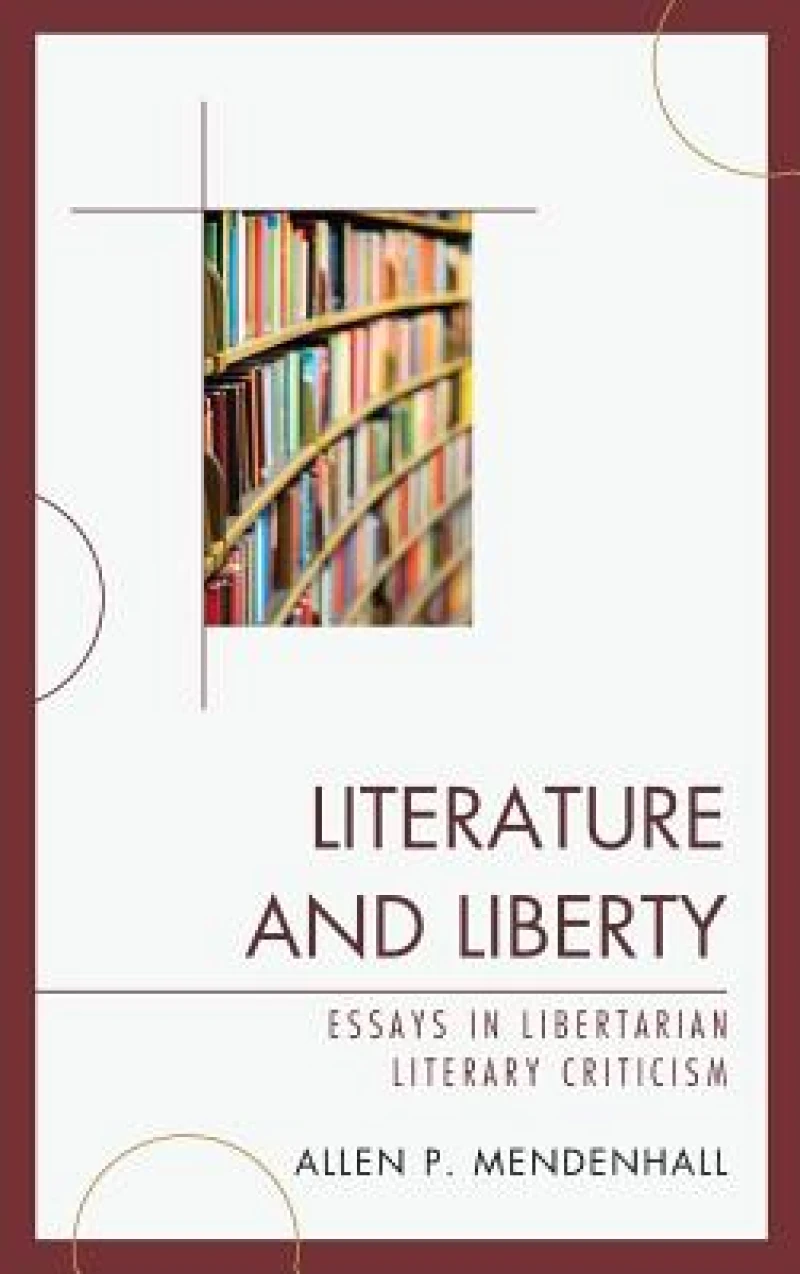
Literature and Liberty : Essays in Libertarian Literary Criticism

Book Details

Format Hardback or Cased Book
ISBN-10 0739186337
ISBN-13 9780739186336
Publisher Bloomsbury Publishing Plc
Imprint Lexington Books
Country of Manufacture GB
Country of Publication GB
Publication Date Feb 19th, 2014
Print length 174 Pages
Weight 416 grams
Dimensions 23.60 x 16.00 x 1.70 cms
Ksh 18,300.00
Manufactured on Demand Delivery in 29 days

Delivery Location

Delivery fee: Select location

Delivery in 29 days

Secure
Quality
Fast
The economic theories of Karl Marx and his disciples continue to be anthologized in books of literary theory and criticism and taught in humanities classrooms to the exclusion of other, competing economic paradigms. Marxism is collectivist, predictable, monolithic, impersonal, linear, reductive — in short, wholly inadequate as an instrument for good in an era when we know better than to reduce the variety of human experience to simplistic formulae. A person’s creative and intellectual energies are never completely the products of culture or class. People are rational agents who choose between different courses of action based on their reason, knowledge, and experience. A person’s choices affect lives, circumstances, and communities. Even literary scholars who reject pure Marxism are still motivated by it, because nearly all economic literary theory derives from Marxism or advocates for vast economic interventionism as a solution to social problems. Such interventionism, however, has a track-record of mass murder, war, taxation, colonization, pollution, imprisonment, espionage, and enslavement — things most scholars of imaginative literature deplore. Yet most scholars of imaginative literature remain interventionists. Literature and Liberty offers these scholars an alternative economic paradigm, one that over the course of human history has eliminated more generic bads than any other system. It argues that free market or libertarian literary theory is more humane than any variety of Marxism or interventionism. Just as Marxist historiography can be identified in the use of structuralism and materialist literary theory, so should free-market libertarianism be identifiable in all sorts of literary theory. Literature and Liberty disrupts the near monopolistic control of economic ideas in literary studies and offers a new mode of thinking for those who believe that arts and literature should play a role in discussions about law, politics, government, and economics. Drawing from authors as wide-ranging as Emerson, Shakespeare, E.M. Forster, Geoffrey of Monmouth, Henry Hazlitt, and Mark Twain, Literature and Liberty is a significant contribution to libertarianism and literary studies.

Get Literature and Liberty by at the best price and quality guaranteed only at Werezi Africa's largest book ecommerce store. The book was published by Bloomsbury Publishing Plc and it has pages.


Mind, Body, & Spirit

Price

Ksh 18,300.00

Shopping Cart

Africa largest book store

Sub Total:
Ebooks

Digital Library
Coming Soon

Our digital collection is currently being curated to ensure the best possible reading experience on Werezi. We'll be launching our Ebooks platform shortly.