
Book Details
Delivery Location
Delivery fee: Select location
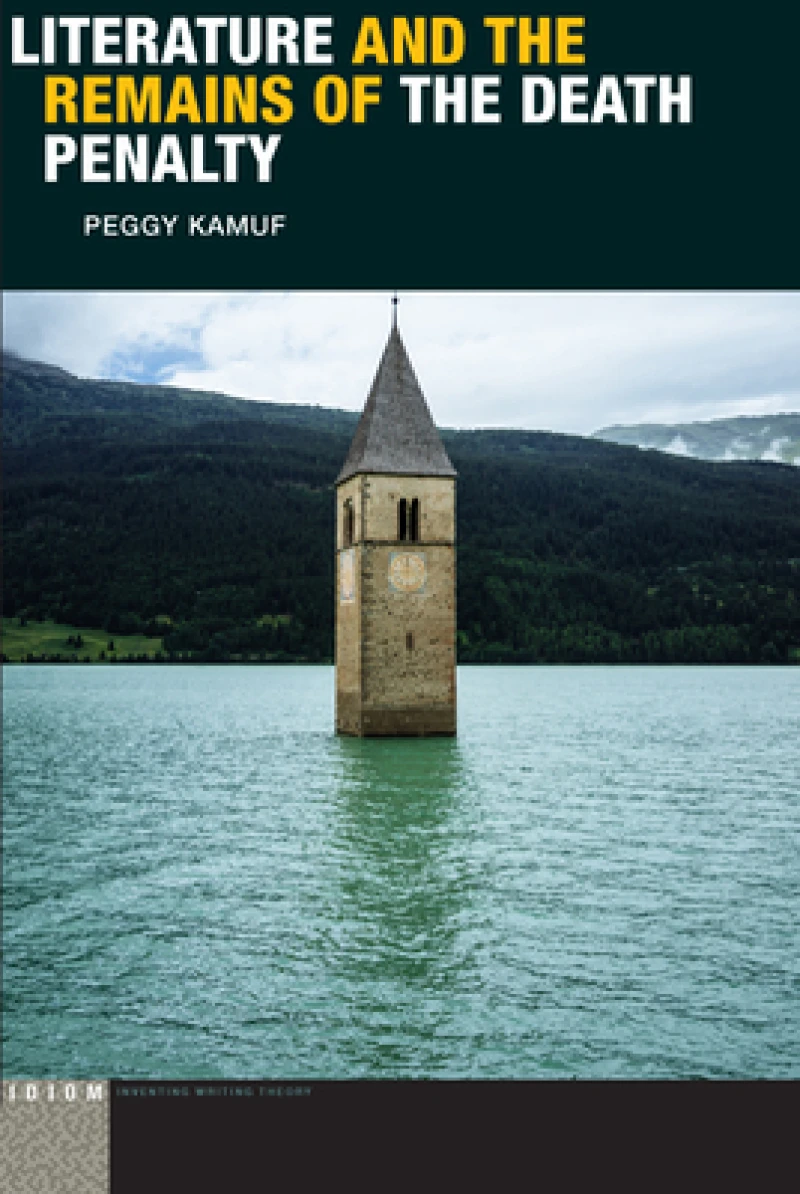
Why have generations of philosophers failed or refused to articulate a rigorous challenge to the death penalty, when literature has been rife with death penalty abolitionism for centuries? In this book, Peggy Kamuf explores why any properly philosophical critique of capital punishment in the West must confront the literary as that which exceeds the logical demands of philosophy.
Jacques Derrida has written that “the modern history of the institution named literature in Europe over the last three or four centuries is contemporary with and indissociable from a contestation of the death penalty.” How, Kamuf asks, does literature contest the death penalty today, particularly in the United States where it remains the last of its kind in a Western nation that professes to be a democracy? What resources do fiction, narrative, and poetic language supply in the age of the remains of the death penalty?
Following a lucid account of Derrida’s approach to the death penalty, Kamuf pursues this question across several literary texts. In reading Orwell’s story “A Hanging,” Kamuf explores the relation between literary narration and the role of the witness, concluding that such a witness needs the seal of literary language in order to account for the secret of the death penalty. The next chapter turns to the American scene with Robert Coover’s 1977 novel The Public Burning, which restages the executions of Julius and Ethel Rosenberg as an outlandish public spectacle in Times Square. Because this fictional device reverses the drive toward secrecy that, beginning in the mid-nineteenth century, put an end to public executions in the West, Kamuf reads the novel in a tension with the current tendency in the U.S. to shore up and protect remaining death penalty practices through increasingly pervasive secrecy measures. A reading of Norman Mailer’s 1979 novel The Executioner’s Song, shows the breakdown of any firm distinction between suicide and capital execution and explores the essential affinity between traditional narrative structure, which is plotted from the end, and the “plot” of a death penalty. Final readings of Kafka, Derrida, and Baudelaire consider the relation between literature and law, showing how performative literary language can “play the law. “A brief conclusion, titled “Postmortem,” reflects on the condition of literature as that which survives the death penalty.
A major contribution to the field of law and society, this book makes the case for literature as a space for contesting the death penalty, a case that scholars and activists working across a range of traditions will need to confront.
Get Literature and the Remains of the Death Penalty by at the best price and quality guaranteed only at Werezi Africa's largest book ecommerce store. The book was published by Fordham University Press and it has pages.

