
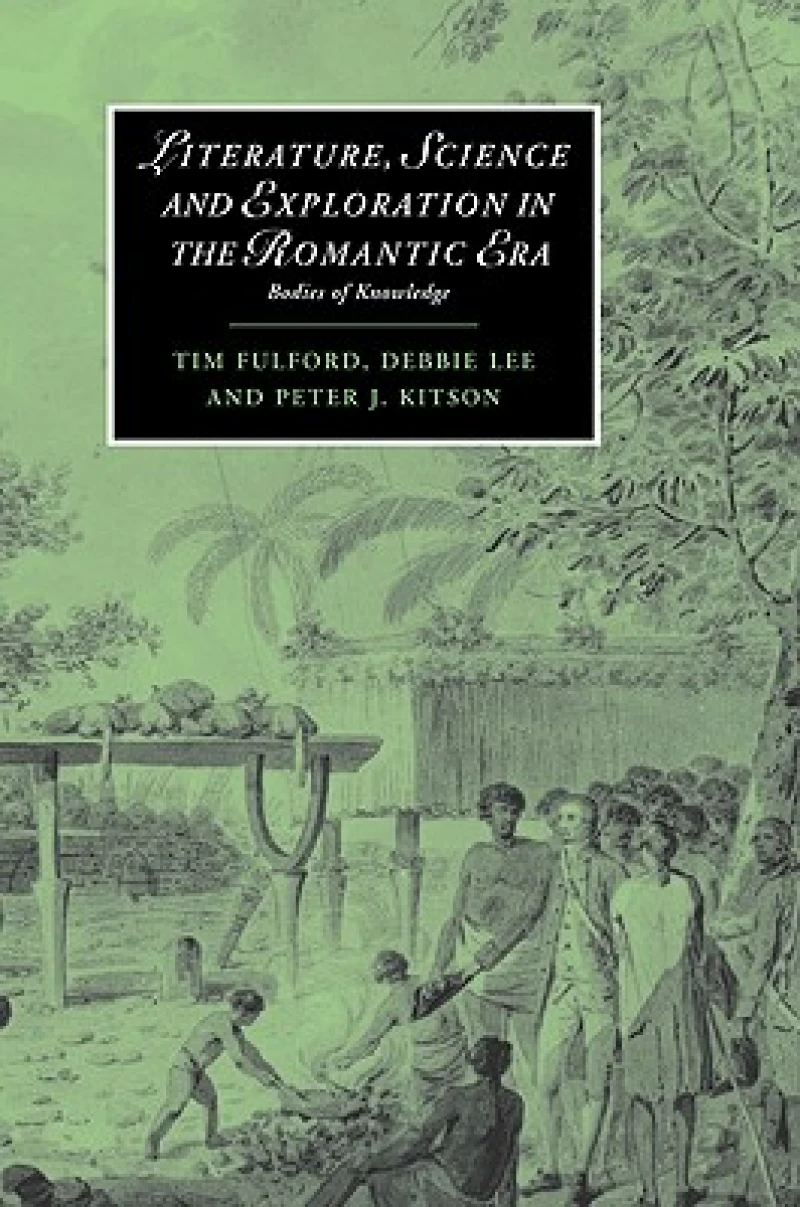
Literature, Science and Exploration in the Romantic Era : Bodies of Knowledge
Book Details
Format
Paperback / Softback
Book Series
Cambridge Studies in Romanticism
ISBN-10
0521039959
ISBN-13
9780521039956
Publisher
Cambridge University Press
Imprint
Cambridge University Press
Country of Manufacture
GB
Country of Publication
GB
Publication Date
Jul 23rd, 2007
Print length
348 Pages
Weight
524 grams
Dimensions
22.80 x 15.20 x 1.90 cms
Product Classification:
Literary studies: c 1800 to c 1900
Ksh 8,050.00
Manufactured on Demand
0 in stock
Delivery Location
Delivery fee: Select location
Secure
Quality
Fast
In Literature, Science and Exploration in the Romantic Era, Fulford, Kitson and Lee examine the massive impact of colonial exploration upon British scientific and literary activity between the 1760s and 1830s. This broad-ranging and well illustrated study will appeal to literary and cultural studies scholars.
In 1768, Captain James Cook made the most important scientific voyage of the eighteenth century. He was not alone: scores of explorers like Cook, travelling in the name of science, brought new worlds and new peoples within the horizon of European knowledge for the first time. Their discoveries changed the course of science. Old scientific disciplines, such as astronomy and botany, were transformed; new ones, like craniology and comparative anatomy, were brought into being. Scientific disciplines, in turn, pushed literature of the period towards new subjects, forms and styles. Works as diverse as Mary Shelley's Frankenstein and Wordsworth's Excursion responded to the explorers' and scientists' latest discoveries. This wide-ranging and well-illustrated study shows how literary Romanticism arose partly in response to science's appropriation of explorers' encounters with foreign people and places and how it, in turn, changed the profile of science and exploration.
Get Literature, Science and Exploration in the Romantic Era by at the best price and quality guaranteed only at Werezi Africa's largest book ecommerce store. The book was published by Cambridge University Press and it has pages.

