
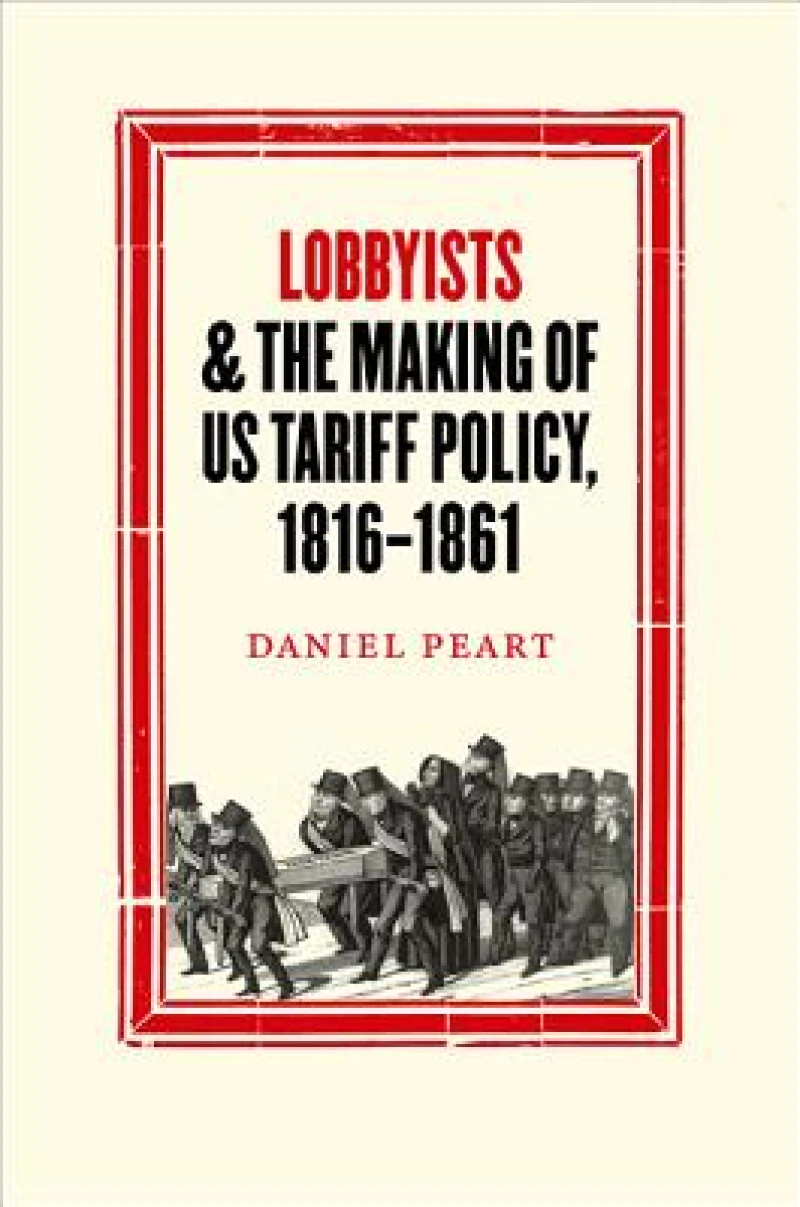
Lobbyists and the Making of US Tariff Policy, 1816-1861
by
Daniel Peart
Book Details
Format
Hardback or Cased Book
ISBN-10
1421426110
ISBN-13
9781421426112
Publisher
Johns Hopkins University Press
Imprint
Johns Hopkins University Press
Country of Manufacture
US
Country of Publication
GB
Publication Date
Nov 26th, 2018
Print length
344 Pages
Weight
600 grams
Dimensions
16.20 x 23.50 x 3.00 cms
Product Classification:
History of the AmericasInternational economicsEconomic & financial crises & disasters
Ksh 10,100.00
Werezi Extended Catalogue
0 in stock
Delivery Location
Delivery fee: Select location
Secure
Quality
Fast
The first book-length study of lobbying prior to the Civil War. Since the 2008 global economic crisis, historians have embraced the challenge of making visible the invisible hand of the market. This renewed interest in the politics of political economy makes it all the more timely to remind ourselves that debates over free trade and protection were just as controversial in the early United States as they have once again become, and that lobbying, then as now, played an important part in Lincoln's government "of the people, by the people, for the people." In Lobbyists and the Making of US Tariff Policy, 18161861, Daniel Peart reveals how active lobbyists were in Washington throughout the antebellum era. He describes how they involved themselves at every stage of the making of tariff policy, from setting the congressional agenda, through the writing of legislation in committee, to the final vote. Considering policymaking as a process, Peart focuses on the importance of rules and timing, the critical roles played by individual lawmakers and lobbyists, and the high degree of uncertainty that characterized this formative period in American political development. The debate about tariff policy, Peart explains, is an unbroken thread that runs throughout the pre–Civil War era, connecting disparate individuals and events and shaping the development of the United States in myriad ways. Duties levied on imports provided the federal government with the major part of its revenue from the ratification of the Constitution to the close of the nineteenth century. More controversially, they also offered protection to domestic producers against foreign competition, at the expense of increased costs for consumers and the risk of retaliation from international trade partners. Ultimately, this book uses the tariff issue to illustrate the critical role that lobbying played within the antebellum policymaking process.
Get Lobbyists and the Making of US Tariff Policy, 1816-1861 by at the best price and quality guaranteed only at Werezi Africa's largest book ecommerce store. The book was published by Johns Hopkins University Press and it has pages.

