
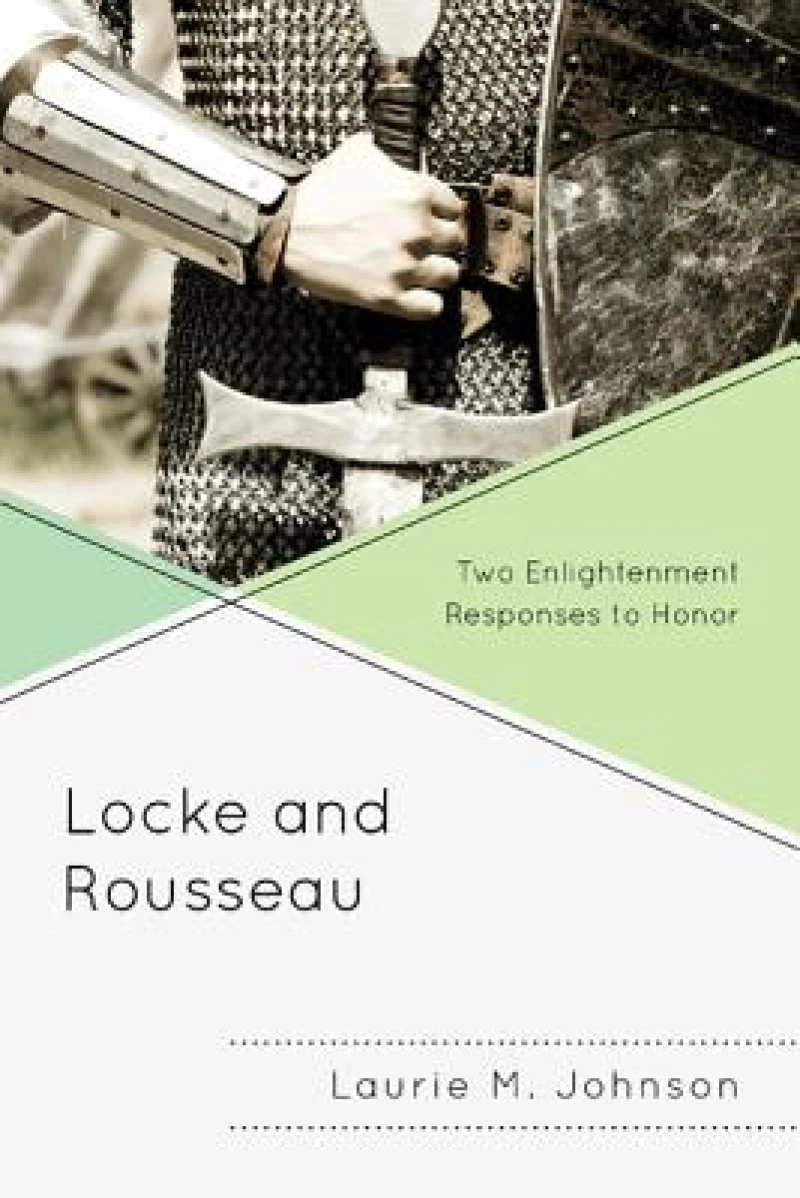
Locke and Rousseau : Two Enlightenment Responses to Honor
Book Details
Format
Paperback / Softback
ISBN-10
0739190601
ISBN-13
9780739190609
Publisher
Bloomsbury Publishing Plc
Imprint
Lexington Books
Country of Manufacture
US
Country of Publication
GB
Publication Date
Dec 10th, 2013
Print length
214 Pages
Weight
310 grams
Dimensions
15.40 x 22.80 x 1.70 cms
Product Classification:
Social & political philosophyPolitical science & theory
Ksh 9,750.00
Manufactured on Demand
0 in stock
Delivery Location
Delivery fee: Select location
Secure
Quality
Fast
Laurie Johnson investigates two Enlightenment-era reactions to honor in Locke and Rousseau. She provides an in-depth analysis of how political philosophers John Locke and Jean-Jacques Rousseau react differently to the place and importance of honor in society. Locke continues the trend of rejecting honor as a means of achieving order and justice in society, preferring instead the modern motivation of rational self-interest. Johnson explores the possibility of an honor code that is compatible with Lockean liberalism, but also points out the problems inherent in such a project. She then turns to Rousseau, whose reaction to Enlightenment ideas reveals our own “divided mood.” Rousseau’s worries and ambivalence about honor are our worries and ambivalence, and his failed attempt to revise honor in a way that works within the modern system highlights how difficult any project to resurrect the value of honor will be. This book will interest anyone who wonders what happened to honor in our world today, including students of communitarianism. Johnson warns us that we cannot simply look to the past, to the ideals of Locke or other Enlightenment thinkers such as the American founders, for answers to our current family, social, and economic problems, because our problems at least partly stem from Enlightenment liberal thought. Instead we must fully recognize this connection before we can start to formulate a definition of honor that can work for us today.
Laurie Johnson investigates two Enlightenment-era reactions to honor in Locke and Rousseau. She provides an in-depth analysis of how political philosophers John Locke and Jean-Jacques Rousseau react differently to the place and importance of honor in society. Locke continues the trend of rejecting honor as a means of achieving order and justice in society, preferring instead the modern motivation of rational self-interest. Johnson explores the possibility of an honor code that is compatible with Lockean liberalism, but also points out the problems inherent in such a project. She then turns to Rousseau, whose reaction to Enlightenment ideas reveals our own “divided mood.” Rousseau’s worries and ambivalence about honor are our worries and ambivalence, and his failed attempt to revise honor in a way that works within the modern system highlights how difficult any project to resurrect the value of honor will be. This book will interest anyone who wonders what happened to honor in our world today, including students of communitarianism. Johnson warns us that we cannot simply look to the past, to the ideals of Locke or other Enlightenment thinkers such as the American founders, for answers to our current family, social, and economic problems, because our problems at least partly stem from Enlightenment liberal thought. Instead we must fully recognize this connection before we can start to formulate a definition of honor that can work for us today.
Get Locke and Rousseau by at the best price and quality guaranteed only at Werezi Africa's largest book ecommerce store. The book was published by Bloomsbury Publishing Plc and it has pages.

