
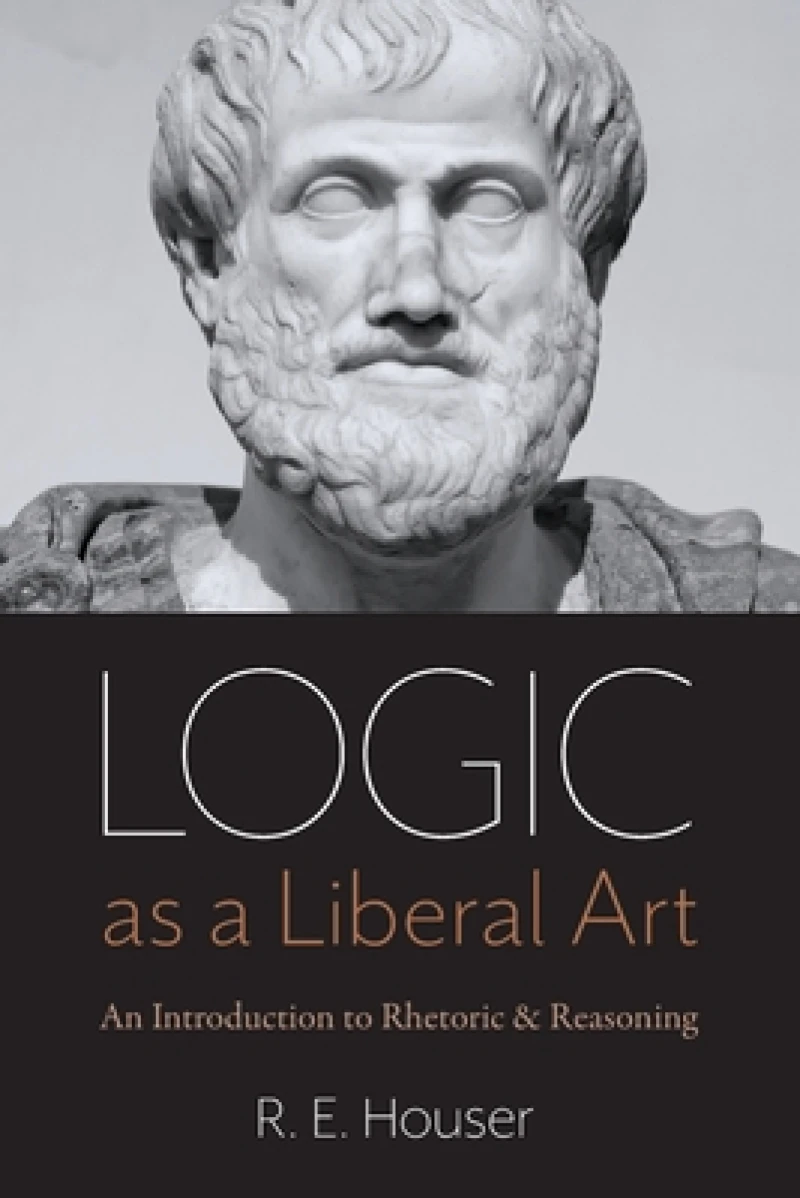
Logic As a Liberal Art : An Introduction to Rhetoric and Reasoning
by
R.E. Houser
Book Details
Format
Paperback / Softback
ISBN-10
0813232341
ISBN-13
9780813232348
Publisher
The Catholic University of America Press
Imprint
The Catholic University of America Press
Country of Manufacture
US
Country of Publication
GB
Publication Date
Dec 30th, 2019
Print length
448 Pages
Weight
768 grams
Dimensions
27.20 x 49.20 x 2.80 cms
Product Classification:
Philosophy: logicPhilosophy: logic
Ksh 5,050.00
Werezi Extended Catalogue
0 in stock
Delivery Location
Delivery fee: Select location
Secure
Quality
Fast
The emphasis in Logic as a Liberal Art is on learning logic through doing problems. In addition, a special effort has been made to have easy, medium, and difficult problems in each Problem Set. In this way the problem sets are designed to offer a challenge to all students.
In the twenty-first century there are two ways to study logic. The more recent approach is symbolic logic. The history of teaching logic since World War II, however, casts doubt on the idea that symbolic logic is best for a first logic course. Logic as a Liberal Art is designed as part of a minority approach, teaching logic in the “verbal” way, in the student’s “natural” language, the approach invented by Aristotle. On utilitarian grounds alone, this “verbal” approach is superior for a first course in logic, for the whole range of students.
For millennia, this “verbal” approach to logic was taught in conjunction with grammar and rhetoric, christened the trivium. The decline in teaching grammar and rhetoric in American secondary schools has led Rollen Edward Houser to develop this book. The first part treats grammar, rhetoric, and the essential nature of logic. Those teachers who look down upon rhetoric are free, of course, to skip those lessons. The treatment of logic itself follows Aristotle’s division of the three acts of the mind (Prior Analytics 1.1). Formal logic is then taken up in Aristotle’s order, with Parts on the logic of Terms, Propositions, and Arguments.
The emphasis in Logic as a Liberal Art is on learning logic through doing problems. Consequently, there are more problems in each lesson than would be found, for example, in many textbooks. In addition, a special effort has been made to have easy, medium, and difficult problems in each Problem Set. In this way the problem sets are designed to offer a challenge to all students, from those most in need of a logic course to the very best students.
For millennia, this “verbal” approach to logic was taught in conjunction with grammar and rhetoric, christened the trivium. The decline in teaching grammar and rhetoric in American secondary schools has led Rollen Edward Houser to develop this book. The first part treats grammar, rhetoric, and the essential nature of logic. Those teachers who look down upon rhetoric are free, of course, to skip those lessons. The treatment of logic itself follows Aristotle’s division of the three acts of the mind (Prior Analytics 1.1). Formal logic is then taken up in Aristotle’s order, with Parts on the logic of Terms, Propositions, and Arguments.
The emphasis in Logic as a Liberal Art is on learning logic through doing problems. Consequently, there are more problems in each lesson than would be found, for example, in many textbooks. In addition, a special effort has been made to have easy, medium, and difficult problems in each Problem Set. In this way the problem sets are designed to offer a challenge to all students, from those most in need of a logic course to the very best students.
Get Logic As a Liberal Art by at the best price and quality guaranteed only at Werezi Africa's largest book ecommerce store. The book was published by The Catholic University of America Press and it has pages.

