
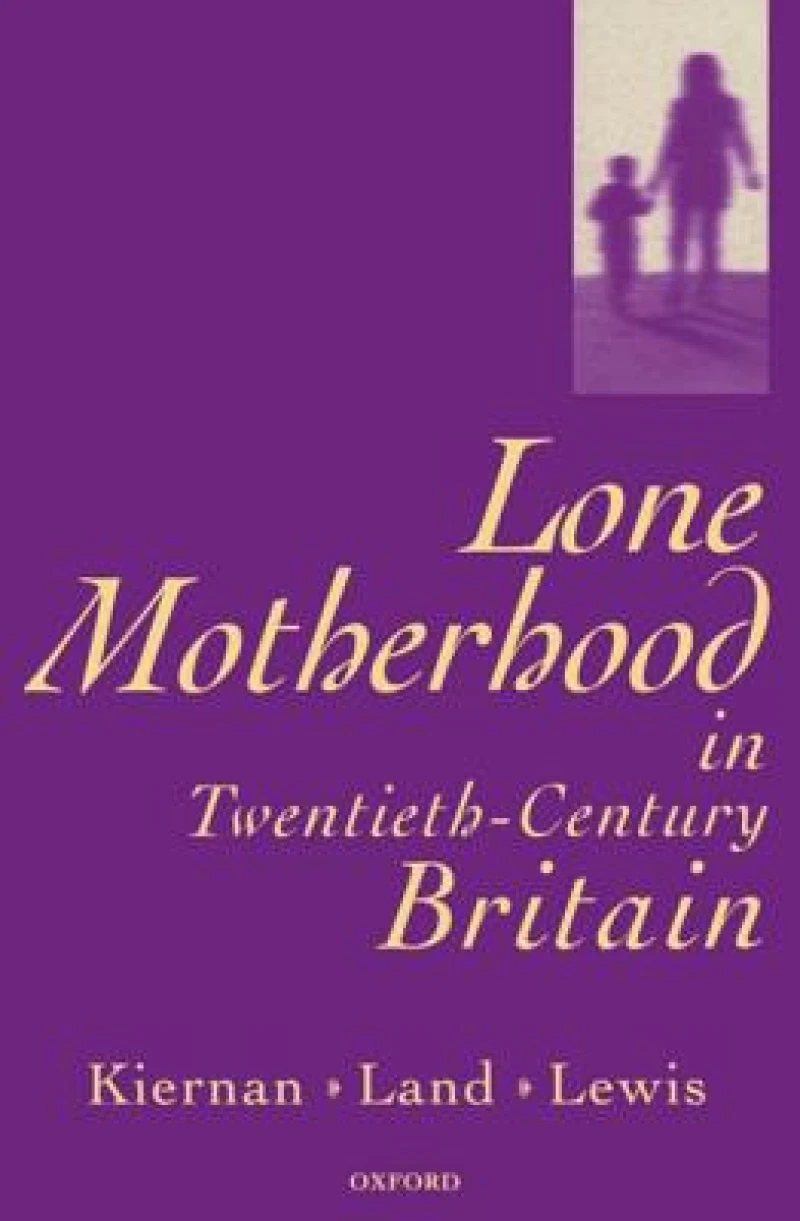
Lone Motherhood in Twentieth-Century Britain : From Footnote to Front Page
Book Details
Format
Paperback / Softback
ISBN-10
0198290691
ISBN-13
9780198290698
Publisher
Oxford University Press
Imprint
Oxford University Press
Country of Manufacture
GB
Country of Publication
GB
Publication Date
May 7th, 1998
Print length
346 Pages
Weight
544 grams
Dimensions
15.80 x 23.40 x 2.20 cms
Ksh 13,300.00
Manufactured on Demand
0 in stock
Delivery Location
Delivery fee: Select location
Secure
Quality
Fast
During the 1990s lone mothers have been viewed as both a drain on public expenditure and a moral threat. This study sets out to investigate the demographics of lone motherhood, to look at the wider social context for any changes, and to examine how policies have defined the problem over time.
During the 1990s lone mothers reached the top of the political agenda, viewed as both a drain on public expenditure and a moral threat. What has been missing from the debate is an understanding of how we have got to where we are. This timely new study, by three leading experts in the field, sets out first to investigate the demographics of lone motherhood - how the pathways into lone motherhood have changed, and whether the changes of the last quarter of a century are as dramatic as they appear. Second, it looks at the wider context for the changes in lone motherhood in terms of ideas about marriage, and the changes in the construction of the never-married mother, from victim in the 1950s to parasite in the late 1980s. Finally, it examines the way in which policies have defined the problem of lone motherhood over time and the way in which lone mothers have been treated with regard to housing, social security, and employment. The study concludes that there is little possiblility of putting the genie back in the bottle in terms of reducing the number of lone mothers - efforts to do so by reducing public expenditure on them may be effective, but at the expense of the children involved. Instead, the authors urge policy-makers to change focus again, and pay more attention to investing in children.
During the 1990s lone mothers reached the top of the political agenda, viewed as both a drain on public expenditure and a moral threat. What has been missing from the debate is an understanding of how we have got to where we are. This timely new study, by three leading experts in the field, sets out first to investigate the demographics of lone motherhood - how the pathways into lone motherhood have changed, and whether the changes of the last quarter of a century are as dramatic as they appear. Second, it looks at the wider context for the changes in lone motherhood in terms of ideas about marriage, and the changes in the construction of the never-married mother, from victim in the 1950s to parasite in the late 1980s. Finally, it examines the way in which policies have defined the problem of lone motherhood over time and the way in which lone mothers have been treated with regard to housing, social security, and employment. The study concludes that there is little possiblility of putting the genie back in the bottle in terms of reducing the number of lone mothers - efforts to do so by reducing public expenditure on them may be effective, but at the expense of the children involved. Instead, the authors urge policy-makers to change focus again, and pay more attention to investing in children.
Get Lone Motherhood in Twentieth-Century Britain by at the best price and quality guaranteed only at Werezi Africa's largest book ecommerce store. The book was published by Oxford University Press and it has pages.

