
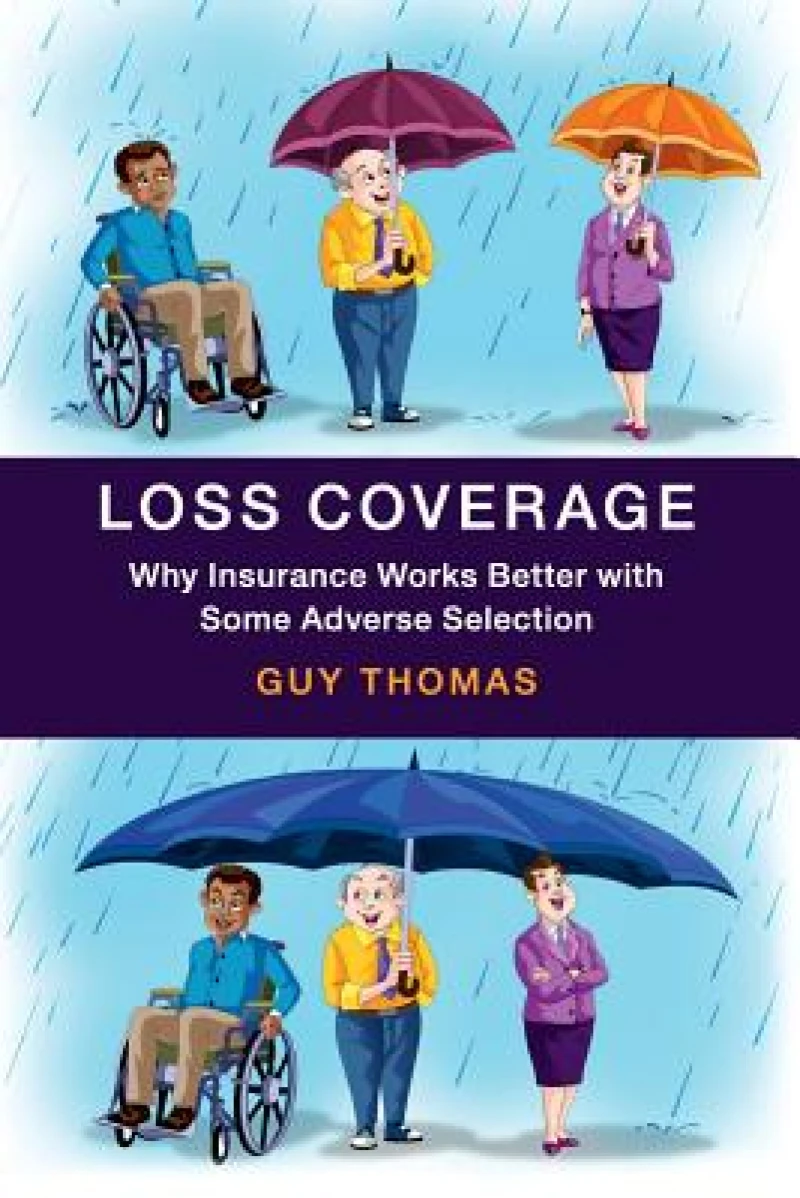
Loss Coverage : Why Insurance Works Better with Some Adverse Selection
by
Guy Thomas
Book Details
Format
Paperback / Softback
ISBN-10
1107495903
ISBN-13
9781107495906
Publisher
Cambridge University Press
Imprint
Cambridge University Press
Country of Manufacture
US
Country of Publication
GB
Publication Date
May 2nd, 2017
Print length
282 Pages
Weight
410 grams
Dimensions
22.80 x 15.20 x 1.50 cms
Ksh 5,400.00
Manufactured on Demand
0 in stock
Delivery Location
Delivery fee: Select location
Secure
Quality
Fast
A novel book that argues that, contrary to received wisdom, some adverse selection in insurance markets is beneficial to society as a whole. It is for all those interested in public policy arguments about insurance and discrimination: policymakers, academics, actuaries, underwriters, disability activists, geneticists and other medical professionals.
Most academic and policy commentary represents adverse selection as a severe problem in insurance, which should always be deprecated, avoided or minimised. This book gives a contrary view. It details the exaggeration of adverse selection in insurers'' rhetoric and insurance economics, and presents evidence that in many insurance markets, adverse selection is weaker than most commentators suggest. A novel arithmetical argument shows that from a public policy perspective, ''weak'' adverse selection can be a good thing. This is because a degree of adverse selection is needed to maximise ''loss coverage'', the expected fraction of the population''s losses which is compensated by insurance. This book will be valuable for those interested in public policy arguments about insurance and discrimination: academics (in economics, law and social policy), policymakers, actuaries, underwriters, disability activists, geneticists and other medical professionals.
Get Loss Coverage by at the best price and quality guaranteed only at Werezi Africa's largest book ecommerce store. The book was published by Cambridge University Press and it has pages.

