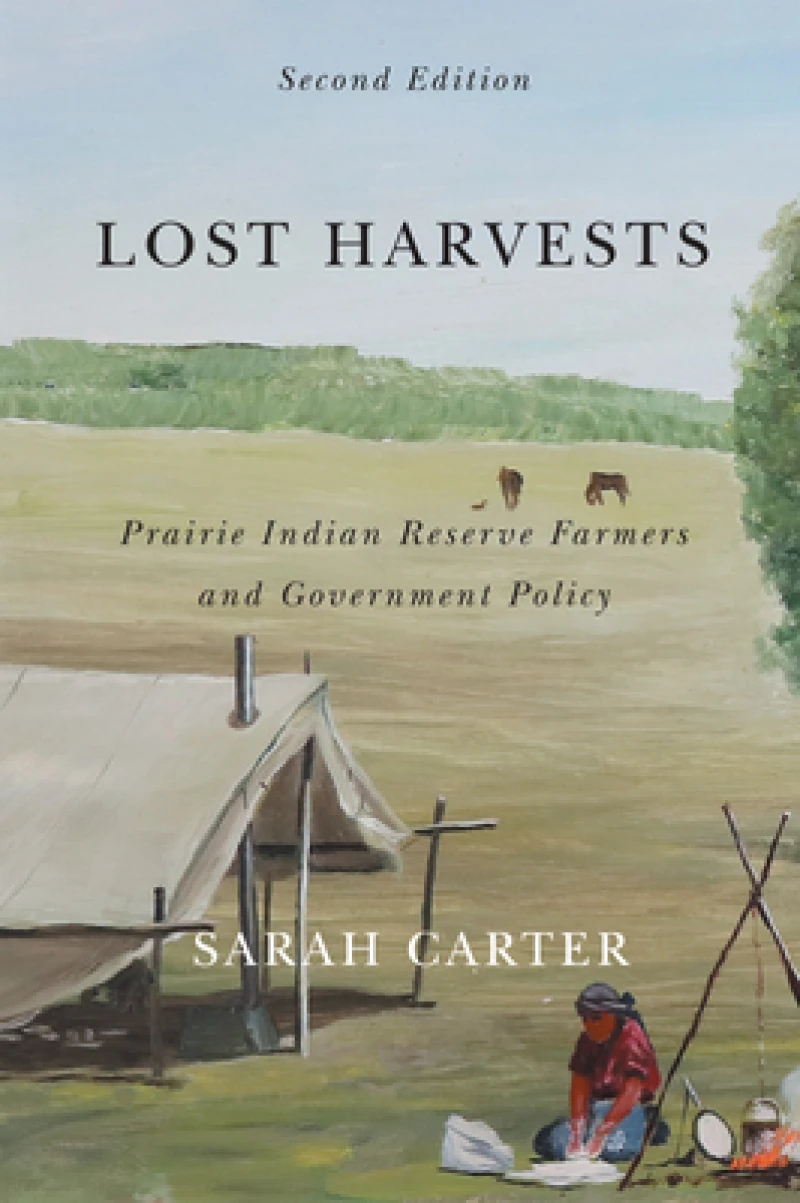
Lost Harvests : Prairie Indian Reserve Farmers and Government Policy, Second Edition
by
Sarah Carter
Book Details
Format
Hardback or Cased Book
Book Series
McGill-Queen's Native and Northern Series
ISBN-10
0228000726
ISBN-13
9780228000723
Publisher
McGill-Queen's University Press
Imprint
McGill-Queen's University Press
Country of Manufacture
CA
Country of Publication
GB
Publication Date
Sep 19th, 2019
Print length
348 Pages
Product Classification:
History of the AmericasIndigenous peoplesAgriculture & related industriesAgriculture & farming
Ksh 20,150.00
Publisher Out of Stock
0 in stock
Delivery Location
Delivery fee: Select location
Secure
Quality
Fast
Agriculture on Plains Indian reserves is generally thought to have failed because the Indigenous people lacked either an interest in farming or an aptitude for it. In Lost Harvests Sarah Carter reveals that reserve residents were anxious to farm and expended considerable effort on cultivation; government policies, more than anything else, acted to undermine their success. Despite repeated requests for assistance from Plains Indians, the Canadian government provided very little help between 1874 and 1885, and what little they did give proved useless. Although drought, frost, and other natural phenomena contributed to the failure of early efforts, reserve farmers were determined to create an economy based on agriculture and to become independent of government regulations and the need for assistance. Officials in Ottawa, however, attributed setbacks not to economic or climatic conditions but to the Indians' character and traditions which, they claimed, made the Indians unsuited to agriculture. In the decade following 1885 government policies made farming virtually impossible for the Plains Indians. They were expected to subsist on one or two acres and were denied access to any improvements in technology: farmers had to sow seed by hand, harvest with scythes, and thresh with flails. After the turn of the century, the government encouraged land surrenders in order to make good agricultural land available to non-Indian settlers. This destroyed any chance the Plains Indians had of making agriculture a stable economic base. Through an examination of the relevant published literature and of archival sources in Ottawa, Manitoba, Saskatchewan, and Alberta, Carter provides an in-depth study of government policy, Indian responses, and the socio-economic condition of the reserve communities on the prairies in the post-treaty era. The new introduction by the author offers a reflection on Lost Harvests, the influences that shaped it, and the issues and approaches that remain to be explored.
Get Lost Harvests by at the best price and quality guaranteed only at Werezi Africa's largest book ecommerce store. The book was published by McGill-Queen's University Press and it has pages.