
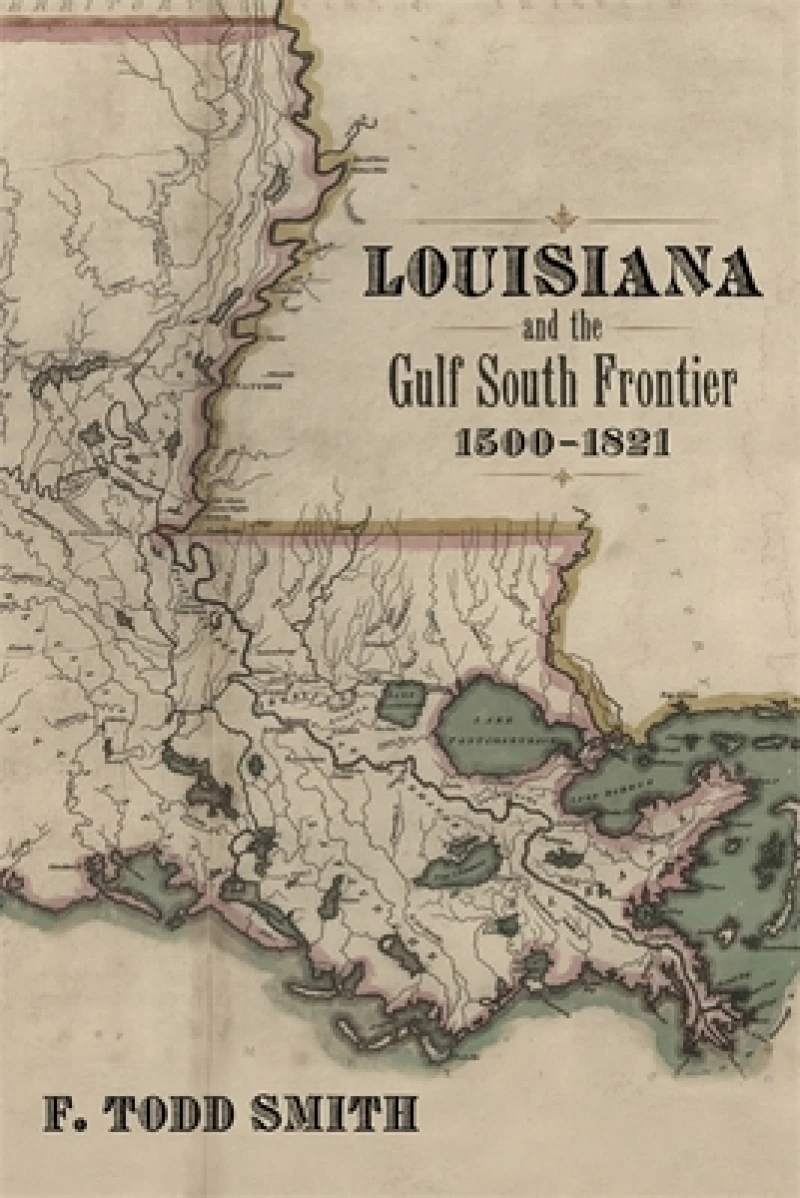
Louisiana and the Gulf South Frontier, 1500-1821
Book Details
Format
Hardback or Cased Book
ISBN-10
0807157104
ISBN-13
9780807157107
Publisher
Louisiana State University Press
Imprint
Louisiana State University Press
Country of Manufacture
US
Country of Publication
GB
Publication Date
Nov 17th, 2014
Print length
296 Pages
Weight
540 grams
Dimensions
22.90 x 16.00 x 2.30 cms
Product Classification:
History of the AmericasHistory of the Americas
Ksh 6,750.00
Temporarily out of stock, due soon
0 in stock
Delivery Location
Delivery fee: Select location
Secure
Quality
Fast
Bound together by social, demographic, and economic commonalities, the territory extending from East Texas to West Florida occupies a unique space in early American history. The result of two decades of scholarly work, this volume examines the region's history from the eve of European colonization to the final imposition of American hegemony.
Bound together by social, demographic, and economic commonalities, the territory extending from East Texas to West Florida occupies a unique space in early American history. A masterful synthesis of two decades of scholarly work, F. Todd Smith's Louisiana and the Gulf South Frontier, 1500-1821 examines the region's history from the eve of European colonization to the final imposition of American hegemony.
The agricultural richness of the Gulf Coast gave rise to an extraordinarily diverse society: development of food crops rendered local indigenous groups wealthier and more powerful than their counterparts in New England and the West, and white demand for plantation slave labor produced a disproportionately large black population compared to other parts of the country. European settlers were a heterogeneous mix as well, creating a multinational blend of cultures and religions that did not exist on the largely Anglo-Protestant Atlantic Coast.
Because of this diversity, which allowed no single group to gain primacy over the rest, Smith's study characterizes the Gulf South as a frontier from the sixteenth century to the early years of the nineteenth. Only in the twenty years following the Louisiana Purchase did Americans manage to remove most of the Indian tribes, overwhelm Louisiana's French Creoles numerically and politically, and impose a racial system in accordance with the rest of the Deep South.
Moving fluently across the boundaries of colonial possessions and state lines, Louisiana and the Gulf South Frontier, 1500-1821 is a comprehensive and highly readable overview of the Gulf Coast's distinctive and enthralling history.
The agricultural richness of the Gulf Coast gave rise to an extraordinarily diverse society: development of food crops rendered local indigenous groups wealthier and more powerful than their counterparts in New England and the West, and white demand for plantation slave labor produced a disproportionately large black population compared to other parts of the country. European settlers were a heterogeneous mix as well, creating a multinational blend of cultures and religions that did not exist on the largely Anglo-Protestant Atlantic Coast.
Because of this diversity, which allowed no single group to gain primacy over the rest, Smith's study characterizes the Gulf South as a frontier from the sixteenth century to the early years of the nineteenth. Only in the twenty years following the Louisiana Purchase did Americans manage to remove most of the Indian tribes, overwhelm Louisiana's French Creoles numerically and politically, and impose a racial system in accordance with the rest of the Deep South.
Moving fluently across the boundaries of colonial possessions and state lines, Louisiana and the Gulf South Frontier, 1500-1821 is a comprehensive and highly readable overview of the Gulf Coast's distinctive and enthralling history.
Get Louisiana and the Gulf South Frontier, 1500-1821 by at the best price and quality guaranteed only at Werezi Africa's largest book ecommerce store. The book was published by Louisiana State University Press and it has pages.

