
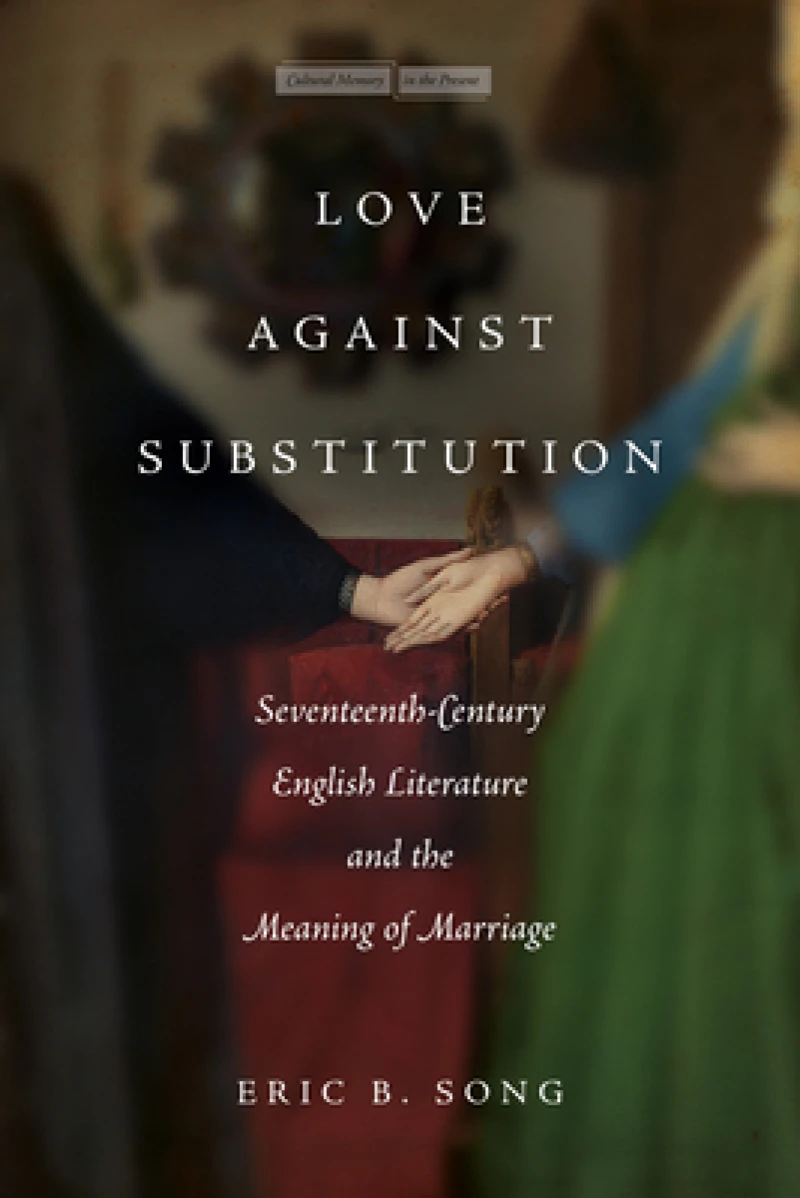
Love Against Substitution : Seventeenth-Century English Literature and the Meaning of Marriage
New
by
Eric B. Song
Book Details
Format
Paperback / Softback
Book Series
Cultural Memory in the Present
ISBN-10
1503631400
ISBN-13
9781503631403
Edition
New
Publisher
Stanford University Press
Imprint
Stanford University Press
Country of Manufacture
GB
Country of Publication
GB
Publication Date
Apr 26th, 2022
Print length
277 Pages
Weight
526 grams
Dimensions
15.30 x 22.90 x 2.40 cms
Product Classification:
Literary studies: c 1500 to c 1800General & world historyHistory of religionChristianity
Ksh 4,150.00
Werezi Extended Catalogue
0 in stock
Delivery Location
Delivery fee: Select location
Secure
Quality
Fast
Are we unique as individuals, or are we replaceable? Seventeenth-century English literature pursues these questions through depictions of marriage. The writings studied in this book elevate a love between two individuals who deem each other to be unique to the point of being irreplaceable, and this vocabulary allows writers to put affective pressure on the meaning of marriage as Pauline theology defines it. Stubbornly individual, love threatens to short-circuit marriage's function in directing intimate feelings toward a communal experience of Christ's love. The literary project of testing the meaning of marriage proved to be urgent work throughout the seventeenth century. Monarchy itself was put on trial in this century, and so was the usefulness of marriage in linking Christian belief with the legitimacy of hereditary succession. Starting at the end of the sixteenth century with Edmund Spenser, and then exploring works by William Shakespeare, William Davenant, John Milton, Lucy Hutchinson, and Aphra Behn, Eric Song offers a new account of how notions of unique personhood became embedded in a literary way of thinking and feeling about marriage.
Get Love Against Substitution by at the best price and quality guaranteed only at Werezi Africa's largest book ecommerce store. The book was published by Stanford University Press and it has pages.

