
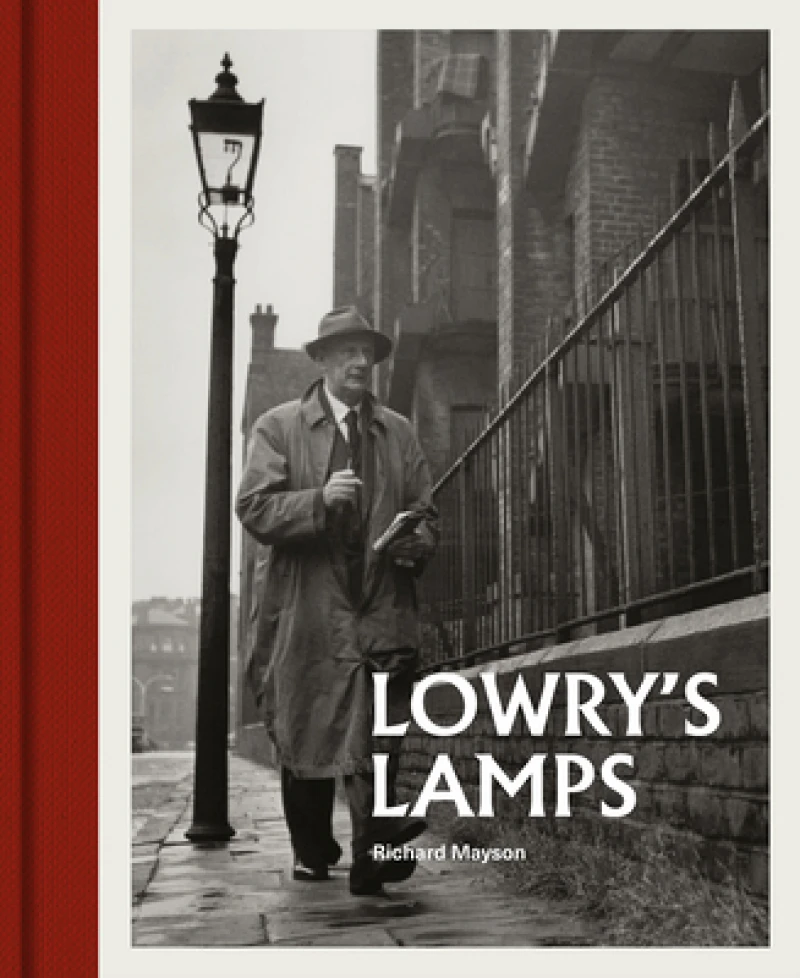
Lowry's Lamps
Book Details
Format
Hardback or Cased Book
ISBN-10
1911604600
ISBN-13
9781911604600
Publisher
Unicorn Publishing Group
Imprint
Unicorn Publishing Group
Country of Manufacture
GB
Country of Publication
GB
Publication Date
Jul 15th, 2020
Print length
124 Pages
Weight
858 grams
Dimensions
20.30 x 24.60 x 1.90 cms
Product Classification:
Art & design styles: c 1900 to c 1960Individual artists, art monographs
Ksh 3,750.00
Re-Printing
0 in stock
Delivery Location
Delivery fee: Select location
Secure
Quality
Fast
No need to go to London to become a famous painter. You wont find better lamp-posts there.
British painter Laurence Stephen Lowry (18871976) is best known for his depictions of life in busy industrial settings, but there is a great deal more to be read from the detail of his paintings. A master of observation and composition, he used street furniture to brilliant effect. Everyday objectslampposts, telegraph poles, flag poles, fences, and sometimes just vertical posts with no apparent useformed an important part of his busy industrial scenes. Lamps, in particular, became a subject in their own right in his later, quieter, solitary works.
Richard Mayson, who was brought up in the same village as L. S. Lowry and holds a passion for street lamps and street furniture, explores some of Lowrys best-known works, highlighting his use of lamps and street furniture in his handling of configuration, perspective, and color. Mayson compares Lowrys treatment of street furniture to the paintings real-life source materialSalford and Manchester streets from 1916 to the 1970sand illustrates how his work evolved. Finally, Mayson considers Lowrys expression of solitude, an aspect of his life often conveyed in his later work. This in-depth look at the perennially popular work of L. S. Lowry is illustrated with seventy color plates, many from private collections and previously unseen, that are reproduced here for the first time.
British painter Laurence Stephen Lowry (18871976) is best known for his depictions of life in busy industrial settings, but there is a great deal more to be read from the detail of his paintings. A master of observation and composition, he used street furniture to brilliant effect. Everyday objectslampposts, telegraph poles, flag poles, fences, and sometimes just vertical posts with no apparent useformed an important part of his busy industrial scenes. Lamps, in particular, became a subject in their own right in his later, quieter, solitary works.
Richard Mayson, who was brought up in the same village as L. S. Lowry and holds a passion for street lamps and street furniture, explores some of Lowrys best-known works, highlighting his use of lamps and street furniture in his handling of configuration, perspective, and color. Mayson compares Lowrys treatment of street furniture to the paintings real-life source materialSalford and Manchester streets from 1916 to the 1970sand illustrates how his work evolved. Finally, Mayson considers Lowrys expression of solitude, an aspect of his life often conveyed in his later work. This in-depth look at the perennially popular work of L. S. Lowry is illustrated with seventy color plates, many from private collections and previously unseen, that are reproduced here for the first time.
Laurence Stephen Lowry RBA RA is mostly thought about in terms of his people and their industrial setting but there is a great deal more to be read from the detail of his paintings. Throughout his artistic career, Lowry used street furniture to brilliant effect. He was a master of observation and composition. Lamp-posts, telegraph poles, flag poles, fences (and sometimes just vertical posts with no apparent use) form an important part of Lowry’s busy industrial scenes. As his work developed, lamps became a subject in their own right and became the focus of some of his later quiet, solitary works. The evidence of Lowry’s careful thought about lamps and lamp posts is evident in his response to young artists asking for career advice as well as it is in the painting: ‘no need to go to London to become a famous painter. You won’t find better lamp-posts there.’ This book examines an important aspect of Lowry’s art for the first time. It is written by Richard Mayson who was brought up in Lowry’s home-village of Mottram-in-Longdendale. Mayson has a life-long passion for street lamps and street furniture. Taking some of Lowry’s best-known works as a reference, this book highlights Lowry’s use of lamps and street furniture in his handling of composition, perspective and colour. The expression of solitude, an aspect of Lowry’s life and often conveyed in his later work, is also considered. He also compares the treatment of street furniture in Lowry’s paintings with the reality of Salford and Manchester streets from 1916 to the 1970s illustrating how Lowry’s work evolved. Previously unseen works in private collections will be reproduced in this book for the first time.
Get Lowry's Lamps by at the best price and quality guaranteed only at Werezi Africa's largest book ecommerce store. The book was published by Unicorn Publishing Group and it has pages.

