
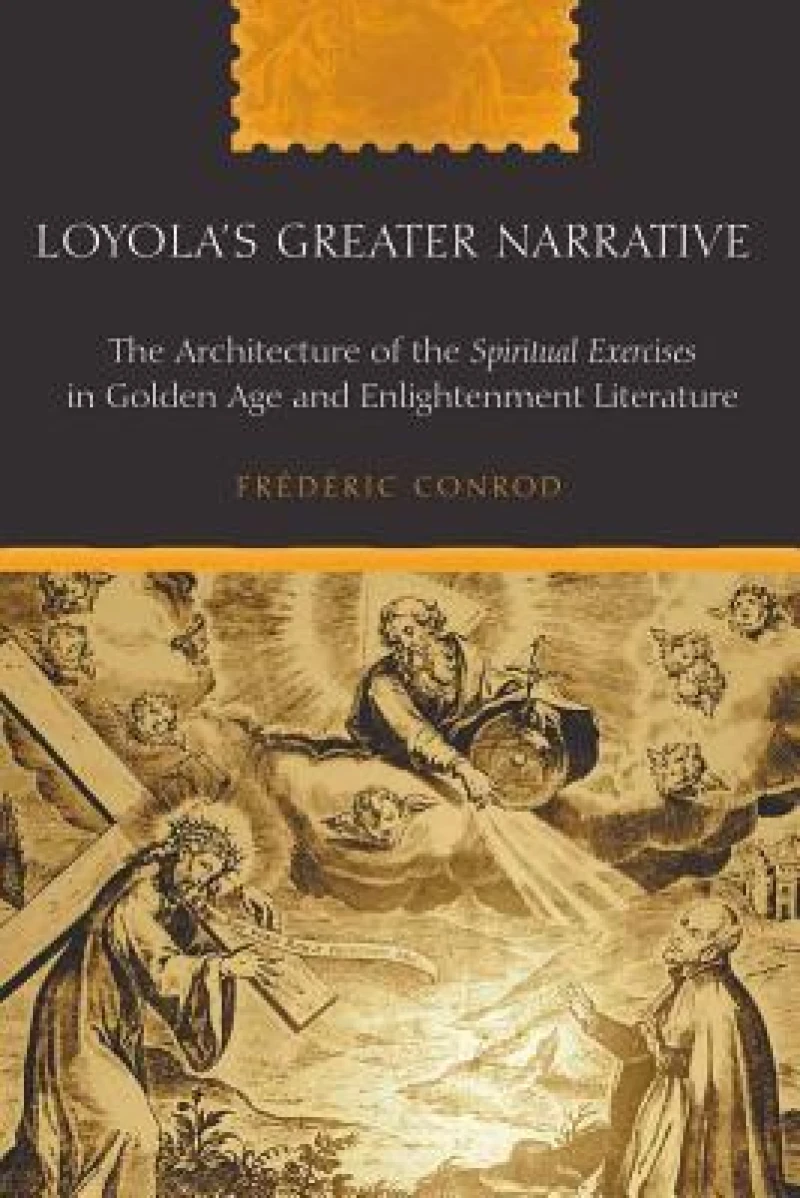
Loyola’s Greater Narrative : The Architecture of the "Spiritual Exercises" in Golden Age and Enlightenment Literature
2 Revised edition
Book Details
Format
Hardback or Cased Book
Book Series
American University Studies
ISBN-10
1433104970
ISBN-13
9781433104978
Edition
2 Revised edition
Publisher
Peter Lang Publishing Inc
Imprint
Peter Lang Publishing Inc
Country of Manufacture
US
Country of Publication
GB
Publication Date
Oct 29th, 2008
Print length
255 Pages
Weight
384 grams
Dimensions
15.20 x 22.60 x 1.60 cms
Product Classification:
Classical textsLiterary studies: c 1800 to c 1900 Religion & beliefs
Ksh 13,500.00
Manufactured on Demand
0 in stock
Delivery Location
Delivery fee: Select location
Secure
Quality
Fast
The Baroque imagination has its roots in Ignatius of Loyola’s Spiritual Exercises (1547), which defined for the Counter-Reformation era the parameters in which Catholic believers must confront the Enemy and the temporal corruption he embodies in order to enter a state of grace and obtain salvation. Through complex interactions of different imaginative functions, Loyola’s text is able to superpose a variety of simultaneous narrative levels. In order to reformulate the «greater narrative» (the Magisterium) of the Roman faith beyond what is revealed in Scripture, the Spiritual Exercises require their exercitant to become an active participant in this narrative through constant visual contact with «orders of corruption», that is, spaces in which virtue can be confronted with physical decay and sin. Through these spaces Counter-Reformation Rome (La Roma Ignaziana) would redefine the economy of salvation and diffuse the visual dynamics of the Spiritual Exercises throughout the Catholic world. In their writings, Spanish Golden Age authors Miguel de Cervantes and Baltasar Gracián use the rising modernity of the novel to transform Loyola’s notion of «orders of corruption» by adapting it to the secular world. Their encoded criticism of Loyolan imagination contributed to the epistemological crisis that marks the Baroque age, but also prepared the way for the crucial debates that would take place during the Enlightenment (such as the deconstruction of the Catholic «greater narrative» reflected in Loyola). This book concludes with a discussion of the eventual negation of Loyolan imagination in the novels of the Marquis de Sade, which undermine the Roman faith by parodying the Baroque forms of spiritual visual experience and negate the Loyolan projection into «orders of corruption».
The Baroque imagination has its roots in Ignatius of Loyola’s Spiritual Exercises (1547), which defined for the Counter-Reformation era the parameters in which Catholic believers must confront the Enemy and the temporal corruption he embodies in order to enter a state of grace and obtain salvation. Through complex interactions of different imaginative functions, Loyola’s text is able to superpose a variety of simultaneous narrative levels. In order to reformulate the «greater narrative» (the Magisterium) of the Roman faith beyond what is revealed in Scripture, the Spiritual Exercises require their exercitant to become an active participant in this narrative through constant visual contact with «orders of corruption», that is, spaces in which virtue can be confronted with physical decay and sin. Through these spaces Counter-Reformation Rome (La Roma Ignaziana) would redefine the economy of salvation and diffuse the visual dynamics of the Spiritual Exercises throughout the Catholic world. In their writings, Spanish Golden Age authors Miguel de Cervantes and Baltasar Gracián use the rising modernity of the novel to transform Loyola’s notion of «orders of corruption» by adapting it to the secular world. Their encoded criticism of Loyolan imagination contributed to the epistemological crisis that marks the Baroque age, but also prepared the way for the crucial debates that would take place during the Enlightenment (such as the deconstruction of the Catholic «greater narrative» reflected in Loyola). This book concludes with a discussion of the eventual negation of Loyolan imagination in the novels of the Marquis de Sade, which undermine the Roman faith by parodying the Baroque forms of spiritual visual experience and negate the Loyolan projection into «orders of corruption».
Get Loyola’s Greater Narrative by at the best price and quality guaranteed only at Werezi Africa's largest book ecommerce store. The book was published by Peter Lang Publishing Inc and it has pages.

