
Luso-Brazilian Encounters of the Sixteenth Century : A Styles of Thinking Approach
Book Details
Format
Hardback or Cased Book
ISBN-10
161147020X
ISBN-13
9781611470208
Publisher
Fairleigh Dickinson University Press
Imprint
Fairleigh Dickinson University Press
Country of Manufacture
US
Country of Publication
GB
Publication Date
Jun 24th, 2011
Print length
128 Pages
Weight
388 grams
Dimensions
15.80 x 23.60 x 1.60 cms
Product Classification:
History of the AmericasEarly modern history: c 1450/1500 to c 1700Colonialism & imperialism
Ksh 13,700.00
Re-Printing
0 in stock
Delivery Location
Delivery fee: Select location
Secure
Quality
Fast
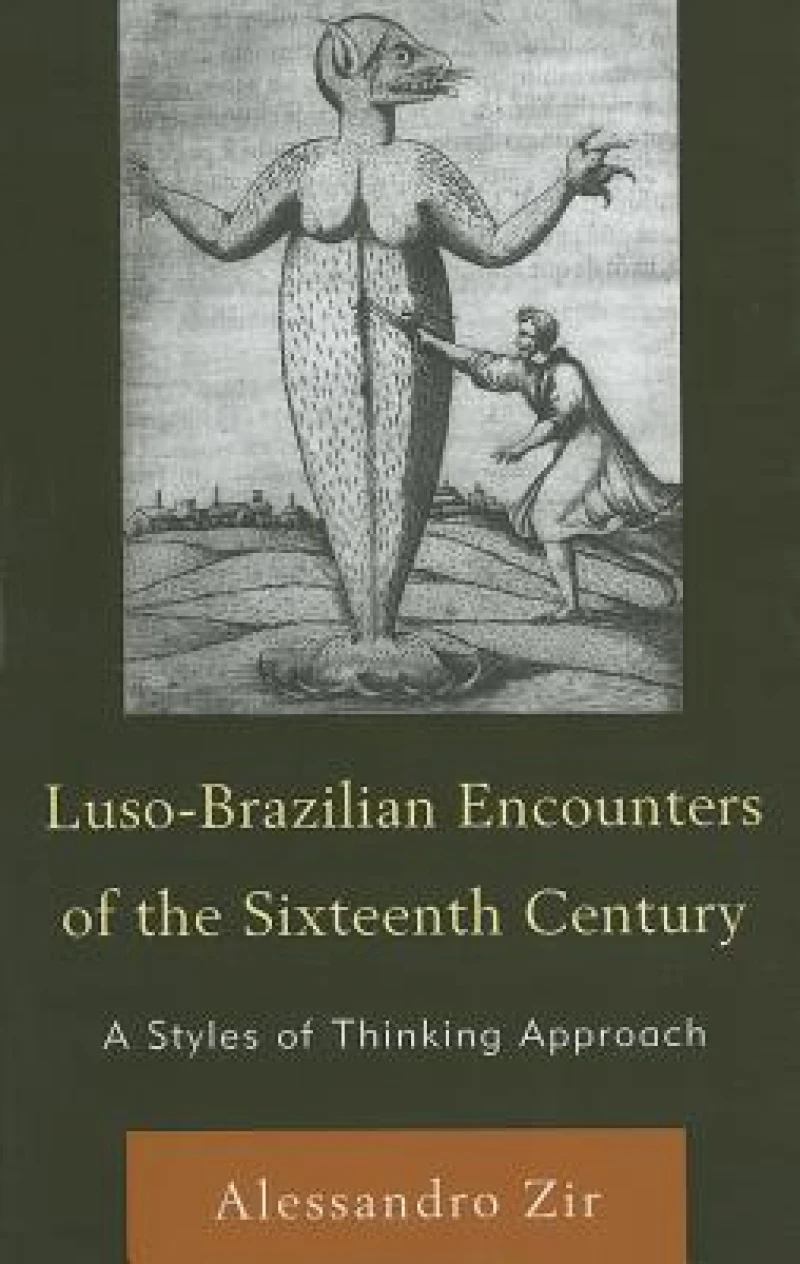
As it happens with other early-Modern corpora, the descriptive texts from 16th-century encounters of the Portuguese colonizers in Brazil are well-known for their strangeness. In them we find references to entities like monsters and demons, bizarre descriptions, and odd classification systems of plants and animals. For the most part, these elements are dismissed as mere eccentricities by modern scholars studying these texts. Instead, this book takes these elements seriously. They are focused on and tackled with a theoretical tool_styles of thinking_not yet used in Luso-Brazilian studies, and coming from another field of inquiry: philosophy and history of science. By doing so the book aims to unveil epistemological and ontological issues in which colonial and post-colonial studies are entangled, and which have a relevance that goes beyond debates concerning, for instance, the formation of Brazil's cultural identity. This book contributes to Luso-Brazilian studies, science studies, and the history of the early-modern period. The notion of 'styles of thinking' as presented and used in it benefitted from the many discussions about philosophy and history of science that emerged since the 1980s, with authors such as Ian Hacking, Lorraine Daston, and Peter Galison, who have already done much reassessing critically what is best in the work of previous authors such as Paul Feyerabend, Thomas Kuhn, and Michel Foucault. This book considers that the well-known puzzling passages of the corpus of the Portuguese have a fictional and figurative character that acquires full intelligibility in view of literary and mystical traditions typical of the late Renaissance, and influential over the Portuguese. Nature is understood as emerging from an excessive source which permanently overflows it and which is impossible to refer and depict literally. The book points to the fact that such an idea would connect the Portuguese with other peculiar pre-Modern and post-Modern authors with similar ontological insights: from the neo-Platonists to Boccaccio, Nietzsche, and more recently, Derrida.
As it happens with other early-Modern corpora, the descriptive texts from 16th-century encounters of the Portuguese colonizers in Brazil are well-known for their strangeness. In them we find references to entities like monsters and demons, bizarre descriptions, and odd classification systems of plants and animals. For the most part, these elements are dismissed as mere eccentricities by modern scholars studying these texts. Instead, this book takes these elements seriously. They are focused on and tackled with a theoretical tool_styles of thinking_not yet used in Luso-Brazilian studies, and coming from another field of inquiry: philosophy and history of science. By doing so the book aims to unveil epistemological and ontological issues in which colonial and post-colonial studies are entangled, and which have a relevance that goes beyond debates concerning, for instance, the formation of Brazil''s cultural identity. This book contributes to Luso-Brazilian studies, science studies, and the history of the early-modern period. The notion of ''styles of thinking'' as presented and used in it benefitted from the many discussions about philosophy and history of science that emerged since the 1980s, with authors such as Ian Hacking, Lorraine Daston, and Peter Galison, who have already done much reassessing critically what is best in the work of previous authors such as Paul Feyerabend, Thomas Kuhn, and Michel Foucault. This book considers that the well-known puzzling passages of the corpus of the Portuguese have a fictional and figurative character that acquires full intelligibility in view of literary and mystical traditions typical of the late Renaissance, and influential over the Portuguese. Nature is understood as emerging from an excessive source which permanently overflows it and which is impossible to refer and depict literally. The book points to the fact that such an idea would connect the Portuguese with other peculiar pre-Modern and post-Modern authors with similar ontological insights: from the neo-Platonists to Boccaccio, Nietzsche, and more recently, Derrida.
Get Luso-Brazilian Encounters of the Sixteenth Century by at the best price and quality guaranteed only at Werezi Africa's largest book ecommerce store. The book was published by Fairleigh Dickinson University Press and it has pages.

