
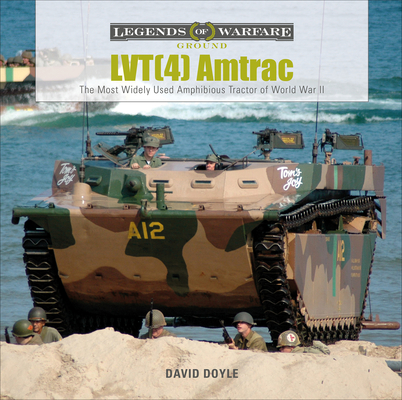
LVT(4) Amtrac : The Most Widely Used Amphibious Tractor of World War II
by
David Doyle
Book Details
Format
Hardback
Book Series
Legends of Warfare: Ground
ISBN-10
0764360108
ISBN-13
9780764360107
Publisher
Schiffer Publishing Ltd
Imprint
Schiffer Publishing Ltd
Country of Manufacture
CN
Country of Publication
GB
Publication Date
Aug 28th, 2020
Print length
112 Pages
Weight
754 grams
Dimensions
12.80 x 20.30 x 2.20 cms
Product Classification:
Land forces & warfareTanks & military land vehicles
KSh 4,150.00
Currently unavailable
0 in stock
Delivery Location
Delivery fee: Select location
Secure
Quality
Fast
Originally developed as a swamp rescue vehicle by millionaire philanthropists Donald and John Roebling, the LVT (Landing Vehicle, Tracked), or "Alligator," was widely used in the Allied island-hopping campaign in the Pacific during World War II. Powered by a mammoth aircraft-type engine, the LVT(4) could cross treacherous coral reefs, deep water, and swamps to land troops ashore. The LVT(4) also introduced the rear ramp, which when lowered allowed troops to rush out, rather than clamber over the tall sides as on previous models. Produced by Food Machinery Corporation (FMC), railway equipment manufacturer St. Louis Car Company, and automobile maker Graham-Paige, over 8,000 LVT(4)s were built during the war; today only a few remain. Through dozens of archival photos as well as detailed photographs of some of the finest existent examples of these vehicles, this iconic landing vehicle is explored, and its history is explained.
Originally developed as a swamp rescue vehicle by millionaire philanthropists Donald and John Roebling, the LVT (Landing Vehicle, Tracked), or "Alligator," was widely used in the Allied island-hopping campaign in the Pacific during World War II. Powered by a mammoth aircraft-type engine, the LVT(4) could cross treacherous coral reefs, deep water, and swamps to land troops ashore. The LVT(4) also introduced the rear ramp, which when lowered allowed troops to rush out, rather than clamber over the tall sides as on previous models. Produced by Food Machinery Corporation (FMC), railway equipment manufacturer St. Louis Car Company, and automobile maker Graham-Paige, over 8,000 LVT(4)s were built during the war; today only a few remain. Through dozens of archival photos as well as detailed photographs of some of the finest existent examples of these vehicles, this iconic landing vehicle is explored, and its history is explained.
Get LVT(4) Amtrac by David Doyle at the best price and quality guaranteed only at Werezi Africa's largest book ecommerce store. The book was published by Schiffer Publishing Ltd and it has 112 pages.
Customers Who Bought This Also Bought

Seven Pillars of Wisdom
KSh 1,500.00

Armies of the Gulf War
KSh 2,700.00

The British-Indian Army 1860-1914
KSh 1,450.00
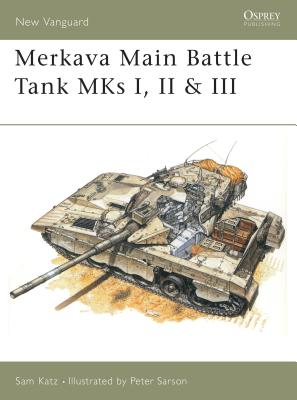
Merkava Main Battle Tank MKs I, II & III
KSh 2,350.00

Cossacks 1799–1815
KSh 2,700.00
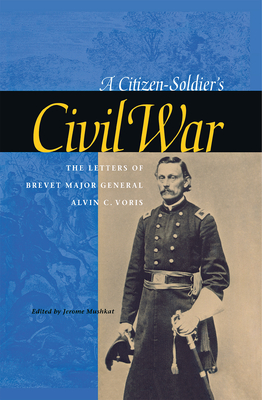
A Citizen-Soldier''s Civil War
KSh 6,300.00
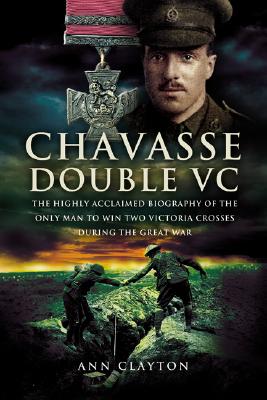
Chavasse
KSh 3,950.00

Modelling the Jagdpanzer 38(t) ''Hetzer''
KSh 2,900.00
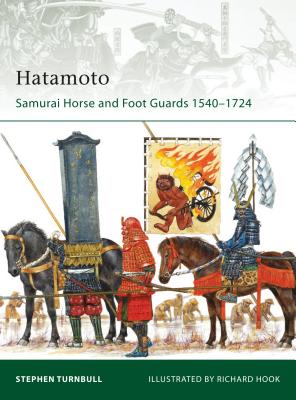
Hatamoto
KSh 2,700.00
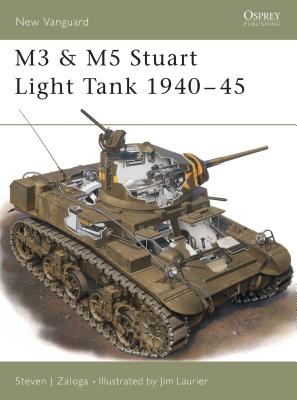
M3 & M5 Stuart Light Tank 1940–45
KSh 2,350.00
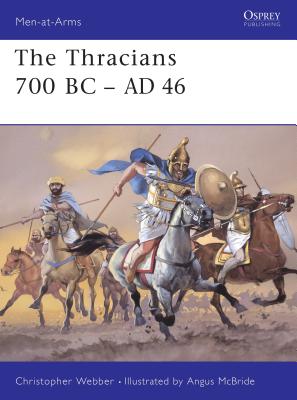
Thracians 700 BC–AD 46
KSh 2,350.00

Leeds Pals
KSh 2,900.00
More by David Doyle

USS Arizona (BB-39)
KSh 4,300.00

M47 Patton Tank
KSh 3,600.00

German Light Armored Cars of WWII
KSh 3,400.00

B-17 Flying Fortress, Vol. 1
KSh 3,500.00

USS Nevada (BB-36)
KSh 5,050.00

M113 and M113A1 Armoured Personnel Carrier
KSh 3,600.00

Maxxpro Mrap
KSh 3,250.00
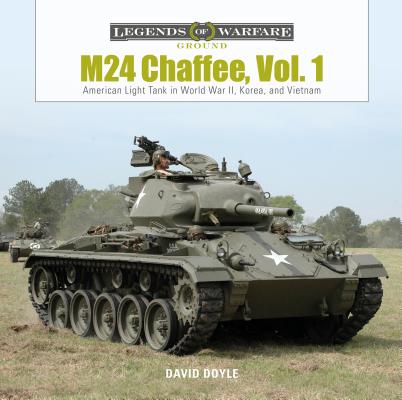
M24 Chaffee, Vol. 1
KSh 3,500.00
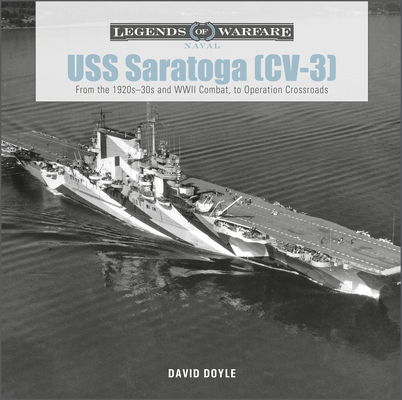
USS Saratoga (CV-3)
KSh 4,200.00

USS California (BB-44)
KSh 5,050.00

USS Yorktown (CV-10)
KSh 5,050.00

Sd.Kfz. 251
KSh 4,050.00
