
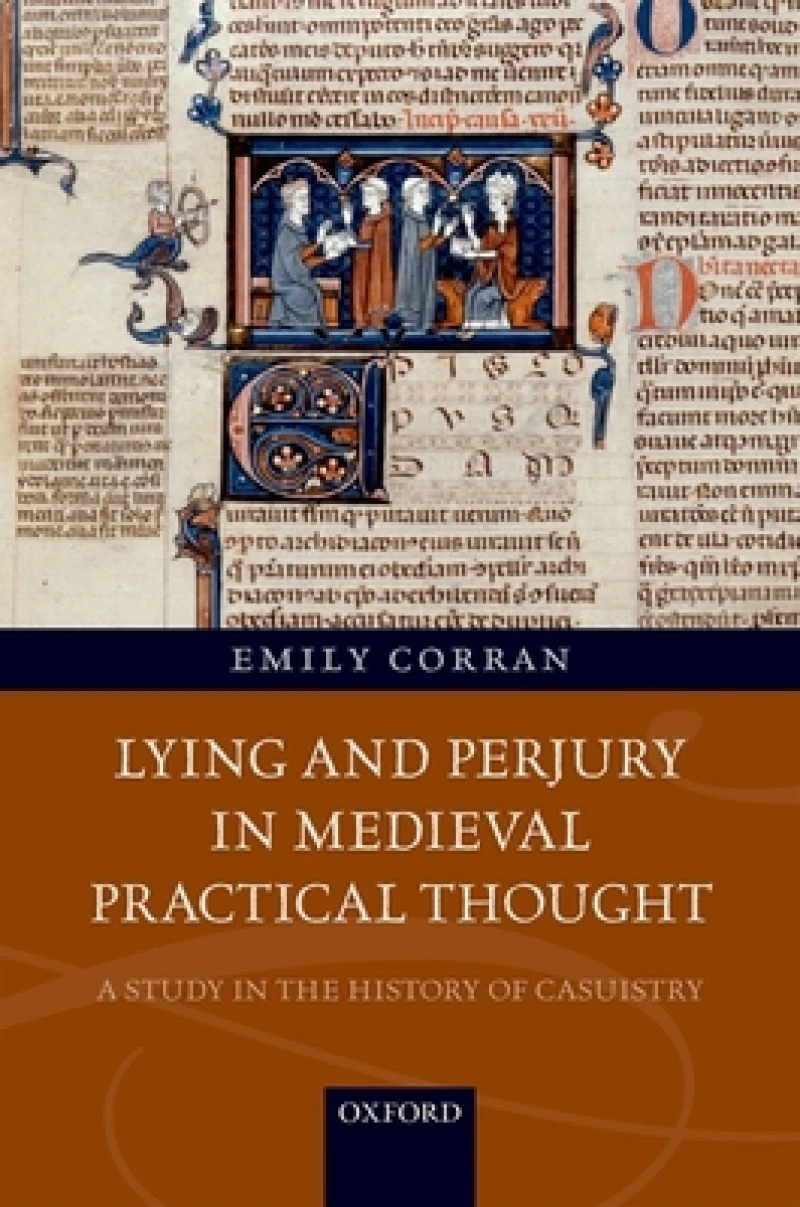
Lying and Perjury in Medieval Practical Thought : A Study in the History of Casuistry
by
Emily Corran
Book Details
Format
Hardback or Cased Book
ISBN-10
0198828888
ISBN-13
9780198828884
Publisher
Oxford University Press
Imprint
Oxford University Press
Country of Manufacture
GB
Country of Publication
GB
Publication Date
Sep 28th, 2018
Print length
220 Pages
Weight
500 grams
Dimensions
16.60 x 24.10 x 1.70 cms
Product Classification:
European historyMedieval historyLegal history
Ksh 19,000.00
Manufactured on Demand
0 in stock
Delivery Location
Delivery fee: Select location
Secure
Quality
Fast
This book investigates questions on lying and perjury as they were discussed in the Middle Ages, showing that while the word for this practical moral theology - casuistry - was not invented until the Renaissance, the practice of this genre of medieval academic thought was widespread, especially in works produced for priests hearing confessions.
Thought about lying and perjury became increasingly practical from the end of the twelfth century in Western Europe. At this time, a distinctive way of thinking about deception and false oaths appeared in the schools of Paris and Bologna, most notably in the Summa de Sacramentis et Animae Consiliis of Peter the Chanter. This kind of thought was concerned with moral dilemmas and the application of moral rules in exceptional cases. It was a tradition which continued in pastoral writings of the thirteenth century, the practical moral questions addressed by theologians in universities in the second half of the thirteenth century, and in the Summae de Casibus Conscientiae of the late Middle Ages. Lying and Perjury in Medieval Practical Thought argues that medieval practical ethics of this sort can usefully be described as casuistry - a term for the discipline of moral theology that became famous during the Counter-Reformation. This can be seen in the origins of the concept of equivocation, an idea that was explored in medieval literature with varying degrees of moral ambiguity. From the turn of the thirteenth century, the concept was adopted by canon lawyers and theologians, as a means of exploring questions about exceptional situations in ethics. It has been assumed in the past that equivocation, and the casuistry of lying was an academic discourse invented in the sixteenth century in order to evade moral obligations. This study reveals that casuistry in the Middle Ages was developed in ecclesiastical thought as part of an effort to explain how to follow moral rules in ambiguous and perplexing cases.
Get Lying and Perjury in Medieval Practical Thought by at the best price and quality guaranteed only at Werezi Africa's largest book ecommerce store. The book was published by Oxford University Press and it has pages.

